
2026 Best Cylindrical Cell Assembly Machines?
Choosing the 2026 Best Cylindrical Cell Assembly Machines requires more than comparing catalog speed.
A reliable assessment examines the complete production path, from electrode handling to final electrical testing. Cylindrical Cell Assembly Machines must maintain accurate jelly-roll alignment, stable tab welding, controlled electrolyte filling, and consistent crimping. Small errors can create visible defects, leakage risks, or unstable capacity results. The best equipment connects these stages without hiding process weaknesses.
Real factory conditions matter.
This guide evaluates machines through practical indicators, including throughput, yield, changeover time, automation depth, and maintenance access. It also considers whether operators can trace each cell through barcode records, camera inspections, pressure checks, and formation data. A fast line means little if it produces excessive rejects or requires frequent manual correction. Energy consumption, floor space, spare-part availability, and supplier response times deserve equal attention.
Technical brochures are not enough.
Factory acceptance testing, sample production, and verified performance data should support every serious purchasing decision. Engineers should compare results using the same cell format, materials, and operating conditions. Even experienced teams can overlook integration delays between welding, filling, sealing, and testing modules. That weakness deserves honest attention.
No ranking is perfect.
This introduction frames a careful comparison of leading 2026 solutions, while recognizing that the right machine depends on cell design, production volume, quality targets, and budget. Readers will find practical criteria rather than impressive claims alone. The goal is dependable manufacturing, measurable quality, and a clearer path from pilot production to stable commercial output.
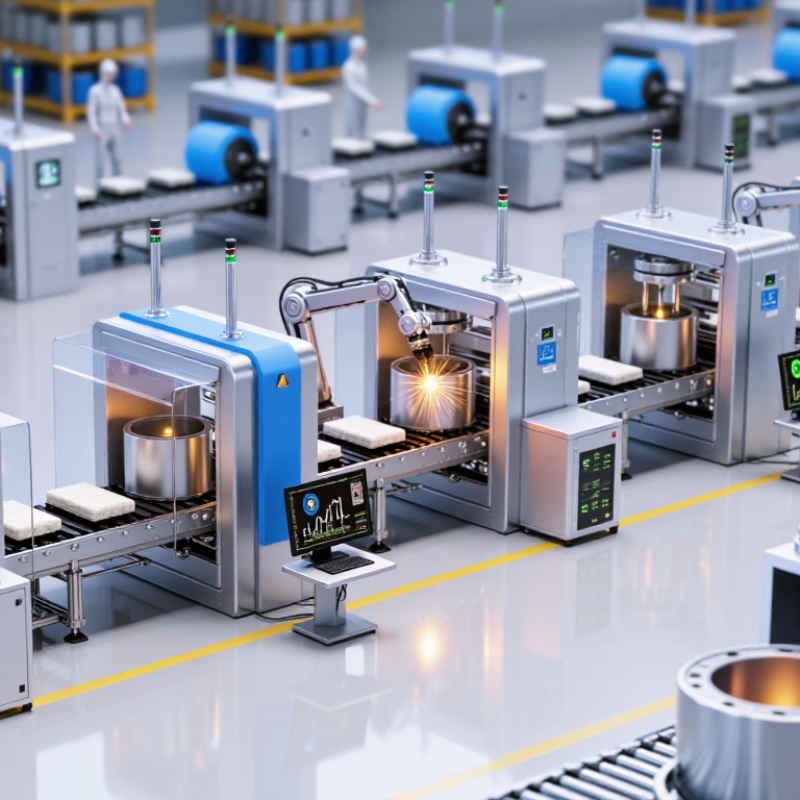
Cylindrical Cell Assembly Machines: Definition and Core Functions
Cylindrical cell assembly machines are integrated production systems for building rechargeable cells from prepared electrodes, separators, collectors, and metal cans. They manage delicate steps with controlled pressure, speed, temperature, and alignment. In practical production, even a small electrode offset can affect internal resistance and safety. Precision matters.
Core functions usually include electrode winding, separator placement, jelly-roll insertion, tab forming, welding, electrolyte filling, crimping, and final sealing.
Some systems also perform vacuum handling, leak testing, insulation checks, weighing, and electrical inspection. Sensors record critical data, such as weld energy, filling weight, and sealing force. This traceability helps engineers investigate defects instead of guessing.
When comparing the best cylindrical cell assembly machines for 2026, manufacturers should examine format flexibility, changeover time, line stability, and inspection depth. A fast machine is not always the best machine. Poor alignment can create expensive rework. Automation reduces manual variation, but it does not remove the need for trained operators. No machine is perfect. Maintenance access, spare-part availability, and process validation deserve equal attention. In my view, suppliers should test representative materials before purchase, because laboratory results can differ from continuous production. A machine may meet its advertised cycle time, yet still struggle with dust control, thin separators, or unstable welding conditions.

Cylindrical Cell Formats and Machine Compatibility
2026 Best Cylindrical Cell Assembly Machines?
Cylindrical cell formats strongly influence machine compatibility. Common sizes include 18650, 21700, 26650, and 4680. Each format changes the can diameter, height, electrode length, and jelly-roll tension. A machine designed for 21700 cells may not process 4680 cells without major tooling changes. Even small dimensional errors can affect sealing quality and internal resistance.
A practical assembly line should support controlled winding, tab welding, electrolyte filling, crimping, and inspection. Winding systems need adjustable mandrels and precise tension control. Welding units must match tab materials, thicknesses, and positions. Filling equipment also requires accurate volume control, because excess electrolyte can create safety and quality concerns. Automated vision systems should check alignment, burrs, seal surfaces, and label data. Traceability matters. Every cell should connect to process records.
Machine flexibility sounds attractive, but it is rarely unlimited. Quick-change fixtures may reduce downtime, yet they can increase adjustment mistakes. Engineers should test several pilot batches before approving full production. I would not rely on a brochure alone. Measure actual changeover time, reject rates, and maintenance access. Check them carefully. Some platforms may support multiple formats, but performance can decline at the largest size. A reliable decision combines supplier evidence, operator feedback, and independent cell testing.
Key Assembly Stages from Winding to Cell Sealing
2026 Best Cylindrical Cell Assembly Machines?
Cylindrical cell assembly begins with accurate electrode winding. The machine must control strip tension, alignment, and separator overlap continuously. A small offset can create local stress inside the jelly roll. Vision inspection should detect wrinkles, edge damage, and exposed metal before insertion. The IEA’s Global EV Outlook 2024 reported over 750 GWh of global EV battery demand in 2023. That scale increases pressure on equipment uptime and process consistency.
After winding, the cell moves through tab welding, can insertion, electrolyte filling, and sealing. Laser or ultrasonic welding needs stable energy control and resistance monitoring. Filling stations require vacuum control and accurate dosing, especially when electrolyte wetting time affects formation quality. Crimping must protect the seal without deforming the can. BloombergNEF’s 2024 Battery Price Survey reported an average battery pack price of 115 dollars per kWh, down 20% year over year. Lower costs make yield losses harder to accept. Still, faster is not always better. I have seen production teams prioritize cycle time, then discover more rejects during leak testing. A better machine links each stage with traceable data, recipe control, and practical maintenance access. No system is perfect. Scrap analysis remains essential.
2026 Best Cylindrical Cell Assembly Machines? - Key Assembly Stages from Winding to Cell Sealing
| Assembly Stage | Machine or Module | Main Function | Important Process Controls | Typical Reference Data | Typical Quality Checks |
|---|---|---|---|---|---|
| 1. Electrode Preparation | Electrode Slitting Machine | Cuts coated electrode rolls into precise strips for cylindrical cell winding. | Slit width, burr height, edge cleanliness, web tension, roll alignment, and dust control. | Slitting tolerance commonly controlled within approximately ±0.05 to ±0.10 mm, depending on product requirements. | Width measurement, edge-camera inspection, burr inspection, and roll hardness verification. |
| 2. Electrode Notching | Die-Cutting or Laser-Notching Machine | Creates electrode tabs or notches required for current collection and winding registration. | Notch position, notch geometry, cutting force or laser power, edge burrs, and particle generation. | Position accuracy is commonly specified at about ±0.10 to ±0.20 mm for high-speed production systems. | Vision inspection of notch shape, tab position, edge defects, and electrode continuity. |
| 3. Winding | Cylindrical Cell Winding Machine | Winds the anode, separator, and cathode into a compact jelly roll with controlled electrode and separator alignment. | Winding tension, separator overlap, electrode alignment, winding diameter, tab position, and end-face flatness. | Common cylindrical formats include 18650 at approximately 18 × 65 mm, 21700 at approximately 21 × 70 mm, and 4680 at approximately 46 × 80 mm. | Jelly-roll diameter, alignment, exposed-tab position, separator damage, wrinkles, and winding length. |
| 4. Jelly-Roll Finishing | Jelly-Roll Taping and Shaping Machine | Secures the wound roll, protects the separator, and prepares the assembly for insertion into the metal can. | Tape position, tape tension, roll compression, end-face condition, and foreign-particle control. | The finished roll must remain within the specified diameter and height envelope for the selected can size. | Visual inspection, dimensional gauging, tape adhesion, and end-face flatness checks. |
| 5. Can Preparation | Can Cleaning and Inspection Unit | Cleans, orients, and inspects the cylindrical metal can before jelly-roll insertion. | Cleanliness, can roundness, height, inner-wall condition, bottom geometry, and orientation. | Typical can materials include nickel-plated steel or stainless steel, selected according to cell design and safety requirements. | Camera inspection, dimensional gauging, cleanliness testing, and dent or scratch detection. |
| 6. Insulation Insertion | Insulating Film or Bottom Pad Insertion Machine | Places insulating components between the electrode assembly and the metal can to reduce internal short-circuit risk. | Film position, coverage, material compatibility, insertion depth, and absence of folds or tears. | Insulation thickness and shape are selected according to the electrical-clearance and thermal design of the cell. | Position verification, visual inspection, dielectric checks, and component presence detection. |
| 7. Jelly-Roll Insertion | Automatic Jelly-Roll Insertion Machine | Inserts the wound electrode assembly into the cylindrical can without damaging the separator or tabs. | Insertion force, insertion speed, roll orientation, tab direction, coaxiality, and can deformation. | Controlled insertion is essential because excessive force can cause separator displacement, tab damage, or can distortion. | Force-displacement curve, insertion depth, tab position, and post-insertion dimensional inspection. |
| 8. Tab Connection | Tab Welding Machine | Connects electrode tabs to the cap, terminal, or internal current-collecting structure. | Welding energy, pulse duration, electrode pressure, tab overlap, resistance, and heat-affected area. | Ultrasonic, resistance, and laser welding are commonly used, depending on tab material and cell architecture. | Weld resistance, pull strength, weld appearance, continuity, and cross-section sampling. |
| 9. Cap and Gasket Assembly | Cap, Gasket, and Insulator Assembly Machine | Positions the top cap, gasket, and insulating parts to provide electrical isolation and sealing preparation. | Component orientation, gasket seating, compression, terminal alignment, and part presence. | The gasket must maintain electrical isolation and sealing performance across the cell's operating temperature range. | Vision inspection, seating-height measurement, insulation verification, and component traceability. |
| 10. Electrolyte Filling | Vacuum Electrolyte Filling Machine | Introduces a measured quantity of electrolyte into the assembled cell under controlled atmosphere and vacuum conditions. | Filling mass, vacuum level, pressure profile, temperature, moisture, and electrolyte exposure time. | Electrolyte handling is normally performed in a dry room because lithium-ion materials are highly sensitive to moisture. | Filling-weight measurement, vacuum decay, moisture monitoring, leakage screening, and spill detection. |
| 11. Cell Sealing | Crimping and Cell Sealing Machine | Mechanically closes the cylindrical can around the cap and gasket to create the primary hermetic seal. | Crimping diameter, sealing height, forming force, tool concentricity, gasket compression, and cap position. | Seal dimensions are controlled against the can and cap drawing; the process must avoid gasket cuts and can cracking. | Seal-height measurement, visual inspection, dimensional gauging, and leak testing. |
| 12. Formation and Aging | Formation, Aging, and Testing System | Performs controlled charge and discharge cycles to form the solid-electrolyte interphase and stabilize cell performance. | Charge rate, discharge rate, voltage limits, temperature, rest time, capacity, and internal resistance. | Formation typically includes low-rate initial charging followed by defined rest and cycling steps; exact profiles depend on chemistry and design. | Capacity, voltage curve, DC internal resistance, self-discharge, temperature rise, and abnormal-voltage detection. |
| 13. Final Inspection and Sorting | OCV, IR, Dimension, and Sorting Station | Classifies finished cells by electrical performance, dimensions, appearance, and traceability status. | Open-circuit voltage, internal resistance, mass, dimensions, terminal condition, label or code readability, and data recording. | Cells are commonly grouped into matched performance bins before module or pack assembly. | Automated electrical testing, machine vision, weighing, barcode or data-matrix verification, and complete production-history records. |
Essential Machine Components and Automation Systems
Choosing a cylindrical cell assembly machine in 2026 requires more than checking output speed. The machine’s core components must protect alignment, cleanliness, and repeatability. A stable unwinding unit controls electrode tension before winding begins. Precision mandrels form consistent jelly rolls, while edge guides prevent wrinkles and offset layers. After winding, loading fixtures place the roll into the metal shell without scraping active material. Small contact errors can become large electrical failures.
Automation connects these stations into one controlled process. Servo drives coordinate winding, insertion, tab forming, and sealing with timed motion profiles. Vision cameras inspect tab position, insulation, and shell orientation. Force sensors can detect abnormal crimping or insertion resistance. A programmable controller records each result, while a manufacturing database links measurements to the cell’s identification code. This traceability supports root-cause analysis instead of guesswork. It also exposes weak process discipline.
A reliable line needs more than robots. Dry-room compatibility, particle control, guarding, interlocks, and accessible maintenance points matter every day. Automatic electrolyte filling requires calibrated dosing, leak checks, and controlled vacuum steps. End-of-line testing should verify insulation, dimensions, and electrical behavior before packaging. In practice, no system is perfect. Cameras may miss reflective surfaces, and sensors drift over time. Operators still need training, documented checks, and permission to stop production when readings look wrong. A fast line with poor data is only fast at making uncertainty.
The chart compares nominal dimensions of widely used cylindrical cell formats. Automated assembly machines must accommodate these diameter and height differences through changeover tooling, precision feeding, welding heads, electrolyte-filling modules, sealing units, machine vision, and traceability systems. Dimensions shown are nominal format values in millimetres, not manufacturing tolerances.
How to Evaluate the Best Machines in 2026
How to Evaluate the Best Cylindrical Cell Assembly Machines in 2026
The best cylindrical cell assembly machine is not simply the fastest one. It must deliver stable winding, accurate tab welding, clean electrolyte handling, and dependable sealing. The IEA Global EV Outlook 2025 reported that global electric car sales exceeded 17 million in 2024. It also estimated electric vehicle battery demand above 1 TWh. This growth increases pressure on equipment suppliers and production teams.
During evaluation, measure real output, not brochure speed. Check placement accuracy, defect rates, changeover time, and energy use per cell. A useful factory trial should run several shifts with production materials. Inspect electrode alignment under magnification. Test weld resistance after thermal cycling. BloombergNEF’s 2025 Battery Price Survey reported a 20% decline in average battery pack prices during 2024. That trend makes material waste and rework even harder to justify. However, published figures can hide different cell formats and factory conditions. My own assessment would remain cautious without independent test records.
Tips: Request sample data from a witnessed trial. Compare finished cells, not only machine specifications. Ask how quickly operators can replace tooling. Review calibration records, software logs, and maintenance intervals. Include rejected cells in the cost model. A low purchase price may become expensive after repeated stoppages. Also, leave space for future diameter changes. This is easy to overlook. Benchmark results against ISO 9001 processes and relevant battery safety requirements.
Article Source:
Get in touch with us,
We will contact you shortly!
What is the difference between Unline(Non-Epoxy Coated) or Lining(Epoxy Coated) Metal Drum?

Unline drums with internally bare metal surface is more susceptible to corrosion and rust while Lining drums are internally coated with Phenolic Epoxy Coating to provide a non-reactive barrier between the drum surface and your product, less risk of contamination. Note: Our Unline drums are coated with an anti-rust agent after washing to reduce risk of rust.
What are Unline(Non-Epoxy Coated) and Lining(Epoxy Coated) drums compatible with?

In Singapore, Recon Unline Drums are usually more costly than Recon Lining Drums. Hence, we recommend Recon Unline Drums to fill aromatics like Thinner, Xylene, Toulene& other solvents like Hexane, BA, CA, EA, MC, White spirit, etc.
We recommend the lower-priced Recon Lining Drums to fill hydrocarbons like IPA, Methanol, Ethanoland oil-based products like diesel, petrol, lubricants, engine, hydraulic, base, transmission fluid, additives, waste oil, etc.;
What is the difference between Grade A and Grade B Metal Drum ?

Grading of used drums are usually based on physical conditions like rustiness, deformities and residual contents. Grade A drums are totally free from internal rust, serious dents and are easy to clean. Grade B drums have different degrees of rust internally and aesthetically inferior compared to Grade A drums.
What content is suitable to fill in a Recon Grade A or Grade B Drum?

Recon Grade A drum is suitable to fill more costly virgin grade products while Recon Grade B drum is more suitable for recycled or waste products.
What is the difference between Open Top and Close Top Drums and their usage?

Closed top drums are for water and other liquid products. Open Top drums can be used for liquid too but are primarily for more viscous products. The Open Top (or open head with a lid) allows you to get in and out of the drum with your product easier.
What type of content are Metal or Plastic Drums suitable for?

Metal drums offer additional protection when dealing with potentially flammable substances. They provide superior fire resistance, impact protection, and longevity for storing class 1, 2, and 3 volatile chemicals.
Plastic HDPE Drums are suitable for corrosive chemicals like acids, alkaline and also water-based products.
Will there be any contamination in the reconditioned metal, plastic drums or IBC tanks?

All our reconditioned containers (metal/plastic drums, carboys, IBC tanks) are washed thoroughly with specially formulated cleaning agent, rinsed with clean water, dried, and tested for possible leakages during the recondition process. Stringent quality inspection is being conducted 100% on every reconditioned product before they are qualified for sale & delivery.
What is the drum gauge(thickness) and weight for reconditioned metal drums?

Reconditioned metal drums gauge can be 0.9mm to 1.0mm all round. Their weight can vary from 16 to 18kg.
Do you sell New Packaging Products too?

Yes, we are also a distributor for new pallets, metal drums, plastic drums, carboys, IBCs and stainless-steel tanks.
What additional services do you provide apart from selling reconditioned and new containers.?

We are an NEA licensed toxic industrial waste collector, who can collect and dispose of used toxic waste containers in Singapore.
Do you offer labelling and silkscreen on the containers ?

We can provide labelling and silk-screening on the containers.
Are you able to ship overseas ?

Yes, we can arrange export our products to any country in the world.
Leading the Way
to Carbon Neutrality