
2026 Top Metal Barrel Suppliers for Global Buyers?
Global buyers are entering a more demanding metal barrel market. Product safety, verified capacity, closure design, and supplier consistency now influence purchasing decisions. The wrong barrel can cause leakage, corrosion, rejected shipments, or costly repacking at a busy warehouse.
Mordor Intelligence estimates that the global steel drums market could grow from about USD 13.56 billion in 2024 to USD 18.13 billion by 2029. Its research points to industrial chemicals, lubricants, paints, coatings, and food ingredients as major demand sectors. Smithers’ report, The Future of Industrial Packaging to 2028, also highlights rising expectations for durable, reusable, and traceable industrial packaging. These figures are useful. They are not perfect. Market definitions differ between reports.
John A. H. Taylor, a long-time steel-packaging consultant, has observed, “A steel drum is more than a container; it is a controlled link in the supply chain.” That practical view matters when comparing the 2026 top metal barrel suppliers for global buyers. Strong suppliers should provide material specifications, UN performance documentation where applicable, coating details, closure samples, and batch traceability. They should also explain testing methods clearly.
Look closely.
A reliable supplier can show factory photographs, inspection records, production capacity, and export experience. Buyers should examine steel thickness, internal lacquer compatibility, bung design, pallet stability, and corrosion resistance before signing contracts. Price still matters, but the lowest quotation may hide weak testing or inconsistent dimensions. This guide evaluates leading suppliers through manufacturing capability, quality systems, customization, sustainability practices, and international service. It also recognizes an uncomfortable truth: no supplier ranking can replace an independent sample inspection.
What Are Metal Barrels and Why Do Global Buyers Need Them?
2026 Top Metal Barrel Suppliers for Global Buyers
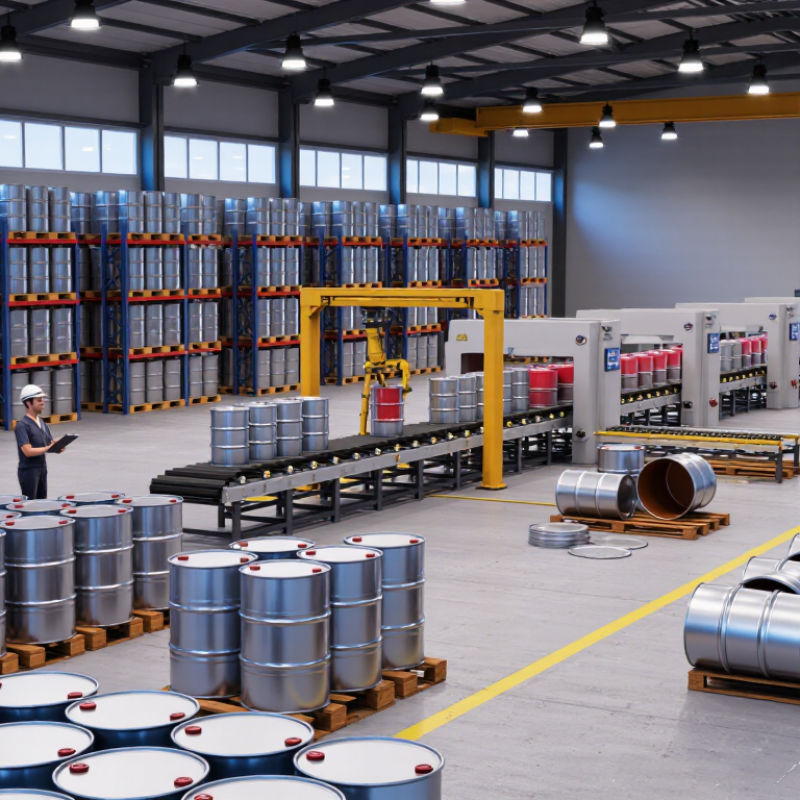
Metal barrels are rigid cylindrical containers made from steel or other corrosion-resistant alloys. They usually include a removable or fixed head, reinforced hoops, and openings for filling and discharge. Common capacities range from small service drums to standard 200-liter units. The right design depends on density, viscosity, stacking pressure, and handling equipment. A thick wall is not always better. It can increase weight, freight cost, and worker strain. In practical sourcing, buyers should inspect seams, closures, coatings, and internal cleanliness. A sample inspection often reveals problems that photographs hide.
Global buyers need metal barrels because supply chains demand durable, traceable, and space-efficient packaging. Steel bodies can resist impact during truck, rail, and sea transport. They also support repeated handling when a reusable system is properly managed. For food, industrial liquids, powders, and other permitted materials, lining selection matters greatly. A coating must match the contents and expected temperature. Buyers should request material certificates, test records, dimensions, closure details, and applicable safety approvals. Regional rules may differ, so local compliance review remains essential. I have seen purchasing teams focus on price and overlook pallet fit or unloading tools. That mistake can delay an otherwise reliable shipment. No barrel fits every route. Clear specifications, pre-shipment checks, and realistic storage plans create stronger results, though they cannot remove every risk.
Key Types of Metal Barrels and Their Common Industrial Uses
Metal barrels remain practical for global industrial supply chains. Their strength, stackability, and recoverable steel support repeated handling. The World Steel Association reported about 1.89 billion tonnes of crude steel production in 2023. That scale supports steady access to steel packaging materials. The familiar 200-litre barrel is widely used for oils, coatings, adhesives, and process chemicals.
Open-head barrels have removable lids and suit powders, viscous materials, and easy cleaning. Tight-head barrels use fixed covers with small openings. They are better for thinner liquids, including lubricants and industrial additives. Stainless steel barrels resist corrosion and help protect sensitive food, pharmaceutical, and chemical ingredients. Galvanized steel offers additional surface protection at a lower cost. Small details matter. Closure design, lining, and gasket material can change product performance.
ISO 15750 provides specifications for steel drums used in transport packaging, helping buyers compare dimensions and construction. The U.S. Environmental Protection Agency’s 2022 Facts and Figures report identifies steel packaging as one of the most recycled packaging categories in the country. Still, recycling performance depends on local collection systems and contamination control. A dented rim can weaken sealing, even when the barrel looks usable. I would not select a supplier from price alone. Buyers should request leak-test records, wall-thickness data, coating compatibility, and sample approval. Some specifications remain surprisingly vague. That is where purchasing decisions can fail.
2026 Top Metal Barrel Suppliers for Global Buyers
Key Types of Metal Barrels and Their Common Industrial Uses
Standard metal drum and pail formats are selected according to required capacity, handling method, and material compatibility. The 55-gallon drum is widely used for bulk chemicals, lubricants, coatings, and industrial liquids, while smaller containers are common for samples, additives, and maintenance materials.
Capacities shown are nominal common sizes. Liter values use 1 US gallon = 3.78541 liters; actual usable capacity may vary by manufacturer and regulatory design.
How to Evaluate Metal Barrel Suppliers in 2026
Supplier evaluation should begin with evidence, not polished catalogs. The World Steel Association reported approximately 1.88 billion tonnes of crude steel production in 2024. Large capacity does not guarantee consistent barrel quality. Request recent batch records, steel-grade certificates, wall-thickness measurements, coating specifications, and photographs from production lines. Check whether testing follows relevant ISO standards and destination-market requirements.
Small details matter.
Ask suppliers to provide traceability from steel coil to finished barrel. A reliable factory should identify production dates, material sources, inspection results, and corrective actions. ISO’s Survey of Certifications 2023 recorded more than 1.26 million ISO 9001 certificates worldwide. Certification helps, but an expired certificate proves little. Verify the certificate directly and inspect its scope. I would also request a sample shipment before approving large orders.
Logistics deserve equal attention. UNCTAD’s Review of Maritime Transport 2024 states that ships carry over 80% of global merchandise trade by volume. Compare port access, export documentation, container loading methods, and realistic lead times. The World Bank’s Logistics Performance Index 2023 evaluates customs, infrastructure, shipment quality, and timeliness. Use similar measures when comparing suppliers. A low unit price can hide leakage claims, damaged pallets, or expensive delays.
My own checklist would include one uncomfortable question: what happens when the supplier misses specifications? Their answer often reveals more than their sales presentation.
Top Metal Barrel Suppliers for International Purchasing
2026 Top Metal Barrel Suppliers for Global Buyers?
For international purchasing, reliable metal barrel suppliers must offer stable quality, clear documentation, and practical export support. Buyers should confirm steel grade, wall thickness, capacity, closure type, and internal coating before placing an order. A typical 200-liter barrel may look simple, but small differences affect stacking, filling, and transport safety.
Experienced suppliers usually provide inspection records, material certificates, production samples, and packaging details. Ask for seam-welding methods, leak-test results, coating resistance, and pallet specifications. Independent pre-shipment inspections can verify dimensions and surface quality. This step adds cost. It may prevent larger losses later. Suppliers should also explain customs documents, port handling, lead times, and replacement procedures for damaged units.
Supplier evaluation should include factory audits, responsive communication, and evidence of consistent production. Check whether the supplier can maintain quality across repeat orders, not only a single sample. Local regulations and destination-country requirements must be reviewed before shipment. Certification may be necessary for certain applications and transport conditions. Do not rely on vague claims.
No supplier is perfect. A low-cost quotation may hide weaker coatings, poor stacking strength, or expensive inland delivery. Buyers should compare total landed cost instead of unit price alone. One practical improvement is to record defects from every shipment and discuss corrective actions openly. That feedback often reveals whether a supplier is truly dependable.
Global Standards, Pricing, Shipping, and Supplier Verification
In 2026, global buyers should compare metal barrel suppliers beyond the quoted unit price. A reliable barrel should match recognized standards, such as ISO 15750, ASTM specifications, or applicable regional requirements. Check steel thickness, closure design, internal coating, and leak-test results. A 210-liter open-head barrel may look identical to another, yet its rim strength can differ noticeably. Ask for current certificates, test methods, and batch traceability. Old documents are not proof of present production quality.
Pricing usually depends on steel costs, order quantity, coatings, tooling, and delivery terms. Request separate prices for EXW, FOB, and CIF shipments. This prevents freight charges from hiding inside the product cost. For shipping, confirm barrel dimensions, pallet limits, container loading plans, and rust-protection measures. A damp container can leave orange marks before arrival. Verify export documents, packing lists, inspection records, and port requirements early. Supplier verification needs more than a polished website. Review the factory license, production photos, quality-control process, and recent customer references. An independent pre-shipment inspection is worthwhile for large orders. Request a sealed sample from the actual production batch. Small defects often appear there first. I would not rely only on video calls; they show activity, but not consistency. Pricing is also easy to misread when the cheapest offer excludes testing or replacement terms.
Related Posts
-
2026 Best Metal Barrel Options for Storage and More?
-
10 Essential Tips for Choosing the Right Metal Barrel for Your Needs
-
How to Choose the Right Metal Drum Barrel for Storage?
-
Top Quality Metal Drum Barrel Suppliers in China?
-
2026 How to Choose the Best Metal Tote for Your Needs?
-
How to Choose the Right Steel Barrels for Global Shipping?

Get in touch with us,
We will contact you shortly!
What is the difference between Unline(Non-Epoxy Coated) or Lining(Epoxy Coated) Metal Drum?

Unline drums with internally bare metal surface is more susceptible to corrosion and rust while Lining drums are internally coated with Phenolic Epoxy Coating to provide a non-reactive barrier between the drum surface and your product, less risk of contamination. Note: Our Unline drums are coated with an anti-rust agent after washing to reduce risk of rust.
What are Unline(Non-Epoxy Coated) and Lining(Epoxy Coated) drums compatible with?

In Singapore, Recon Unline Drums are usually more costly than Recon Lining Drums. Hence, we recommend Recon Unline Drums to fill aromatics like Thinner, Xylene, Toulene& other solvents like Hexane, BA, CA, EA, MC, White spirit, etc.
We recommend the lower-priced Recon Lining Drums to fill hydrocarbons like IPA, Methanol, Ethanoland oil-based products like diesel, petrol, lubricants, engine, hydraulic, base, transmission fluid, additives, waste oil, etc.;
What is the difference between Grade A and Grade B Metal Drum ?

Grading of used drums are usually based on physical conditions like rustiness, deformities and residual contents. Grade A drums are totally free from internal rust, serious dents and are easy to clean. Grade B drums have different degrees of rust internally and aesthetically inferior compared to Grade A drums.
What content is suitable to fill in a Recon Grade A or Grade B Drum?

Recon Grade A drum is suitable to fill more costly virgin grade products while Recon Grade B drum is more suitable for recycled or waste products.
What is the difference between Open Top and Close Top Drums and their usage?

Closed top drums are for water and other liquid products. Open Top drums can be used for liquid too but are primarily for more viscous products. The Open Top (or open head with a lid) allows you to get in and out of the drum with your product easier.
What type of content are Metal or Plastic Drums suitable for?

Metal drums offer additional protection when dealing with potentially flammable substances. They provide superior fire resistance, impact protection, and longevity for storing class 1, 2, and 3 volatile chemicals.
Plastic HDPE Drums are suitable for corrosive chemicals like acids, alkaline and also water-based products.
Will there be any contamination in the reconditioned metal, plastic drums or IBC tanks?

All our reconditioned containers (metal/plastic drums, carboys, IBC tanks) are washed thoroughly with specially formulated cleaning agent, rinsed with clean water, dried, and tested for possible leakages during the recondition process. Stringent quality inspection is being conducted 100% on every reconditioned product before they are qualified for sale & delivery.
What is the drum gauge(thickness) and weight for reconditioned metal drums?

Reconditioned metal drums gauge can be 0.9mm to 1.0mm all round. Their weight can vary from 16 to 18kg.
Do you sell New Packaging Products too?

Yes, we are also a distributor for new pallets, metal drums, plastic drums, carboys, IBCs and stainless-steel tanks.
What additional services do you provide apart from selling reconditioned and new containers.?

We are an NEA licensed toxic industrial waste collector, who can collect and dispose of used toxic waste containers in Singapore.
Do you offer labelling and silkscreen on the containers ?

We can provide labelling and silk-screening on the containers.
Are you able to ship overseas ?

Yes, we can arrange export our products to any country in the world.
Leading the Way
to Carbon Neutrality