2026 Top Stainless Steel IBC Types for Global Buyers

Global buyers are entering 2026 with stricter expectations for stainless steel IBC performance, hygiene, traceability, and service life. A polished tank is not enough. Buyers must inspect weld quality, internal finish, outlet design, gasket materials, lifting frames, and cleaning access. These details become critical when an IBC travels through humid ports, cold warehouses, and repeated filling cycles.

Stainless steel packaging consultant Dr. Elena Marquez explains, “An IBC proves its value through cleanability, control, and consistency—not capacity alone.” Her observation reflects a practical purchasing reality. The right container should match the product, handling system, filling equipment, and maintenance plan. Food ingredients may require sanitary fittings and documented surface finishes. Chemical applications may demand stronger frames, compatible seals, and careful corrosion evaluation. One specification cannot serve every route.

This guide examines the top stainless steel IBC types expected to attract global buyers in 2026. It compares fixed-volume units, pressure-rated designs, insulated models, agitator-equipped tanks, and specialized hygienic containers. It also considers stacking, discharge speed, inspection records, and total ownership cost.

Some assumptions deserve questioning. Bigger is not always better. A lower purchase price may hide difficult cleaning or expensive repairs. Even a certified vessel can perform poorly when operators overlook valves, seals, or transport conditions. Buyers should request material certificates, pressure documentation, dimensional drawings, and realistic maintenance guidance before ordering. Small checks matter. This article offers a practical framework for comparing suppliers and selecting a stainless steel IBC with greater confidence.
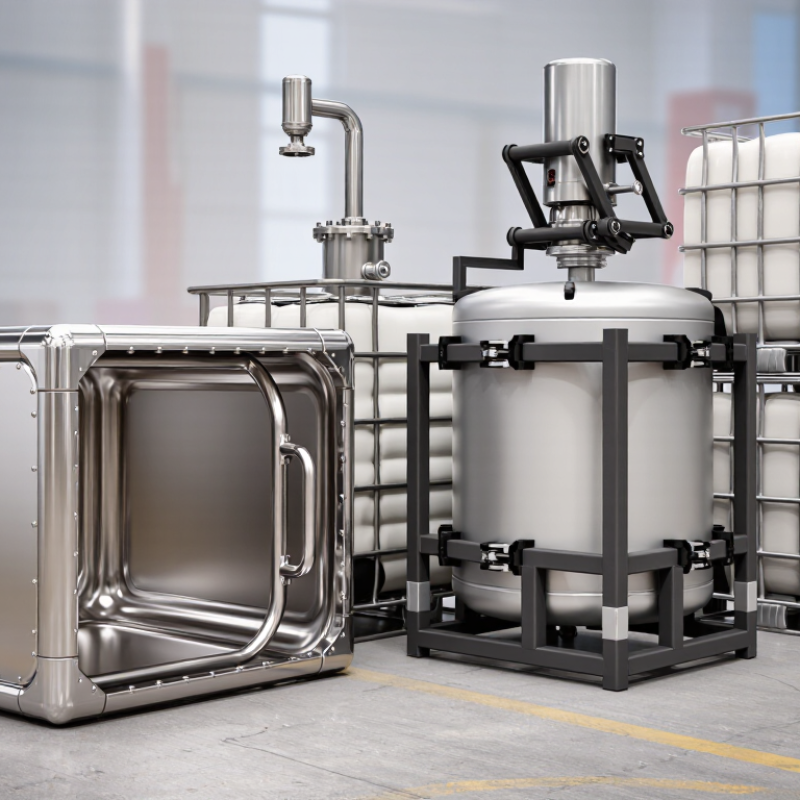
2026 Top Stainless Steel IBC Types for Global Buyers

Stainless Steel IBC Basics and Global Buyer Requirements

Stainless steel IBCs combine a rigid frame, reusable tank, and accessible discharge valve. Common capacities range from 500 to 1,500 liters. The right type depends on product density, filling temperature, and handling equipment. A food-grade IBC may require polished internal surfaces, sanitary welds, and hygienic fittings. Industrial models often prioritize wall thickness, valve protection, and forklift access.

Global buyers should verify material certificates, pressure-test records, and traceability documents before purchase. Stainless steel grades such as 304 and 316 suit different environments. Chloride-rich liquids may demand stronger corrosion resistance. A compatible gasket is equally important. Incorrect elastomer selection can cause swelling, leakage, or product contamination. Small details matter.

During inspections, I have found that appearance can mislead. A bright surface does not prove safe construction. Check weld uniformity, drainability, corner protection, and closure performance. Confirm dimensions against containers, loading bays, and local transport systems. Requirements also vary by destination. Buyers may need recognized markings, inspection intervals, labeling, and import documents. Ask for current evidence, not verbal assurances. No specification is perfect without testing.

Key Stainless Steel IBC Types and Their Structural Differences

2026 Top Stainless Steel IBC Types for Global Buyers

Key Stainless Steel IBC Types and Their Structural Differences

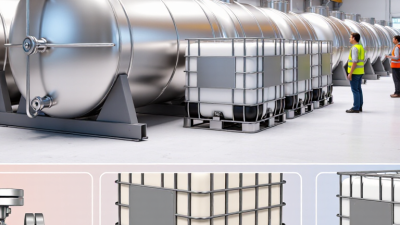
Stainless steel IBCs differ mainly in tank geometry, wall construction, discharge layout, and frame design. Standard single-wall units use a welded stainless tank inside a rigid protective frame. They suit liquid storage and transport where temperature control is unnecessary. A square or rectangular body saves floor space, while rounded corners reduce residue during cleaning. Every weld matters.

Jacketed IBCs add an outer chamber around the product tank. Heating or cooling fluid moves through this jacket, helping maintain stable viscosity during filling and discharge. Insulated models place thermal material outside the jacket or tank, reducing heat loss. These units are heavier and require stronger lifting points. Buyers should verify the jacket pressure, insulation thickness, drain arrangement, and surface finish.

Conical-bottom IBCs improve drainage because liquid moves toward the outlet with less manual handling. Flat-bottom designs provide better stability but may leave more residual material. Agitated IBCs include a top-mounted mixer, reinforced cover, and sealed shaft assembly. Pressure-rated designs require thicker walls, tested closures, and documented inspection procedures. They are not simply stronger standard tanks.

Material selection also affects service life. Grade 304 stainless steel fits many general applications, while 316L offers better resistance in chloride-rich or more aggressive environments. Confirm the product properties with a qualified engineer. A small design mismatch can cause cleaning problems, dead zones, or unexpected maintenance costs. No configuration is perfect.

Capacity, Materials, and Performance Factors for Type Selection

For global buyers, IBC selection starts with capacity, not catalogue appearance. A 1,000-liter format often balances handling, transport, and usable floor space. Yet density changes the calculation. A 1,000-liter load at 1.5 kg/L weighs 1,500 kilograms before tare weight. Rack loads, forklift ratings, and filling speed must match that mass. The 23rd revised United Nations Model Regulations recognize IBC capacities up to 3,000 liters, but maximum capacity alone should not drive selection.

Material choice affects durability, cleaning, and product protection. Grade 304L suits many aqueous and mildly corrosive products. Grade 316L offers stronger resistance where chlorides or aggressive cleaning chemicals are present. The International Stainless Steel Forum reported approximately 60.0 million tonnes of global stainless steel production in 2023. That scale supports material availability, but it does not prove every vessel needs premium alloy. A higher grade can increase cost without improving service life.

Performance depends on more than steel grade. Buyers should review weld quality, internal surface finish, valve design, insulation, and thermal expansion. A rough weld can trap residue and complicate validated cleaning. Temperature cycling also exposes weak gaskets and poorly aligned fittings. For regulated shipments, certification under UN Model Regulations Chapter 6.5 requires careful verification of design, testing, and marking. I have seen capacity targets overshadow outlet height and access clearance. That mistake is easy to prevent. Ask for test records, not only polished specifications.

2026 Top Stainless Steel IBC Types for Global Buyers

Capacity, materials, and performance factors for selecting the right intermediate bulk container.

Capacity
Stainless steel IBCs are commonly supplied in nominal capacities from approximately 500 L to 2,000 L. The usable fill volume may be lower because of expansion space, product behavior, and dangerous-goods regulations.
Material selection
Type 304 stainless steel is widely used for general food, water, and chemical service. Type 316L is preferred where chloride exposure, stronger corrosion resistance, or hygienic weld quality is important.
Performance checks
Buyers should verify UN certification where required, operating temperature, pressure and vacuum limits, surface finish, fittings, insulation, lifting points, and stacking requirements before purchase.

Representative industry capacity formats for comparison; actual dimensions, tare weight, fill ratio, and certification limits vary by design and application.

Safety Standards, Certifications, and International Compliance

2026 Top Stainless Steel IBC Types for Global Buyers

Stainless steel IBCs differ by capacity, access design, pressure rating, and discharge configuration. Common options include fixed-top, removable-top, and insulated IBCs for lawful industrial liquids. Food, pharmaceutical, and chemical applications require different surface finishes and gasket materials. Electropolished interiors can reduce residue, but they do not replace validated cleaning procedures. Fit matters more.

International compliance starts with the product classification and transport route. For regulated liquids, buyers should request a valid UN packaging certificate, typically covering the applicable metal IBC design and performance tests. The certificate should match capacity, closure type, test pressure, and intended substance. UNECE ADR 2025 and the IMDG Code 2024 Edition provide key road and sea transport requirements. UNCTAD’s Review of Maritime Transport 2024 reports that over 80% of global merchandise trade by volume moves by sea, making marine compatibility especially important.

Traceability must continue after delivery. Ask for material certificates, weld inspection records, pressure-test results, and documented inspection intervals. ISO 16103 supports guidance for recycled plastics, while stainless steel IBC buyers should verify the relevant ISO, UN, and regional requirements separately. A polished certificate is not proof of complete compliance. Practical audits often reveal mismatched valves or missing closure instructions. This is easy to overlook. Buyers should also check local rules at loading, transit, and destination points. Requirements can change, and a supplier’s confident answer may still be incomplete.

Purchasing, Inspection, and Shipping Considerations for Global Buyers

Global buyers should define the IBC before requesting prices. State volume, dimensions, valve position, shell grade, and intended liquid. Common options include 304 and 316 stainless steel, but compatibility depends on the actual product. Ask for drawings, surface finish, weld standards, and a clear tolerance sheet. Do not rely on a catalog photograph. Port access and forklift clearance can change the best design.

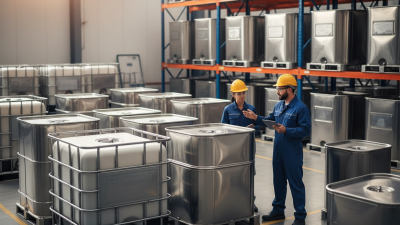
Inspection should begin with documents, not only polished metal. Request material certificates, weld inspection records, pressure or leak-test results, and batch traceability. Check every weld for uneven beads, discoloration, pits, and trapped residue. Examine gaskets, lids, discharge valves, and protective frames separately. Measure critical points against the approved drawing. A clean appearance proves little. An overlooked seal can become an expensive failure. Independent inspection is useful when the order is large or specifications are unfamiliar. Still, inspection plans can miss the detail that matters most.

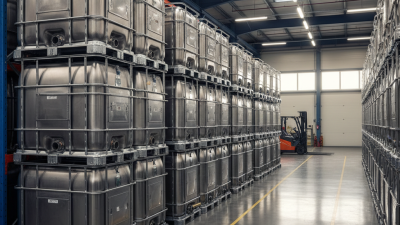
Shipping planning starts before production ends. Confirm external dimensions, tare weight, stacking limits, lifting points, and container loading measurements. Ask whether the unit will move by road, rail, or sea. Each route may impose different packaging, labeling, securing, and documentation requirements. Use corrosion protection for long voyages, especially in humid port environments. Photograph the empty unit, valve caps, and loaded restraints before dispatch. Keep commercial invoices, packing lists, certificates, and destination instructions together. Schedules change. Build modest time into the plan. That small buffer is often cheaper than correcting a rushed shipment.

Get in touch with us,
We will contact you shortly!

Get in touch with us by filling up the enquiry form. We will contact you shortly!

    What is the difference between Unline(Non-Epoxy Coated) or Lining(Epoxy Coated) Metal Drum?

    What are Unline(Non-Epoxy Coated) and Lining(Epoxy Coated) drums compatible with?

    What is the difference between Grade A and Grade B Metal Drum ?

    What content is suitable to fill in a Recon Grade A or Grade B Drum?

    What is the difference between Open Top and Close Top Drums and their usage?

    What type of content are Metal or Plastic Drums suitable for?

    Will there be any contamination in the reconditioned metal, plastic drums or IBC tanks?

    What is the drum gauge(thickness) and weight for reconditioned metal drums?

    Do you sell New Packaging Products too?

    What additional services do you provide apart from selling reconditioned and new containers.?

    Do you offer labelling and silkscreen on the containers ?

    Are you able to ship overseas ?

    Leading the Way
    to Carbon Neutrality

    Drumming sustainability into every aspect of our operations, we strive to create a greener and more conscious future for generations to come.
    Contact Us
    WhatsApp
    Email
    Join Our Newsletter

    Sign up for our newsletter for exclusive discounts and latest news of new launches!

      Logo Logo Logo Logo Logo
      Scroll to Top