
What Is the Best Crucible for Copper in China?
Choosing the best Crucible For Copper in China requires more than comparing prices or catalog photographs. Copper melts at approximately 1,085°C, yet the crucible must tolerate repeated heating, thermal shock, chemical attack, and metal contamination. A suitable choice depends on the furnace type, batch size, heating speed, copper grade, and expected service life.
Clay-graphite crucibles remain popular for many copper melting applications. They transfer heat efficiently and can offer good resistance to thermal shock. Silicon carbide options may provide stronger durability during demanding cycles. Graphite crucibles can also perform well, but oxidation control becomes especially important. The correct material is not universal. It must match the process.
Small details matter. A foundry operator may notice cracking after only ten cycles. Another may achieve far longer service with slower preheating and proper storage. Moisture is a serious concern. Even a dry-looking crucible may need controlled preheating before contact with molten copper. Poor handling can damage reliable products.
Chinese manufacturers offer many crucible designs, including custom sizes and reinforced rims. However, technical claims should be verified through material data, dimensional inspection, sample testing, and production references. Ask about apparent porosity, maximum working temperature, thermal conductivity, and recommended heating procedures. Request a trial batch before placing a large order. It is not the fastest approach, but it reduces avoidable risk.
There is no single winner.
The best Crucible For Copper is the one that delivers stable melting performance, low contamination, safe handling, and predictable replacement costs. Buyers should evaluate measured results, not attractive promises. Even experienced teams can overlook furnace compatibility. Careful testing remains essential.
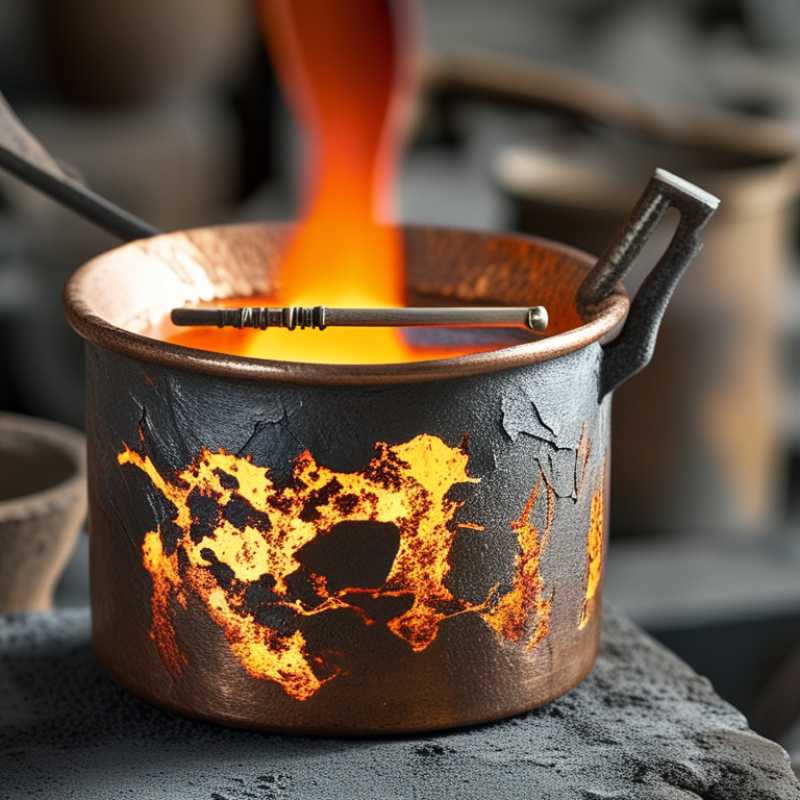
Types of Crucibles Used for Copper Melting in China
What Is the Best Crucible for Copper in China?
Types of Crucibles Used for Copper Melting in China
In China, copper melting commonly uses graphite-clay, silicon carbide, and alumina crucibles. Each type suits different furnace conditions. Graphite-clay crucibles transfer heat quickly and handle repeated melting cycles well. They are practical for small foundries and copper alloy work. However, excessive air exposure can oxidize graphite and shorten service life.
Silicon carbide crucibles offer strong thermal shock resistance and good heat distribution. They are often selected for frequent furnace operation or larger copper batches. Their dense surface can reduce metal penetration, but poor handling may still cause cracking.
Alumina ceramic crucibles resist chemical attack and suit cleaner laboratory or controlled production melts. They usually need slower heating. Sudden temperature changes are unforgiving.
The best choice depends on furnace type, batch weight, heating speed, and expected contamination. Induction furnaces require careful attention to crucible compatibility and wall thickness. Operators should preheat a new crucible gradually, inspect it for hairline cracks, and avoid placing cold metal into a hot vessel.
A dry charge is essential because moisture can create dangerous splashing. Not every “high-temperature” crucible performs equally with copper.
In practice, the ideal option is often found through controlled trials, not catalog claims. I would record melting time, slag buildup, wall wear, and copper cleanliness after every cycle.
That record may reveal an inconvenient truth: a cheaper crucible can cost more when failures interrupt production.

Key Material Requirements for a Copper-Melting Crucible
What Is the Best Crucible for Copper in China?
Key Material Requirements for a Copper-Melting Crucible
Choosing the best crucible for copper depends on temperature, furnace design, batch size, and melting frequency. Copper melts at about 1,085°C, but the crucible must withstand higher working temperatures. Graphite, silicon carbide, and clay-graphite are common choices. Each material offers different performance.
A suitable crucible should resist thermal shock, oxidation, chemical attack, and copper penetration. Silicon carbide provides strong heat transfer and good mechanical durability. Graphite supports clean melting but needs protection from excessive air exposure. Clay-graphite can balance cost, strength, and thermal performance. Purity also matters. Impurities may enter the melt and affect conductivity or surface quality.
In China, buyers should check test data, wall consistency, maximum operating temperature, and production traceability. A crucible that looks strong may still fail after repeated heating. That is easy to overlook. Real workshop conditions often reveal weaknesses that laboratory tests miss. I would compare sample performance before ordering large quantities.
Tips: Preheat the crucible gradually. Avoid sudden contact with cold tools or wet charge materials. Keep copper pieces clean and dry. Inspect cracks after every cooling cycle. Do not rely only on the lowest price. A slightly higher initial cost may reduce replacement frequency and production interruptions. Always match the crucible shape to the furnace and lifting equipment.
How Chinese Manufacturers Produce Copper Crucibles
Choosing the best crucible for copper in China starts with understanding its working conditions. Chinese manufacturers usually match the crucible design to melting temperature, vacuum level, load, and cooling requirements. A universal option rarely performs well.
Production often begins with high-purity copper, especially oxygen-free copper for vacuum and electrical applications. Workers cut the material into plates, tubes, or forged blanks. CNC machining then shapes the cavity, rim, and mounting surfaces. For water-cooled crucibles, manufacturers create internal channels and connect them through controlled welding. The structure must remain stable under repeated heating.
Quality checks are practical. Technicians measure wall thickness, surface roughness, dimensions, and water-channel pressure. Vacuum leak testing can reveal tiny welding defects. Some factories also inspect grain structure after heat treatment. Copper purity matters, but it is not the only concern. A crucible with excellent conductivity may still fail because of uneven cooling.
Small details matter. A sharp inner corner can collect residue. A rough surface can complicate cleaning. Poor alignment may cause unstable heating. Experienced engineers often adjust the design after trial production. That step is not perfect. It may expose weaknesses missed by drawings. Buyers should request material certificates, inspection records, cooling data, and service-temperature guidance before choosing a Chinese supplier.
Typical Melting Temperatures Relevant to Copper Crucible Selection
Chinese crucible manufacturers select materials according to the metal or alloy being melted, operating temperature, and furnace atmosphere. The values below are representative liquidus temperatures; exact temperatures vary with alloy composition.
Practical implication: Pure copper melts at 1084.62°C, so a suitable crucible should provide a safe temperature margin above this point, resist copper oxidation, and remain stable during repeated heating and cooling cycles.
How to Compare Crucible Quality, Performance, and Cost
What Is the Best Crucible for Copper in China?
How to Compare Crucible Quality, Performance, and Cost
Choosing a copper crucible in China requires more than comparing catalog prices. Copper melts at 1,084.62°C, according to the NIST Chemistry WebBook. Therefore, the crucible needs a safe operating margin above that temperature. I usually examine maximum temperature, thermal-shock resistance, wall thickness, and chemical compatibility. A thick wall is not automatically better. It may increase heating time and energy use.
Material quality strongly affects service life. Graphite offers good thermal conductivity and often supports faster melting. Ceramic and clay-graphite designs can provide better oxidation resistance, depending on furnace conditions. Ask suppliers for porosity, density, thermal expansion, and tested cycle-life data. These details matter more than attractive photographs. In practical trials, record cracks, metal contamination, heating time, and weight loss after every batch. Small records reveal expensive weaknesses.
Cost should include replacement, labor, energy, and rejected copper. The USGS Mineral Commodity Summaries 2025 reported a 2024 average copper price of about 4.15 US dollars per pound. That value shows why contamination and metal loss deserve careful measurement. A cheaper crucible may become costly after several failures. Still, published service-life claims are not always comparable. Furnace atmosphere, loading habits, and operator experience can change results. I would request sample testing and written data before placing a large order. One missed detail can distort the whole comparison.
Choosing the Best Copper Crucible for Your Application
Choosing the best copper crucible for your application requires more than comparing prices or catalog photographs. Copper melts at about 1,085°C, but the crucible must also withstand thermal shock, repeated heating, and contact with fluxes. Graphite, clay-graphite, silicon carbide, and ceramic options each behave differently. Graphite often supports fast heating and clean metal, while ceramic materials may suit specific atmospheres or contamination limits.
Match the crucible to your furnace, batch size, and working temperature. A vessel filled far below its rated capacity may heat unevenly. An oversized crucible can waste energy and increase handling risks. Check wall thickness, pouring design, porosity, and resistance to oxidation. For copper alloys, zinc or other additives can change vapor behavior and surface reactions. Request material composition, maximum service temperature, thermal-cycle data, and inspection records from the Chinese manufacturer. A factory sample is useful, but one test is not enough. Real production conditions may expose weaknesses.
Tips: Preheat gradually, especially after storage in a damp area. Avoid sudden contact with cold metal, tools, or moisture. Keep a simple log of heat cycles, cracks, erosion, and metal cleanliness. Replace the crucible before damage becomes visible inside. Also, do not assume the most expensive option is best. A smaller, correctly matched crucible can perform better and last longer. Selection still involves judgment.
| Crucible Material | Typical Maximum Service Temperature | Thermal Shock Resistance | Oxidation Resistance | Compatibility with Molten Copper | Main Advantages | Key Limitations | Best-Fit Copper Application |
|---|---|---|---|---|---|---|---|
| Graphite | Approximately 1,600–2,000°C in a controlled inert or reducing atmosphere | Excellent; heats and cools rapidly with relatively low risk of cracking | Low in air at elevated temperature; oxidation can begin at approximately 500–600°C | Excellent when oxidation is controlled; commonly used for copper and copper alloys | High thermal conductivity, fast heating, good resistance to thermal shock, and relatively low metal adhesion | Oxidizes in air, can be affected by some reactive slags, and requires careful handling because it is brittle | Frequent melting of copper, brass, bronze, and other non-ferrous alloys in electric or fuel-fired furnaces with controlled atmosphere |
| Clay-Graphite | Approximately 1,200–1,600°C, depending on composition and operating conditions | Very good; generally more forgiving than dense ceramic crucibles | Moderate; the graphite portion requires protection from prolonged exposure to air | Very good for routine copper melting and many copper-alloy processes | Good balance of thermal shock resistance, mechanical strength, and cost | Can oxidize, absorb moisture if stored improperly, and may have a shorter life under aggressive flux conditions | General-purpose copper melting, small foundries, workshops, and batch production using fuel-fired or electric furnaces |
| Silicon Carbide | Approximately 1,400–1,600°C in typical crucible service | Excellent to very good, depending on density, bonding system, and crucible design | Good; develops a protective silica layer, although prolonged high-temperature oxidation can still cause wear | Excellent for copper and copper alloys when the crucible is properly conditioned | High thermal conductivity, strong resistance to abrasion, good durability, and fast heat transfer | Thermal performance varies by formulation; may be damaged by severe mechanical impact or incompatible fluxes | Medium- to high-frequency melting, repeated production cycles, and applications requiring good energy efficiency |
| Alumina Ceramic | Approximately 1,600–1,800°C, depending on alumina purity and design | Moderate to low compared with graphite and silicon carbide | Excellent in air | Very good for high-purity copper when contamination control is important | High chemical stability, strong electrical insulation, and low contamination potential | Lower thermal shock resistance, slower heat transfer, and greater sensitivity to rapid temperature changes | Laboratory melting, analytical work, high-purity copper, and controlled-atmosphere processes |
| Zirconia Ceramic | Approximately 2,000–2,400°C, depending on stabilization and operating conditions | Moderate; better fracture toughness than many traditional ceramics but still requires controlled heating and cooling | Excellent in air | Excellent for specialized high-purity or high-temperature copper processing | Very high refractoriness, low chemical reactivity, and strong resistance to many molten materials | High cost, relatively low thermal conductivity, and greater risk of thermal-gradient damage | Specialized laboratory or industrial processes where chemical purity and extreme temperature capability justify the cost |
| Fused Silica | Approximately 1,100–1,200°C for continuous service, depending on product design | Excellent; very low thermal expansion provides strong resistance to thermal shock | Excellent in air | Suitable for limited copper melting cycles, but not generally preferred for long-term production use | Very low thermal expansion, good visual clarity in some designs, and low contamination | Softens at temperatures close to copper melting conditions and has limited mechanical durability for repeated heavy-duty use | Small laboratory melts, sampling, and short-duration experimental work near the copper melting point of 1,084.62°C |
| Selection guideline: For most routine copper melting, graphite, clay-graphite, or silicon-carbide crucibles provide the best overall balance. Choose alumina, zirconia, or fused silica when purity, chemical stability, or laboratory-scale control is more important than production durability. Actual service life depends on furnace atmosphere, heating rate, maximum temperature, flux chemistry, alloy composition, crucible size, and handling practices. | |||||||
Article Source:
Get in touch with us,
We will contact you shortly!
What is the difference between Unline(Non-Epoxy Coated) or Lining(Epoxy Coated) Metal Drum?

Unline drums with internally bare metal surface is more susceptible to corrosion and rust while Lining drums are internally coated with Phenolic Epoxy Coating to provide a non-reactive barrier between the drum surface and your product, less risk of contamination. Note: Our Unline drums are coated with an anti-rust agent after washing to reduce risk of rust.
What are Unline(Non-Epoxy Coated) and Lining(Epoxy Coated) drums compatible with?

In Singapore, Recon Unline Drums are usually more costly than Recon Lining Drums. Hence, we recommend Recon Unline Drums to fill aromatics like Thinner, Xylene, Toulene& other solvents like Hexane, BA, CA, EA, MC, White spirit, etc.
We recommend the lower-priced Recon Lining Drums to fill hydrocarbons like IPA, Methanol, Ethanoland oil-based products like diesel, petrol, lubricants, engine, hydraulic, base, transmission fluid, additives, waste oil, etc.;
What is the difference between Grade A and Grade B Metal Drum ?

Grading of used drums are usually based on physical conditions like rustiness, deformities and residual contents. Grade A drums are totally free from internal rust, serious dents and are easy to clean. Grade B drums have different degrees of rust internally and aesthetically inferior compared to Grade A drums.
What content is suitable to fill in a Recon Grade A or Grade B Drum?

Recon Grade A drum is suitable to fill more costly virgin grade products while Recon Grade B drum is more suitable for recycled or waste products.
What is the difference between Open Top and Close Top Drums and their usage?

Closed top drums are for water and other liquid products. Open Top drums can be used for liquid too but are primarily for more viscous products. The Open Top (or open head with a lid) allows you to get in and out of the drum with your product easier.
What type of content are Metal or Plastic Drums suitable for?

Metal drums offer additional protection when dealing with potentially flammable substances. They provide superior fire resistance, impact protection, and longevity for storing class 1, 2, and 3 volatile chemicals.
Plastic HDPE Drums are suitable for corrosive chemicals like acids, alkaline and also water-based products.
Will there be any contamination in the reconditioned metal, plastic drums or IBC tanks?

All our reconditioned containers (metal/plastic drums, carboys, IBC tanks) are washed thoroughly with specially formulated cleaning agent, rinsed with clean water, dried, and tested for possible leakages during the recondition process. Stringent quality inspection is being conducted 100% on every reconditioned product before they are qualified for sale & delivery.
What is the drum gauge(thickness) and weight for reconditioned metal drums?

Reconditioned metal drums gauge can be 0.9mm to 1.0mm all round. Their weight can vary from 16 to 18kg.
Do you sell New Packaging Products too?

Yes, we are also a distributor for new pallets, metal drums, plastic drums, carboys, IBCs and stainless-steel tanks.
What additional services do you provide apart from selling reconditioned and new containers.?

We are an NEA licensed toxic industrial waste collector, who can collect and dispose of used toxic waste containers in Singapore.
Do you offer labelling and silkscreen on the containers ?

We can provide labelling and silk-screening on the containers.
Are you able to ship overseas ?

Yes, we can arrange export our products to any country in the world.
Leading the Way
to Carbon Neutrality