
What Is the Best Deodorant Container Supplier in China?

Choosing the best Deodorant Container supplier in China requires more than comparing factory prices. It demands evidence, testing, and a clear understanding of packaging performance.

Grand View Research valued the global cosmetic packaging market at approximately US$32.74 billion in 2023. Its report also forecasts steady growth through 2030. Smithers’ packaging studies highlight a similar shift toward recyclable materials, lightweight designs, and improved supply-chain efficiency. These trends directly affect deodorant packaging. Aluminum shells, PCR plastic, paper-based tubes, and refillable formats now compete for brand attention.

The container is not merely a holder.

Packaging strategist Adam Peek describes packaging as “the silent salesperson.” His observation is especially relevant at a crowded retail shelf, where a matte aluminum can, clean actuator, or secure cap may influence a quick purchase. However, appearance alone cannot identify the best Chinese supplier.

A reliable manufacturer should provide material certificates, dimensional drawings, leak-testing records, compatibility testing, and traceable batch control. Buyers should also inspect mold ownership, production capacity, minimum order quantities, and export experience. A factory may offer a beautiful sample but struggle with valve consistency or color matching during mass production.

This is where the answer becomes less tidy.

The lowest quotation may conceal higher inspection costs, delayed shipments, or excessive packaging waste. Supplier selection should therefore combine technical audits, sample approval, and independent quality checks. China has many capable manufacturers, but capability varies sharply between factories.

The best Deodorant Container supplier is not automatically the largest or cheapest. It is the partner that can repeatedly deliver safe, attractive, compliant containers while supporting realistic sustainability goals. Some claims still require verification. That caution is valuable.
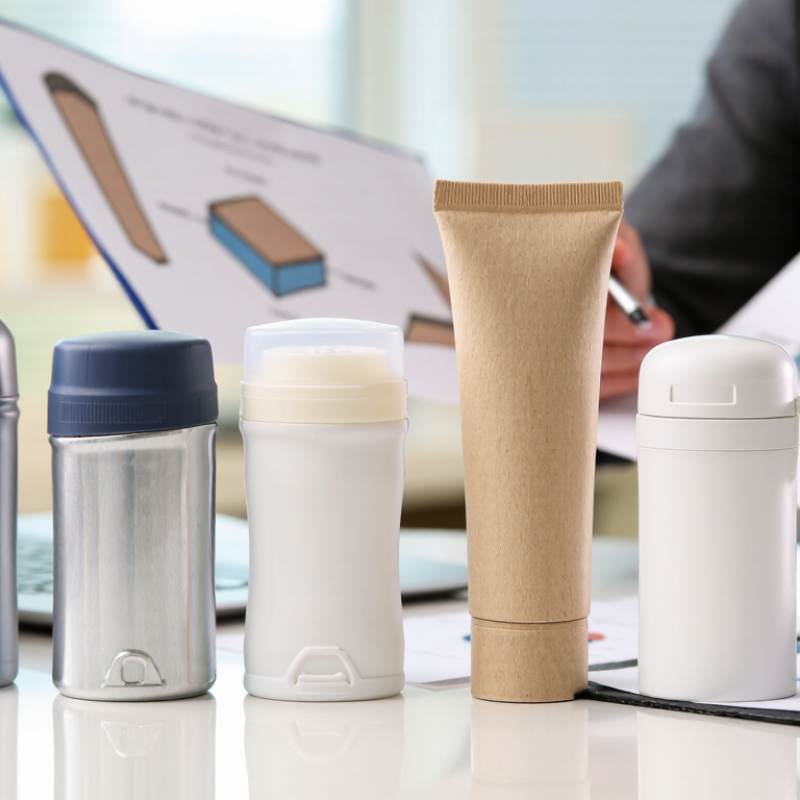
What Is the Best Deodorant Container Supplier in China?

Map Deodorant Formats: Sticks, Roll-Ons, Sprays, and 15–150 mL Sizes

What Is the Best Deodorant Container Supplier in China?

Choosing a deodorant container supplier starts with the format, not the catalog. Sticks usually need rigid walls, smooth twist mechanisms, and accurate dosage control. They suit 15–100 mL sizes and support clean, one-handed application. Roll-ons require a well-balanced bottle, a leak-resistant neck, and a ball that moves without catching. Glass feels premium, but plastic often reduces weight and breakage during shipping.

Sprays need closer engineering attention. The actuator, pump, valve, and inner tube must work together consistently. A 50–150 mL container can offer more daily applications, but it also demands stronger closure testing. Smaller 15–30 mL sprays fit travel routines and sampling programs. Small details matter. A loose cap can damage an otherwise reliable package.

In supplier evaluations, request drawings, material specifications, sample units, and production records. Check filling compatibility with alcohol-based, water-based, or gel formulas before approving tooling. Ask how the factory tests leakage, torque, drop resistance, and repeated opening. Factory experience matters here. Still, experience is not proof by itself. Some attractive samples fail after transport or prolonged storage. Test before scaling. A practical supplier should explain limitations clearly, offer measurable inspection standards, and adjust the container to the formula, filling line, and target size. I would not choose the lowest quotation without reviewing those details; the cheaper option may create more waste later.


Compare PP, HDPE, PET, and Aluminum Using Barrier and Recyclability Data

What Is the Best Deodorant Container Supplier in China?

For deodorant packaging, material choice affects freshness, strength, and recycling. PP offers good chemical resistance and low weight, but its oxygen barrier is only moderate. HDPE blocks moisture better than PP and resists impact well. However, neither plastic provides a strong light barrier without added layers. PET gives better stiffness and clarity, yet transparent packs can expose formulas to light. Aluminum provides an excellent barrier against oxygen, moisture, and light. It also feels premium, but forming energy and mixed components may increase production costs.

Barrier results depend on wall thickness, closure design, and testing conditions. A supplier should provide oxygen transmission rate and water vapor transmission data, not vague claims. In practical factory checks, I would inspect filled samples after transport, not only review laboratory sheets. Recyclability also needs a wider view. PET, HDPE, and PP can enter recycling streams, but local facilities differ. Aluminum is highly recyclable and retains material value. Pumps, springs, labels, and silicone parts can still complicate sorting. This is where many “recyclable” packages become less simple than expected.

Tips: Ask for resin identification, recycled-content options, barrier reports, and trial samples. Test the complete container. Not just the body. Compare leakage, odor retention, crushing, and label removal. A supplier with clear records, stable tooling, and honest limitations is usually more reliable than the cheapest quotation. I would also request production photos and batch inspection records. Small details matter.

Verify Suppliers Against ISO 9001, ISO 22716, and GB/T 29606 Standards

What Is the Best Deodorant Container Supplier in China?

A dependable deodorant container supplier should provide more than attractive samples. Verify an active ISO 9001 certificate for controlled purchasing, production, inspection, and corrective actions. Check whether the certificate names the actual factory, not only a trading office. Request recent audit records and production traceability documents.

ISO 22716 matters when the container contacts cosmetic formulations. It supports hygienic manufacturing, contamination control, personnel training, and documented handling procedures. Ask how the factory stores components before assembly. Inspect clean areas, sealing equipment, and batch identification. Small details matter. Check the seal.

For plastic deodorant bottles, confirm applicable GB/T 29606 requirements, including dimensions, appearance, capacity, and leakage performance. The supplier should provide test reports matching your exact material and container design. Test samples with your formula, cap, roller, or spray mechanism. Measure leakage after transport simulation and repeated opening. Do not guess.

Certificates can expire, exclude specific products, or cover another facility. That weakness is easy to miss. A supplier may also pass a visual inspection while failing torque or compatibility tests. Keep samples from each approved batch and record inspection results. Independent laboratory testing can strengthen confidence, although it adds time and cost. No audit is perfect. Review the evidence, question unclear claims, and treat missing records as a real quality signal.

What Is the Best Deodorant Container Supplier in China? — Verify Suppliers Against ISO 9001, ISO 22716, and GB/T 29606 Standards
A practical, standards-based verification matrix for comparing deodorant container suppliers without relying on company or brand claims.
Verification Area Reference Standard What the Standard Covers Evidence to Request Supplier Evaluation Checks Applicability Result
Quality management system ISO 9001:2015 Requirements for a quality management system, including process control, customer requirements, risk-based thinking, corrective action, and continual improvement. A current certificate showing the legal entity, manufacturing site, certification scope, issue date, expiry date, and certification body. Confirm the certificate directly through the certification body's public register where available. Check whether the scope covers plastic, glass, metal, or assembled deodorant packaging rather than unrelated products. Recommended Pass only after certificate and scope verification
Cosmetic packaging hygiene and production practice ISO 22716:2007 Good manufacturing practice guidelines for cosmetic products, including personnel hygiene, premises, equipment, production, quality control, complaints, documentation, and storage. GMP audit report or implementation records; hygiene procedures; cleaning and sanitation logs; batch records; training records; deviation and complaint procedures. Verify that the documented controls apply to packaging production. Review material traceability, foreign-matter control, line clearance, inspection records, and protection of finished containers during storage. Guidance Accept evidence of implementation; do not treat it as an automatic product guarantee
Plastic product requirements GB/T 29606-2013 A Chinese national recommended standard for plastic cups. It is not a universal standard for every deodorant bottle, stick case, cap, pump, or roll-on container. A written applicability assessment; relevant test reports; material, dimensional, sealing, appearance, and performance specifications for the actual container type. Confirm that the deodorant container's design and intended use fall within the standard's scope before using it as a qualification criterion. If not applicable, identify the correct product-specific Chinese, destination-market, or customer specification. Conditional Do not mark compliant without confirming product scope
Material identification and traceability Supplier specification and batch-control records Identification of resin, glass, metal, elastomer, coating, ink, adhesive, and other materials used in the container and closure system. Material declarations; supplier batch numbers; certificates of analysis where applicable; incoming inspection records; production lot records. Check whether each finished lot can be traced back to raw-material batches, production dates, operators, tooling, and inspection results. Required Pass when traceability can be demonstrated within a defined time
Container–formula compatibility Application-specific validation plan Assessment of interaction between the deodorant formula and the container, including leakage, swelling, cracking, discoloration, odor transfer, stress cracking, and component deformation. Compatibility test protocol and report using the actual formula or a justified representative formula under defined time and temperature conditions. Review samples after storage, transport simulation, temperature exposure, and repeated opening or dispensing. Confirm that results include the complete container-closure system. Required Pass only when acceptance criteria are documented and met
Dimensional and functional performance Approved product specification Critical dimensions and functions such as neck finish, closure torque, actuator fit, dispensing output, wall thickness, capacity, sealing, and appearance. Controlled drawings; tolerances; inspection plans; capability data where available; first-article approval; final inspection records. Compare measured samples with approved drawings. Confirm inspection equipment calibration and verify that cosmetic defects are classified consistently. Required Pass when samples meet approved specifications consistently
Regulatory and market documentation Destination-market requirements Legal and customer requirements that may apply to packaging materials, restricted substances, labeling, recycling, food-contact claims, or cosmetic product packaging in the target market. Material declarations; restricted-substance statements; packaging composition data; test reports requested by the importing market or buyer. Match documentation to the exact material, color, coating, decoration, closure, and production site. Do not accept generic documents for a materially different product. Required Pass when documents match the supplied configuration
Change and complaint management ISO 9001 process controls and GMP practices Control of changes to raw materials, tooling, equipment, production location, subcontractors, specifications, and packaging components. Change-control procedure; notification timeline; corrective-action reports; complaint log; root-cause and effectiveness-review records. Check whether the supplier must notify the buyer before material, tooling, process, or site changes. Review anonymized examples of closed corrective actions. Required Pass when changes are documented, assessed, and communicated
Overall supplier decision Weighted buyer scorecard A final decision based on verified quality systems, product performance, documentation accuracy, production capability, service reliability, and total commercial risk. Completed audit checklist; approved samples; test reports; corrective-action closure; signed technical specification; supply and inspection agreement. Approve only when mandatory evidence is complete. Treat missing, expired, unverifiable, or scope-mismatched documents as open risks rather than as proof of non-compliance or compliance. Required Approve, conditionally approve, or reject based on documented evidence
Important: ISO 9001 is a quality-management-system standard, while ISO 22716 provides cosmetic good-manufacturing-practice guidelines. GB/T 29606-2013 concerns plastic cups and should only be used for a deodorant container when its product scope is demonstrably applicable.

Benchmark MOQ, 15–30-Day Lead Times, Tooling Fees, and Defect Rates

What Is the Best Deodorant Container Supplier in China?

A practical supplier benchmark should compare MOQ, lead time, tooling, and defect control. For standard deodorant sticks, a reasonable starting MOQ is 10,000–30,000 units. Custom shapes may require 30,000–50,000 units. Production lead times commonly range from 15–30 days after artwork and samples are approved. Tooling fees often fall between $800 and $3,000, depending on cavity count, material, and decoration. These figures are market benchmarks, not guarantees.

Defect rates need clearer definitions. A supplier reporting “less than 1% defects” should explain the inspection method. ISO 2859-1 supports acceptance sampling, while AQL levels such as 1.5 or 2.5 can structure incoming inspections. Check for loose caps, uneven filling, cracked bases, leakage, and poor label alignment. QIMA’s State of Global Quality reports repeatedly stress supplier audits, in-process checks, and traceability as practical quality controls. Still, published reports rarely isolate deodorant containers. That gap matters.

Tips: Request 300–500 pre-production samples. Test cap fit after heat and drop exposure. Ask for a tooling drawing and written ownership terms. Require batch photos, inspection records, and a defect replacement policy. Compare landed cost, not unit price alone. A cheaper mold may create more flash, weaker threads, or inconsistent color. I have seen “15-day delivery” exclude decoration and packing. That promise looks attractive, but it needs careful questioning.

Rank China Suppliers with a Weighted 40–30–20–10 Evaluation Scorecard

Choosing the best deodorant container supplier in China requires more than comparing unit prices. A weighted 40–30–20–10 scorecard creates a clearer, evidence-based ranking. The 40% quality and safety category examines material consistency, closure performance, leakage resistance, and production controls. Request samples, inspect threads and caps, then test filled containers through transport simulation.

The 30% manufacturing capability score measures tooling accuracy, monthly capacity, automation, and defect handling. A reliable factory should explain its inspection points, from incoming resin checks to final packing. The 20% sustainability and customization score covers recyclable materials, lightweight designs, color matching, and mold flexibility. These details matter when a container must feel solid in the hand but remain economical. The final 10% evaluates communication, lead times, documentation, and after-sales support.

The model is not flawless. A polished sample can hide weak batch control, while a smaller supplier may offer stronger technical attention. My first ranking changed after reviewing production records and inspecting random units. I would score each supplier against the same evidence, not presentation quality. Factory visits, third-party testing, and a signed specification sheet improve reliability. Keep the scoring notes visible, including missed deadlines and unclear answers. A supplier with 86 points is not automatically safer than one scoring 82. The evidence behind each number deserves equal scrutiny.

Get in touch with us,
We will contact you shortly!

Get in touch with us by filling up the enquiry form. We will contact you shortly!

    What is the difference between Unline(Non-Epoxy Coated) or Lining(Epoxy Coated) Metal Drum?

    What are Unline(Non-Epoxy Coated) and Lining(Epoxy Coated) drums compatible with?

    What is the difference between Grade A and Grade B Metal Drum ?

    What content is suitable to fill in a Recon Grade A or Grade B Drum?

    What is the difference between Open Top and Close Top Drums and their usage?

    What type of content are Metal or Plastic Drums suitable for?

    Will there be any contamination in the reconditioned metal, plastic drums or IBC tanks?

    What is the drum gauge(thickness) and weight for reconditioned metal drums?

    Do you sell New Packaging Products too?

    What additional services do you provide apart from selling reconditioned and new containers.?

    Do you offer labelling and silkscreen on the containers ?

    Are you able to ship overseas ?

    Leading the Way
    to Carbon Neutrality

    Drumming sustainability into every aspect of our operations, we strive to create a greener and more conscious future for generations to come.
    Contact Us
    WhatsApp
    Email
    Join Our Newsletter

    Sign up for our newsletter for exclusive discounts and latest news of new launches!

      Logo Logo Logo Logo Logo
      Scroll to Top