
2026 Best Hard Water Descaler for Global Buyers?

Choosing the 2026 best Hard Water Descaler requires more than comparing prices or polished product claims. Global buyers face different water conditions, including calcium-rich groundwater, high magnesium levels, elevated temperatures, and changing municipal supplies. A device that performs well in a cool apartment may disappoint in a hotel boiler room. The details matter.

Professor Z. Amjad, a recognized water-treatment researcher and author on mineral scale control, has stated, “Effective scale control depends on water chemistry, operating conditions, and verified performance.” That principle guides this review. We examine electronic, magnetic, template-assisted crystallization, and salt-free conditioning technologies. We also consider flow rate, pipe material, installation demands, maintenance, energy use, warranty support, and independent testing. A Hard Water Descaler may reduce scale formation, but it normally does not remove calcium or magnesium from water. That distinction is easy to miss.

Real homes reveal the difference. A showerhead may show fewer white flakes after several weeks. A kettle may still develop a thin cloudy ring. Results can vary. Some manufacturers provide strong laboratory data, while others rely heavily on testimonials. Evidence is uneven. Our comparison therefore balances published testing with practical buying experience, regional support, and transparent limitations. No shortlist is perfect. Water hardness can change seasonally, and local plumbing conditions may affect performance. Buyers should test their water before choosing equipment, especially for commercial or whole-house use. The goal is not to promise a universal winner, but to identify dependable options for specific water problems, budgets, and operating environments.
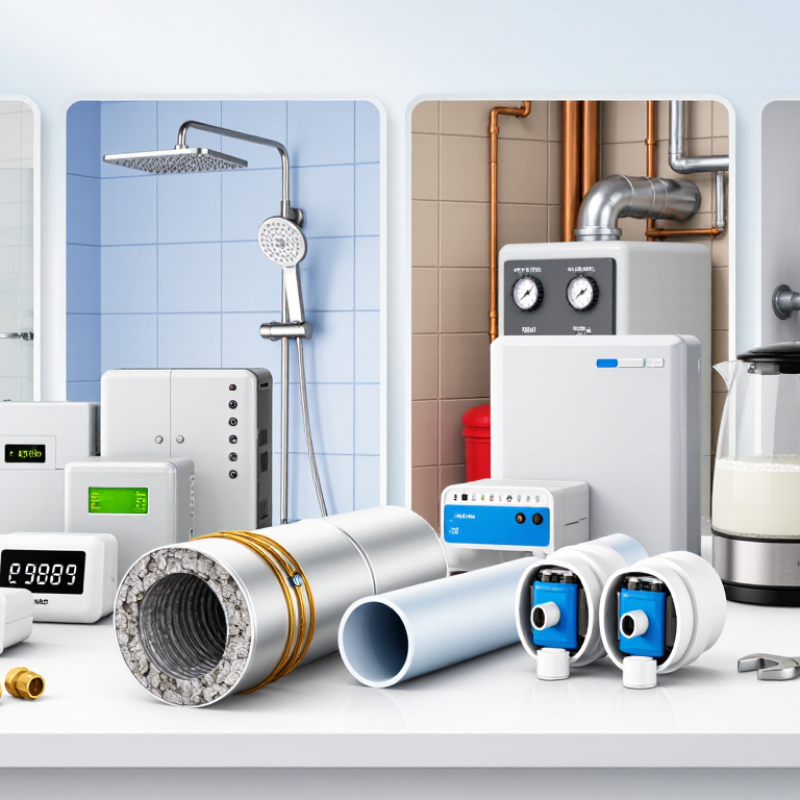
2026 Best Hard Water Descaler for Global Buyers?

Hard Water Basics: USGS Classes from 0 to Over 180 mg/L as CaCO₃

2026 Best Hard Water Descaler for Global Buyers?

Hardness is measured as milligrams per liter of calcium carbonate, or mg/L as CaCO₃. The USGS classification begins with soft water, from 0 to 60 mg/L. Water from 61 to 120 mg/L is moderately hard. Hard water ranges from 121 to 180 mg/L. Above 180 mg/L, it is very hard. These numbers matter because a compact scale ring on a kettle may signal a wider household problem.

A practical check starts with a certified laboratory report or a fresh test strip. Do not rely only on cloudy glassware.

In very hard water, showerheads, heating elements, and washing machines can collect deposits quickly.

A descaler may reduce scale formation, but it usually does not remove dissolved minerals. That distinction is often missed.

I would compare a device against your measured hardness, flow rate, and water temperature. Local plumbing materials and maintenance habits also affect results. A system that performs well at 120 mg/L may disappoint above 180 mg/L. Results can vary.

I once assumed visible scale meant one treatment would solve everything, but the deposit returned after several weeks. That experience made me check inlet water, cleaning frequency, and installation conditions separately.

Independent test data is useful, yet household monitoring remains necessary. Keep a simple record of scale, water pressure, and filter condition.


Scale Risk by Water Use: Hardness, Temperature, Flow, and Mineral Load

2026 Best Hard Water Descaler for Global Buyers?

Choosing the best hard water descaler requires more than reading a hardness number. Scale risk changes with water use, temperature, flow, and mineral load. A kitchen tap may have moderate hardness but little scaling. A hot-water system can develop deposits quickly.

Hardness measures calcium and magnesium, usually as calcium carbonate. Temperature matters because heated water releases dissolved carbon dioxide and encourages precipitation. Showers, boilers, and heat exchangers face greater risk than cold storage tanks. Flow also matters. High flow can reduce treatment contact time, while low flow may create stagnant zones and uneven protection.

A descaler may alter crystal formation, but it does not reliably remove dissolved minerals. This distinction is often missed. Buyers should request local water data, including hardness, alkalinity, pH, iron, manganese, silica, and total dissolved solids. A laboratory report is more useful than a seller’s general chart. I once focused only on hardness and underestimated scaling caused by high alkalinity. That was a costly lesson.

Match the unit’s rated flow with real peak demand, not average consumption. Check operating temperature, pipe size, pressure limits, maintenance needs, and independent test evidence. Global buyers should also confirm local electrical requirements and replacement support. A compact device may suit an apartment, while a high-flow system needs stronger capacity and monitoring. Performance can vary between regions, even when two water reports show similar hardness.

Descaler Technology Guide: TAC, Electromagnetic, Template, and RO Systems

For global buyers, the best hard water descaler depends on water chemistry, flow, and maintenance capacity. A laboratory hardness result is more useful than a sales chart. Test calcium, magnesium, iron, pH, and total dissolved solids before choosing equipment.

TAC systems convert dissolved minerals into tiny crystals that resist scale on heating elements and pipes. They do not remove hardness from drinking water. Template-assisted crystallization uses a prepared surface to guide this process. It can work well in stable conditions, but performance may change with high iron, chlorine, or unusual flow rates. Keep expectations realistic.

Electromagnetic descalers are compact and simple to install. However, independent results remain inconsistent, especially across different pipe materials and water qualities. RO systems are more predictable when the goal is mineral removal. They can reduce hardness, salts, and many dissolved contaminants, but they require filter changes, pressure, and wastewater management. They may also remove useful minerals.

A practical choice is not always the most powerful one. For scale protection only, TAC may suit a household with moderate hardness. For low-mineral drinking water, RO is more appropriate. Verify local water data and replacement availability. Installation mistakes happen. The wrong flow rate or neglected prefilter can quietly reduce performance. Some recommendations still rely too heavily on theory, so real household monitoring remains necessary.

2026 Best Hard Water Descaler for Global Buyers? — Descaler Technology Guide: TAC, Electromagnetic, Template, and RO Systems
Technology Primary Function Does It Remove Calcium and Magnesium? Typical Effect on Scale Hardness Reduction Salt or Chemical Use Electricity Use Maintenance Profile Water Quality After Treatment Best-Fit Applications Main Limitations Overall Suitability for Global Buyers
Template-Assisted Crystallization (TAC) Encourages dissolved calcium carbonate to form stable microscopic crystals that remain suspended instead of adhering strongly to surfaces. No
Minerals remain in the water.
Often reduces the formation of hard, bonded calcium-carbonate scale when correctly sized and operated within the treatment range. None
Total hardness and TDS remain essentially unchanged.
No salt
No routine chemical regeneration.
Usually none
Most units operate passively.
Replace the catalytic media according to the media specification, commonly after several years; inspect the housing and upstream filtration. Drinking-water minerals are retained, although the technology does not disinfect water or remove dissolved contaminants. Whole-house point-of-entry protection, apartments, rental properties, and locations where salt discharge is restricted. Performance depends on water chemistry, flow rate, temperature, pH, and correct sizing. It does not soften water for processes that require low hardness. ★★★★★
Strong low-maintenance option for scale control without changing mineral content.
Electromagnetic or Electronic Descaler Applies a changing electromagnetic or electronic field intended to influence crystal formation and reduce adhesion on plumbing surfaces. No
Calcium, magnesium, and TDS remain in the water.
Results can range from useful scale reduction to little measurable effect; outcomes are highly dependent on water chemistry and system design. None
Hardness test results normally remain unchanged.
No salt
No chemical regeneration.
Low
Requires a small electrical supply; consumption varies by design.
Check cable installation, controller operation, and electrical safety. There is generally no resin or cartridge to regenerate. Mineral content and taste are generally unchanged; the device does not remove metals, microbes, or dissolved chemicals. Small residential systems, retrofit projects, and applications where simple installation is more important than guaranteed hardness removal. Evidence and field performance are less consistent than for conventional softening or membrane treatment. Correct installation around the pipe is important. ★★★☆☆
Attractive for low installation effort, but buyers should request independent performance data.
Ion-Exchange Water Softener Exchanges calcium and magnesium ions for sodium or, in some systems, potassium ions using a regenerated resin bed. Yes
Effectively reduces hardness in treated water.
Strongly prevents hardness scale when properly regenerated and maintained. High
Can reduce hardness substantially, depending on resin capacity, regeneration settings, and incoming water quality.
Uses salt or potassium chloride
Requires periodic regeneration and produces a brine discharge.
Low to moderate
Controls, valves, and metered regeneration require electricity in many systems.
Refill salt, maintain the brine tank, check resin performance, and service valves. Pre-filtration may be needed for iron, sediment, or chlorine. Reduces hardness but increases sodium or potassium concentration and does not remove most non-hardness contaminants. Homes, hotels, laundries, and process-water systems where genuine hardness reduction is required. Requires floor space, drainage, salt handling, and regular servicing. Salt discharge may be restricted in some regions. ★★★★☆
Reliable for hardness removal, but less suitable where salt-free operation or low wastewater production is required.
Reverse Osmosis (RO) Uses pressure to force water through a semipermeable membrane that rejects many dissolved salts, hardness ions, metals, and other contaminants. Yes
Removes a high proportion of calcium and magnesium from the treated stream.
Excellent scale control in the permeate stream; untreated concentrate can still be hard and mineral-rich. Very high
Typical dissolved-solids rejection is often about 90–99% for a properly operated membrane, but actual results vary by feed water and equipment.
No salt
May require antiscalant or pre-treatment for difficult feed water.
Moderate
Requires a pressurizing pump in many systems.
Replace sediment and carbon prefilters, monitor membrane performance, sanitize storage tanks, and manage concentrate discharge. Produces low-mineral water; remineralization may be desirable for drinking water taste and corrosion control. Point-of-use drinking water, laboratories, food and beverage production, medical applications, and other low-TDS requirements. Usually treats only selected outlets unless a larger system is installed. Produces a concentrate stream and needs adequate pressure and pre-treatment. ★★★★★
Best when low hardness and low dissolved solids are essential, not merely for whole-house scale prevention.
Polyphosphate Scale Inhibitor Uses a controlled chemical dose to reduce the ability of hardness minerals to form adherent scale. No
Hardness remains dissolved in the water.
Can reduce scale formation in suitable applications, especially water heaters and selected point-of-entry installations. None
Does not lower hardness or TDS.
Uses treatment media
Media must be replenished as it dissolves.
None
Passive systems generally require no power.
Replace the dosing cartridge or crystals, inspect the housing, and follow local drinking-water-use requirements. Minerals remain in the water; suitability depends on approved materials, dosage, temperature, and local regulations. Specific equipment protection, water heaters, and compact point-of-use systems where a passive approach is preferred. Not appropriate for every drinking-water application or high-temperature process. It does not remove contaminants or reduce hardness. ★★★☆☆
Useful for targeted scale control when regulatory and application requirements are clearly satisfied.
Conventional Lime Softening Adds lime, and sometimes soda ash, to precipitate calcium and magnesium from water before clarification and filtration. Yes
Can substantially reduce hardness when carefully controlled.
Strong hardness and scale control after adequate clarification and filtration. High
Performance depends on chemical dosing, pH control, mixing, and treatment design.
Uses chemicals
Generates sludge that requires handling and disposal.
Moderate to high
Large systems require mixers, pumps, controls, and clarification equipment.
Requires trained operators, chemical storage, pH monitoring, sludge management, and regular process control. Can alter alkalinity and mineral balance; additional filtration or disinfection may be required. Municipal water treatment and large industrial installations rather than typical residential use. Complex, space-intensive, and unsuitable for most small properties without professional infrastructure. ★★★☆☆
Technically effective at large scale, but rarely practical for residential or small commercial buyers.
Buyer note: A descaler that leaves calcium and magnesium in the water is not a true water softener. Before selecting a system, test hardness, alkalinity, pH, iron, manganese, TDS, chlorine, temperature, and flow rate. Verify local drinking-water regulations, pressure requirements, wastewater rules, replacement-media availability, and independent performance testing.

2026 Performance Tests: 90-Day Scale Data, Flow Loss, Salt, and Energy

A credible 2026 hard water descaler test should measure more than visible deposits. The 90-day protocol should use the same water source, temperature, flow rate, and fixture. Record hardness in milligrams per liter as calcium carbonate. The USGS classifies water above 180 mg/L as very hard, although local conditions vary widely. Collect scale from a glass plate and an electric heating element every 30 days. Weigh the dried residue. Photograph the surface under identical lighting. Small details matter.

Flow loss needs equal attention. Measure litres per minute before installation, after 30 days, and after 90 days. A two-minute shower test can reveal gradual restriction. The Water Quality Association notes that hardness control depends on water chemistry, not one universal device setting. Salt use must be recorded separately. A salt-free descaler may add zero salt, while ion-exchange equipment requires measured regeneration cycles. That difference affects operating cost and maintenance. Energy data also needs caution. The U.S. Department of Energy identifies water heating as a major household energy demand, but scale-related savings depend on heater design, temperature, and usage. Record electricity or gas consumption with a calibrated meter. One test is not enough. Results may be imperfect. Yet transparent 90-day data, including failed measurements and untreated controls, gives global buyers a more reliable comparison than dramatic claims.

Global Buyer Checklist: NSF/ANSI 61, CE, RoHS, Warranty, and Total Cost

A reliable hard water descaler starts with measured water quality, not advertising claims. The U.S. Geological Survey classifies water above 180 mg/L as calcium carbonate as very hard. Ask for a recent laboratory test before selecting equipment. A descaler may reduce scale formation, but it usually does not remove calcium like a conventional softener. This distinction matters.

For global buyers, request evidence behind every compliance statement. NSF/ANSI/CAN 61 focuses on materials that contact drinking water, not automatic descaling performance. CE marking indicates conformity with applicable European requirements, while RoHS addresses restricted substances in electrical equipment. These marks help, but they are not identical. Check test scope, certificate numbers, issuing laboratories, voltage compatibility, and installation instructions. The WHO Guidelines for Drinking-water Quality report that hardness has no health-based guideline value, yet hard water can still damage heaters and leave deposits. Warranty length also needs context. A three-year warranty may exclude sensors, labor, shipping, or scale-related claims.

Tips: Calculate total cost before purchase. Include equipment, adapters, installation, electricity, replacement parts, maintenance, and disposal. Compare costs over five years, not only the invoice price. Keep water-test results and installation photos. Ask about service access in your country. One practical weakness remains: household flow rate, pipe condition, and water chemistry can change results. A device tested in one region may perform differently elsewhere. That uncertainty deserves a written answer.

Get in touch with us,
We will contact you shortly!

Get in touch with us by filling up the enquiry form. We will contact you shortly!

    What is the difference between Unline(Non-Epoxy Coated) or Lining(Epoxy Coated) Metal Drum?

    What are Unline(Non-Epoxy Coated) and Lining(Epoxy Coated) drums compatible with?

    What is the difference between Grade A and Grade B Metal Drum ?

    What content is suitable to fill in a Recon Grade A or Grade B Drum?

    What is the difference between Open Top and Close Top Drums and their usage?

    What type of content are Metal or Plastic Drums suitable for?

    Will there be any contamination in the reconditioned metal, plastic drums or IBC tanks?

    What is the drum gauge(thickness) and weight for reconditioned metal drums?

    Do you sell New Packaging Products too?

    What additional services do you provide apart from selling reconditioned and new containers.?

    Do you offer labelling and silkscreen on the containers ?

    Are you able to ship overseas ?

    Leading the Way
    to Carbon Neutrality

    Drumming sustainability into every aspect of our operations, we strive to create a greener and more conscious future for generations to come.
    Contact Us
    WhatsApp
    Email
    Join Our Newsletter

    Sign up for our newsletter for exclusive discounts and latest news of new launches!

      Logo Logo Logo Logo Logo
      Scroll to Top