
What Is the Best Thermal Paper from China?
Choosing the best thermal paper from China requires more than comparing prices. The right Paper Thermal product must perform reliably in real operating conditions. A receipt roll should print dark, scan clearly, and resist fading during storage. It should also run smoothly through printers without dust, curling, or frequent jams.
According to thermal-paper consultant Dr. Elena Morris, “The best thermal paper is not the cheapest roll; it is the roll that remains readable after real handling.” This practical view matters for retailers, logistics companies, hospitals, and payment providers. A professional evaluation should examine coating sensitivity, basis weight, smoothness, and image density. It should also check roll width, core size, winding quality, and packaging protection. Small differences can create large problems. Sometimes, specifications look perfect on paper.
Chinese manufacturers offer many grades, including standard receipt paper, durable thermal paper, POS rolls, label stock, and BPA-free options. Buyers should request samples before placing large orders. Test them in the actual printer. Store printed receipts in heat, light, and humid conditions. Compare fading after several weeks, not only after one minute. Supplier experience, production consistency, factory quality control, and export documentation also deserve attention. Certifications can support trust, but they do not replace practical testing.
A strong supplier should explain its coating technology and recommend a suitable grade for each application. It should provide clear batch information and respond professionally when defects appear. No supplier is perfect. That is why verification remains essential. The best Paper Thermal choice balances print performance, safety considerations, stable supply, and total operating cost.
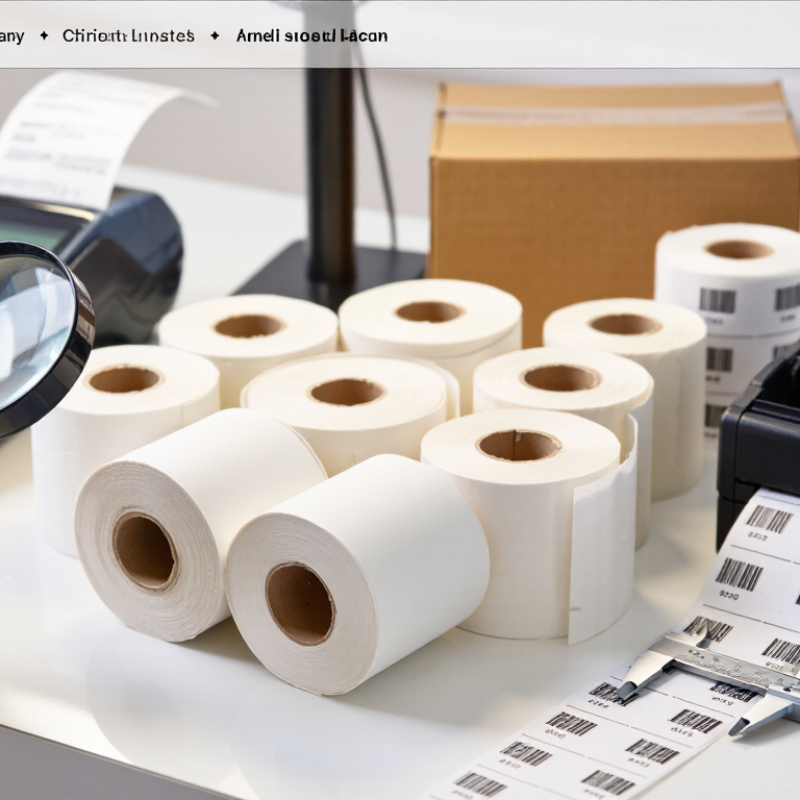
What Makes Thermal Paper High Quality?
What Is the Best Thermal Paper from China?
High-quality thermal paper begins with a stable coating, not a bright white surface. The paper should produce dark, sharp images at low printer energy. Its background must remain clean after printing. A 2024 Smithers market report estimates that global thermal paper demand will continue growing through 2028, driven by receipts, labels, and logistics documents. That growth makes quality control more important, especially for high-volume printing.
A practical inspection checks basis weight, thickness, coating uniformity, curl, and roll winding. Print a small barcode and examine its edges under magnification. Uneven coating often creates pale lines or broken bars. The International Organization for Standardization highlights controlled image stability and storage conditions in its imaging-material guidance, including ISO 189 standards. Temperature and humidity matter. A printed receipt left beside a hot window may fade quickly, even when the original paper was acceptable.
Chemical safety also matters. European regulatory restrictions on certain developers have pushed manufacturers toward alternative formulations. However, “phenol-free” claims still need test reports and traceable documentation. I would not trust a certificate without a batch number. Nor would I judge quality from one perfect sample. Tests should include several rolls, different printers, and storage at elevated temperature. Small defects matter. A roll that feeds smoothly today may curl tomorrow.

Key Types of Thermal Paper Made in China
What Is the Best Thermal Paper from China?
Key Types of Thermal Paper Made in China
China produces several practical thermal paper types for retail, logistics, healthcare, and ticketing. Standard receipt paper suits point-of-sale printers and short-term records. Top-coated thermal paper adds protection against moisture, oil, friction, and sunlight. It works better for shipping labels and warehouse handling. Synthetic thermal media offers stronger tear and water resistance, although it costs more.
Label stock is another major category. It may use permanent or removable adhesive, depending on the application. Direct thermal labels are common for parcel tracking because they need no ink ribbon. Medical thermal paper supports ECG and monitoring equipment, where image clarity and machine compatibility matter. Test the paper with the exact printer. Small differences in core size can cause feeding problems.
Market data supports this broad demand. Grand View Research valued the global thermal paper market at about USD 4.36 billion in 2023 and expects continued growth through 2030. Smithers’ thermal printing analysis also highlights retail, transport, and logistics as important application areas. These reports describe global markets, not every Chinese factory. That distinction matters.
I usually check basis weight, coating sensitivity, roll diameter, and image durability before comparing prices. A bright image is not enough. Some low-cost rolls print well initially but fade under heat or sunlight. The better choice depends on storage conditions, printer settings, and record-retention needs. More testing is still needed for long-term chemical stability.
What Is the Best Thermal Paper from China?
Key thermal paper types made in China differ mainly in coating performance, durability, and typical basis weight. The chart below shows representative basis-weight levels commonly used for major thermal paper categories.
How to read the chart: Standard thermal paper is widely used for receipts and basic tickets. Top-coated paper offers better protection against moisture, oil, and handling. Synthetic thermal paper is selected for demanding labels and tags, while linerless thermal paper is designed for adhesive labels without a separate release liner.
How to Compare Chinese Thermal Paper Suppliers
Choosing the best thermal paper from China requires more than comparing prices. Compare suppliers through measurable evidence.
Grand View Research valued the global thermal paper market at about USD 4.5 billion in 2023. Its forecast also indicates continued growth through 2030. This demand increases pressure on suppliers to control coating quality. Ask for GSM, roll width tolerance, core size, and image-density test results. A reliable supplier should provide recent test reports, production photos, and batch traceability. Do not rely on a polished catalog alone.
Material safety also needs careful checking. The European Chemicals Agency restricts BPA in thermal paper above 0.02% by weight. Ask whether the supplier uses phenol-free or alternative developer systems. Request independent laboratory testing, not only internal declarations.
Compare aging performance at high temperature and humidity. A practical trial can expose weak coating, faded printing, or dusty edges. Smithers’ thermal paper market research identifies retail, logistics, and ticketing as important demand sectors. Therefore, suppliers should explain how their grades perform across different printers and storage conditions.
My purchasing experience suggests that the cheapest quotation often hides higher waste. However, a higher price does not automatically prove better quality. I once focused too heavily on whiteness and underestimated roll hardness. That was a useful mistake. Compare total usable length, defect rates, delivery consistency, communication speed, and after-sales handling. A small pilot order remains essential. Ask difficult questions early. You may still miss something.
Which Features Matter for Different Applications?
What Is the Best Thermal Paper from China?
The best thermal paper depends on the application, not only the lowest price. Point-of-sale receipts need fast imaging, clean edges, and reliable machine feeding. A slightly heavier paper can resist tearing during busy transactions. For shipping labels, strong adhesive, barcode contrast, and moisture resistance matter more. A beautiful black image is useless if scanners cannot read it.
Medical records and tickets require stable printing over time. Choose paper with consistent thermal sensitivity and suitable fading resistance. For direct contact applications, ask for phenol-free options and review the supplier’s test documents. Roll width, core size, winding direction, and curl also affect equipment performance. In practical testing, humidity often reveals weaknesses that indoor samples hide. I have found that a paper can look excellent on day one, then fade faster than expected near a window.
Tips: Request samples from several production batches. Test them in your actual printers, scanners, cutters, and storage conditions. Check image density, dust, curling, adhesive strength, and jam rates. Do not trust a single laboratory result. A short trial may still miss seasonal problems. That is worth remembering.
What Is the Best Thermal Paper from China? – Which Features Matter for Different Applications?
The best thermal paper depends on the printer, storage conditions, required image life, and application. The comparison below focuses on commonly used paper types and practical selection criteria rather than on any specific company or brand.
| Thermal Paper Type | Typical Applications | Key Features | Recommended Image Life | Resistance Requirements | Print Quality | Typical Thickness | Main Selection Priority |
|---|---|---|---|---|---|---|---|
| Standard Direct Thermal Paper | Retail receipts, queue tickets, payment receipts, and short-term transaction records | Heat-sensitive coating, clear black image, economical material, and high-speed printing compatibility | Approximately 6–24 months under normal indoor storage conditions | Basic protection from light, heat, moisture, plasticizers, and oil | Good | Approximately 48–80 microns | Cost efficiency and reliable short-term readability |
| Premium Direct Thermal Paper | Retail receipts, logistics labels, pharmacy labels, and records requiring improved readability | More uniform coating, darker image density, smoother surface, and better resistance than standard grades | Approximately 2–5 years under controlled indoor storage | Improved resistance to light, humidity, heat, and handling | Very good | Approximately 55–85 microns | Balanced print quality, durability, and operating cost |
| Top-Coated Direct Thermal Paper | Shipping labels, product labels, warehouse identification, and applications with frequent handling | Protective top coating, smoother surface, reduced abrasion damage, and better coating stability | Approximately 1–3 years, depending on exposure and label use | Better resistance to abrasion, moisture, oil, and moderate chemical contact | Very good | Approximately 65–100 microns | Surface protection and dependable barcode scanning |
| Long-Life Direct Thermal Paper | Healthcare records, laboratory labels, asset tracking, and documents requiring extended retention | Enhanced thermal formulation, controlled background color, and improved resistance to image fading | Approximately 5–10 years when stored in suitable conditions | High resistance to light, heat, humidity, and selected chemicals; exact performance requires testing | Very good | Approximately 60–90 microns | Document retention and long-term legibility |
| Synthetic Direct Thermal Media | Outdoor labels, cold-chain logistics, reusable tags, and demanding industrial environments | Polymer-based construction, tear resistance, water resistance, and strong dimensional stability | Approximately 1–5 years, depending on exposure and coating system | High resistance to water, tearing, abrasion, oils, and temperature changes | Good to very good | Approximately 75–150 microns | Physical durability and environmental resistance |
| Linerless Thermal Label Stock | Food labeling, delivery labels, retail weighing, and applications seeking reduced label waste | No disposable release liner, flexible label length, efficient roll usage, and adhesive-backed construction | Approximately 6–24 months for standard grades | Depends on the adhesive and top coating; moisture and temperature performance should be verified | Good | Approximately 60–100 microns | Waste reduction, roll efficiency, and adhesive performance |
| Two-Sided Thermal Ticket Stock | Parking tickets, event tickets, transit tickets, and controlled-access documents | Thermal coating on one or both sides, precise sheet or roll sizing, and optional security features | Approximately 1–5 years, depending on coating and storage | Resistance to abrasion, moisture, light, and repeated handling | Good to very good | Approximately 80–140 microns | Ticket integrity, readability, and anti-tampering needs |
| Color-Indicator Thermal Paper | Temperature monitoring, sterilization indicators, promotional printing, and visual alerts | Heat-triggered color response or image change designed for a specific temperature range | Application-specific; testing is required for reliable interpretation | Must be evaluated for temperature, humidity, light, and chemical exposure | Application-specific | Approximately 60–120 microns | Accurate activation temperature and stable visual response |
Note: Image-life figures are general industry ranges, not guarantees. Actual performance depends on coating formulation, printer settings, storage temperature, humidity, ultraviolet exposure, contact with plasticizers or chemicals, and the final application. Always request samples and conduct application-specific testing before large-volume purchasing.
How to Choose the Best Thermal Paper for Your Needs
What Is the Best Thermal Paper from China?
Choosing the best thermal paper starts with your actual printing conditions, not the lowest quotation. For receipts, labels, tickets, or shipping documents, check the required roll width, length, core size, and winding direction. A small measurement error can stop a machine completely. Ask for samples from the same production specification, then test them in your own printers.
Look closely at print darkness, image sharpness, and fading after several weeks. Rub printed areas with a dry finger. Store samples in warm, humid conditions, because thermal coating may react differently there. Paper should feed smoothly without dust, curling, or adhesive residue. For food-related or sensitive applications, request current material declarations and safety test reports. Confirm whether the paper meets the rules in your sales market, since requirements can differ.
Supplier reliability matters as much as paper quality. Review coating consistency, quality-control records, packaging details, and batch traceability. A responsible manufacturer should explain the base paper, coating structure, and recommended storage temperature. Do not trust impressive claims without evidence.
In one trial, a cheaper roll printed clearly at first but faded too quickly for daily records. That mistake cost more than the original saving.
I still think price matters, but it should follow performance, compliance, and dependable supply. Test more than one batch. Variations happen.
Article Source:
Get in touch with us,
We will contact you shortly!
What is the difference between Unline(Non-Epoxy Coated) or Lining(Epoxy Coated) Metal Drum?

Unline drums with internally bare metal surface is more susceptible to corrosion and rust while Lining drums are internally coated with Phenolic Epoxy Coating to provide a non-reactive barrier between the drum surface and your product, less risk of contamination. Note: Our Unline drums are coated with an anti-rust agent after washing to reduce risk of rust.
What are Unline(Non-Epoxy Coated) and Lining(Epoxy Coated) drums compatible with?

In Singapore, Recon Unline Drums are usually more costly than Recon Lining Drums. Hence, we recommend Recon Unline Drums to fill aromatics like Thinner, Xylene, Toulene& other solvents like Hexane, BA, CA, EA, MC, White spirit, etc.
We recommend the lower-priced Recon Lining Drums to fill hydrocarbons like IPA, Methanol, Ethanoland oil-based products like diesel, petrol, lubricants, engine, hydraulic, base, transmission fluid, additives, waste oil, etc.;
What is the difference between Grade A and Grade B Metal Drum ?

Grading of used drums are usually based on physical conditions like rustiness, deformities and residual contents. Grade A drums are totally free from internal rust, serious dents and are easy to clean. Grade B drums have different degrees of rust internally and aesthetically inferior compared to Grade A drums.
What content is suitable to fill in a Recon Grade A or Grade B Drum?

Recon Grade A drum is suitable to fill more costly virgin grade products while Recon Grade B drum is more suitable for recycled or waste products.
What is the difference between Open Top and Close Top Drums and their usage?

Closed top drums are for water and other liquid products. Open Top drums can be used for liquid too but are primarily for more viscous products. The Open Top (or open head with a lid) allows you to get in and out of the drum with your product easier.
What type of content are Metal or Plastic Drums suitable for?

Metal drums offer additional protection when dealing with potentially flammable substances. They provide superior fire resistance, impact protection, and longevity for storing class 1, 2, and 3 volatile chemicals.
Plastic HDPE Drums are suitable for corrosive chemicals like acids, alkaline and also water-based products.
Will there be any contamination in the reconditioned metal, plastic drums or IBC tanks?

All our reconditioned containers (metal/plastic drums, carboys, IBC tanks) are washed thoroughly with specially formulated cleaning agent, rinsed with clean water, dried, and tested for possible leakages during the recondition process. Stringent quality inspection is being conducted 100% on every reconditioned product before they are qualified for sale & delivery.
What is the drum gauge(thickness) and weight for reconditioned metal drums?

Reconditioned metal drums gauge can be 0.9mm to 1.0mm all round. Their weight can vary from 16 to 18kg.
Do you sell New Packaging Products too?

Yes, we are also a distributor for new pallets, metal drums, plastic drums, carboys, IBCs and stainless-steel tanks.
What additional services do you provide apart from selling reconditioned and new containers.?

We are an NEA licensed toxic industrial waste collector, who can collect and dispose of used toxic waste containers in Singapore.
Do you offer labelling and silkscreen on the containers ?

We can provide labelling and silk-screening on the containers.
Are you able to ship overseas ?

Yes, we can arrange export our products to any country in the world.
Leading the Way
to Carbon Neutrality