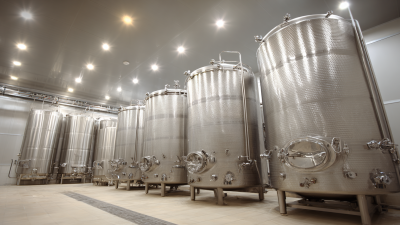
10 Best Stainless Steel Tanks for Global Buyers?
Choosing a stainless tank for international use is not simply a matter of comparing prices. Buyers must examine capacity, steel grade, weld quality, surface finish, insulation, fittings, and cleaning access. A polished tank may look impressive, yet poor internal drainage can create hygiene problems and costly maintenance. Small details matter.
“Tank reliability begins with material discipline and honest fabrication,” says stainless-steel equipment specialist Dr. Michael R. Latham. His point is practical. A tank should match the product, process, climate, and installation site. Food, beverage, pharmaceutical, chemical, and water applications each demand different design decisions. Grade 304 may suit many general uses, while grade 316L often provides stronger resistance in salty or aggressive environments. That choice should follow professional testing, not casual advice.
This guide reviews ten stainless tank options for global buyers. Each selection is considered through practical criteria, including working volume, pressure rating, corrosion resistance, weld consistency, sanitary design, documentation, delivery support, and after-sales service. We also consider regional realities, such as long shipping distances, temperature changes, replacement-part access, and local installation skills.
No ranking is perfect.
A low-cost tank can become expensive when seals fail, drawings are incomplete, or support disappears after delivery. Conversely, an advanced design may exceed the needs of a small facility. Buyers should verify certificates, inspection records, material traceability, and applicable local requirements before ordering. The strongest choice is not always the largest or most polished. It is the stainless tank that remains safe, cleanable, serviceable, and suitable for its actual working conditions.
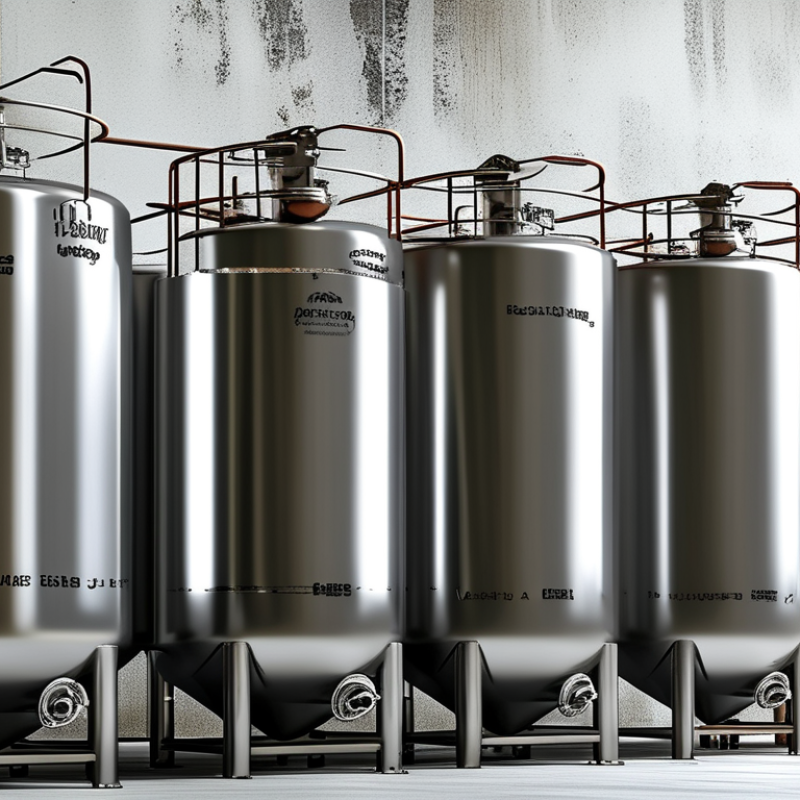
Stainless Steel Tank Types and Their Main Industrial Applications
10 Best Stainless Steel Tanks for Global Buyers?
Stainless steel tanks differ by duty, pressure, temperature, and cleaning method. The best choice depends on the process, not appearance. Vertical storage tanks suit water, edible oils, chemicals, and liquid raw materials. Horizontal tanks work well where ceiling height is limited. Cone-bottom tanks improve drainage and reduce product residue.
Mixing tanks include impellers, baffles, and optional heating or cooling jackets. Food processors use them for sauces, dairy ingredients, and beverages. Pharmaceutical plants often require 316L steel, polished interiors, and documented sanitary welds. Fermentation tanks support controlled temperature and gas release in biotechnology and beverage production. Pressure tanks need certified design calculations, relief devices, and inspection records. Small IBC-style tanks help laboratories and mobile production lines.
Choose carefully. A tank may look suitable but fail under repeated thermal cycling. I have seen purchasing teams focus on volume while overlooking outlet height, cleaning access, and foundation loads. These details create expensive installation changes. Confirm material certificates, weld procedures, surface finish, gasket compatibility, and local pressure requirements before ordering. For corrosive media, 316L may perform better than 304, but concentration and temperature still matter. Insulation reduces heat loss, while load cells improve batching accuracy. Some specifications remain uncertain until the process is tested with real viscosity and solids content. Global buyers should request drawings, inspection plans, maintenance guidance, and spare-part information in clear technical language.
| No. | Stainless Steel Tank Type | Typical Capacity Range | Common Material Grades | Typical Design Conditions | Main Industrial Applications | Key Advantages | Important Selection Factors |
|---|---|---|---|---|---|---|---|
| 1 | Sanitary Storage Tank | 100–100,000 L | 304L 316L | Usually atmospheric or low-pressure service; commonly fitted with spray-ball cleaning systems. | Food and beverage storage, dairy products, liquid ingredients, cosmetics, pharmaceutical intermediates. | Hygienic construction, smooth internal surfaces, easy cleaning, good corrosion resistance. | Product compatibility, internal finish, drainability, clean-in-place requirements, insulation needs. |
| 2 | Jacketed Process Tank | 200–50,000 L | 304L 316L | Atmospheric to moderate pressure; jacket may use hot water, steam, thermal oil, or chilled water. | Food processing, sauces, syrups, chemicals, personal-care products, heat-sensitive formulations. | Controlled heating and cooling, improved process consistency, optional insulation and agitation. | Heat-transfer area, jacket type, thermal-fluid pressure, agitator configuration, temperature range. |
| 3 | Agitated Mixing Tank | 100–30,000 L | 304L 316L | Atmospheric or vacuum-capable designs; fitted with top-entry or bottom-entry mixers. | Blending liquids, suspensions, detergents, paints, coatings, pharmaceutical and chemical formulations. | Uniform product composition, adjustable mixing intensity, compatibility with heating or cooling jackets. | Viscosity, solids content, shear sensitivity, mixer power, baffles, seal and impeller design. |
| 4 | Fermentation Tank | 500–100,000 L | 316L 304L | Typically controlled temperature and pressure; equipped with sanitary valves, sampling ports, and aeration systems. | Brewing, dairy cultures, industrial biotechnology, enzymes, organic acids, and microbial processes. | Precise temperature control, hygienic design, aeration capability, clean-in-place and sterilize-in-place options. | Oxygen transfer, agitation, sterile air supply, contamination control, pressure rating, instrumentation. |
| 5 | Pressure-Rated Process Vessel | 50–30,000 L | 304L 316L | Designed for positive pressure or vacuum service; requires engineered shell, heads, relief devices, and inspection. | Gas-liquid processing, chemical reactions, pharmaceutical production, compressed process fluids. | Supports controlled pressure operations, closed processing, and reduced exposure to contamination. | Design pressure and temperature, cyclic loading, relief protection, code compliance, weld inspection. |
| 6 | Vertical Bulk Storage Tank | 1,000–1,000,000 L | 304 316L | Most commonly atmospheric service; may include fixed or floating roofs, vents, ladders, and level instruments. | Water treatment, edible oils, chemicals, food ingredients, pharmaceutical liquids, and industrial utilities. | Efficient use of floor space, large storage capacity, long service life, and low maintenance requirements. | Foundation and wind loads, liquid density, seismic requirements, roof design, corrosion allowance, access. |
| 7 | Horizontal Storage Tank | 500–100,000 L | 304 316L | Usually atmospheric or low-pressure service; installed on saddles or structural supports. | Fuel and lubricant storage, water treatment, chemical feed systems, mobile or space-restricted installations. | Convenient installation at low building heights, good accessibility, and suitability for modular systems. | Support loads, liquid level, access clearance, shell deflection, transport limitations, venting. |
| 8 | Conical-Hopper Tank | 100–50,000 L | 304 316L | Atmospheric or low-pressure service; steep cone angles assist gravity discharge of solids and powders. | Powder handling, granules, starches, food ingredients, minerals, plastics, and chemical solids. | Improved product discharge, reduced material retention, easier batch changeover, and compact footprint. | Powder flowability, cone angle, bridging risk, outlet size, dust control, load cells, wear protection. |
| 9 | Vacuum Process Tank | 100–20,000 L | 304L 316L | Designed for vacuum or partial-vacuum operation; requires stiffening rings or reinforced geometry where necessary. | Evaporation, vacuum drying, deaeration, emulsification, solvent recovery, and low-temperature processing. | Lower boiling temperatures, reduced oxidation, improved deaeration, and controlled evaporation. | Full-vacuum rating, implosion protection, condenser sizing, seal performance, heating and cooling control. |
| 10 | Cryogenic Stainless Steel Tank | 100–100,000 L | 304L 316L | Double-wall, vacuum-insulated construction for very low-temperature liquids such as nitrogen, oxygen, or argon. | Industrial gases, medical gas supply, laboratories, food freezing, metal processing, and electronics manufacturing. | Low heat leakage, strong low-temperature performance, clean storage, and extended holding time. | Cryogenic design code, vacuum integrity, insulation system, pressure relief, oxygen compatibility, site safety. |
Essential Selection Criteria for Global Stainless Steel Tank Buyers
10 Best Stainless Steel Tanks for Global Buyers?
Essential Selection Criteria for Global Stainless Steel Tank Buyers
Global buyers need more than a large catalogue. A stainless steel tank must match the process, site, and local compliance demands. Start with the stored liquid, operating temperature, pressure, density, and cleaning chemicals. Material grade matters, but grade alone is not enough. Ask for mill certificates, weld procedures, and traceable inspection records. Internal welds should be smooth, fully finished, and free from crevices that trap residue. A polished shell can still hide weak fabrication.
Check working volume, not just total capacity. Leave headspace for foaming, thermal expansion, and safe agitation. Confirm nozzle locations against pumps, pipes, sensors, and maintenance access. A low-point drain should empty completely without awkward manual handling. For food, pharmaceutical, or sensitive processing, review surface roughness, passivation, gasket compatibility, and cleaning validation. Request drawings with dimensions in both metric and site-required formats. Small errors become expensive after shipment.
Export selection also depends on logistics. Measure door widths, container limits, lifting points, foundation loads, and corrosion exposure at the destination. Require pressure tests, dimensional checks, packing photographs, and clear installation instructions. Independent inspection may be worthwhile for critical or oversized tanks. Supplier experience should be visible through similar project records, responsive technical answers, and honest limits. Do not accept vague claims about premium quality. Ask what was tested, by whom, and under which standard. I would rather delay approval than discover a hidden defect during commissioning. That choice is not always convenient. It is usually cheaper.
10 Best Stainless Steel Tanks for Global Buyers
The chart ranks the most important purchasing criteria for stainless steel tanks used in food, beverage, chemical, pharmaceutical, water-treatment, and industrial applications. The index is based on practical procurement priorities, including hygiene, corrosion resistance, structural safety, documentation, and total ownership cost. Buyers should confirm the final specification against the product, process, pressure, temperature, and applicable local regulations.
Ten Leading Stainless Steel Tank Options Compared by Performance
Global buyers often compare ten stainless steel tank options: 304 storage tanks, 316L process tanks, duplex vessels, jacketed tanks, insulated tanks, mixing tanks, sanitary tanks, pressure-rated vessels, cone-bottom tanks, and mobile tanks. Each serves a different performance target. A 304 tank suits dry or low-chloride liquids, while 316L offers stronger resistance in salty or acidic environments. Duplex steel can improve strength, but welding control becomes less forgiving. That detail is easy to underestimate.
Jacketed tanks support heating or cooling, and insulated tanks reduce temperature loss during transport. Mixing tanks need correctly sized impellers, baffles, and motors; a polished sanitary tank needs drainability and cleanable welds. Cone-bottom designs improve discharge, while mobile tanks favor flexible plant layouts. Pressure-rated vessels must follow applicable design codes, including ASME Section VIII where required. The International Stainless Steel Forum reported global stainless crude steel production at about 58.4 million tonnes in 2023, showing the material’s broad industrial relevance. Yet volume does not guarantee suitability.
The NACE IMPACT study estimated corrosion costs near 3.4% of global GDP. Material selection therefore affects lifecycle cost, not only purchase price. In practice, I would inspect weld discoloration, gasket compatibility, surface roughness, and drain performance before approval. One overlooked chloride pocket can defeat an expensive specification. Market reports also simplify conditions. A tank that performs well in a temperate warehouse may struggle beside a coastal process line. Testing the actual liquid remains wiser than trusting a catalogue rating.
International Standards, Certifications, and Import Requirements
For global buyers, the “best” stainless steel tank is not simply the largest or brightest. It must match the destination’s technical rules. World Stainless reported global stainless steel production at about 58.4 million tonnes in 2023, showing the scale of this supply chain. Yet material availability does not guarantee import approval. Grade 304 may suit general water service, while 316L often performs better near chlorides. This choice needs documented reasoning.
Pressure tanks commonly require design evidence under ASME BPVC Section VIII or EN 13445. European imports may also require compliance with the Pressure Equipment Directive 2014/68/EU. These routes are not interchangeable everywhere. Ask for mill test certificates, weld maps, heat numbers, hydrostatic test results, and non-destructive testing records. A missing weld traceability record can delay inspection.
Documentation matters.
The ISO Survey of Management System Standards 2022 recorded more than 1.2 million ISO 9001 certificates worldwide. However, ISO 9001 proves process control, not tank safety. Food and pharmaceutical buyers may need hygienic design records, surface-finish measurements, and applicable food-contact declarations.
Import files should usually include the commercial invoice, packing list, certificate of origin, technical drawings, HS classification, and installation instructions.
Customs requirements differ by country, and local authorities may request translated certificates.
I have seen buyers focus on polishing quality while overlooking flange standards. That is an expensive oversight. Check dimensions, pressure ratings, electrical components, and importer responsibilities before production begins.
Installation, Maintenance, and Long-Term Ownership Considerations
10 Best Stainless Steel Tanks for Global Buyers?
For global buyers, a stainless steel tank is not finished when it leaves the factory. Installation decisions often determine its service life. Confirm the tank’s capacity, material grade, working temperature, and pressure rating before delivery. Inspect welds, fittings, and surface finishes when it arrives. Keep lifting equipment clear of nozzles and access ports. A level foundation matters. Tanks must be anchored for local wind or seismic conditions. Allow space for cleaning and future repairs. A qualified local engineer should verify connections and drainage.
Maintenance begins with routine observation. Check welds, manways, gaskets, valves, and supports during scheduled inspections. Look for tea-colored stains, pitting, or unusual dampness around joints. These signs may indicate contamination or corrosion beneath deposits. Rinse internal surfaces with compatible water after cleaning. Avoid chloride-rich cleaners and rough steel brushes. For insulated tanks, inspect the outer jacket for trapped moisture. Record temperatures, cleaning dates, repairs, and inspection findings. Small details become useful evidence later.
Long-term ownership includes more than the purchase price. Request material certificates, weld inspection records, and clear maintenance instructions. Confirm that replacement gaskets and valves remain available in your region. Spare parts reduce avoidable downtime. Budget for cleaning, inspection labor, energy, and eventual refurbishment. A low purchase price can hide difficult access or expensive transport. Not every “best” tank suits every site. Review actual fluid chemistry, climate, operator skills, and expansion plans. A five-year ownership estimate often reveals uncomfortable assumptions. That review deserves honest revision.
Related Posts
-
Top 10 Benefits of Using Stainless Tanks for Your Storage Needs
-
Top 10 Benefits of Using Stainless Tanks for Your Storage Needs
-
How to Choose the Best Plastic Drum Container for Your Needs?
-
Top Quality Tote Tanks for Global Procurement Needs?
-
Top 10 Benefits of Using a Tote Tank for Your Liquid Storage Needs
-
Top 10 Benefits of Using Plastic Drum Containers for Shipping

Get in touch with us,
We will contact you shortly!
What is the difference between Unline(Non-Epoxy Coated) or Lining(Epoxy Coated) Metal Drum?

Unline drums with internally bare metal surface is more susceptible to corrosion and rust while Lining drums are internally coated with Phenolic Epoxy Coating to provide a non-reactive barrier between the drum surface and your product, less risk of contamination. Note: Our Unline drums are coated with an anti-rust agent after washing to reduce risk of rust.
What are Unline(Non-Epoxy Coated) and Lining(Epoxy Coated) drums compatible with?

In Singapore, Recon Unline Drums are usually more costly than Recon Lining Drums. Hence, we recommend Recon Unline Drums to fill aromatics like Thinner, Xylene, Toulene& other solvents like Hexane, BA, CA, EA, MC, White spirit, etc.
We recommend the lower-priced Recon Lining Drums to fill hydrocarbons like IPA, Methanol, Ethanoland oil-based products like diesel, petrol, lubricants, engine, hydraulic, base, transmission fluid, additives, waste oil, etc.;
What is the difference between Grade A and Grade B Metal Drum ?

Grading of used drums are usually based on physical conditions like rustiness, deformities and residual contents. Grade A drums are totally free from internal rust, serious dents and are easy to clean. Grade B drums have different degrees of rust internally and aesthetically inferior compared to Grade A drums.
What content is suitable to fill in a Recon Grade A or Grade B Drum?

Recon Grade A drum is suitable to fill more costly virgin grade products while Recon Grade B drum is more suitable for recycled or waste products.
What is the difference between Open Top and Close Top Drums and their usage?

Closed top drums are for water and other liquid products. Open Top drums can be used for liquid too but are primarily for more viscous products. The Open Top (or open head with a lid) allows you to get in and out of the drum with your product easier.
What type of content are Metal or Plastic Drums suitable for?

Metal drums offer additional protection when dealing with potentially flammable substances. They provide superior fire resistance, impact protection, and longevity for storing class 1, 2, and 3 volatile chemicals.
Plastic HDPE Drums are suitable for corrosive chemicals like acids, alkaline and also water-based products.
Will there be any contamination in the reconditioned metal, plastic drums or IBC tanks?

All our reconditioned containers (metal/plastic drums, carboys, IBC tanks) are washed thoroughly with specially formulated cleaning agent, rinsed with clean water, dried, and tested for possible leakages during the recondition process. Stringent quality inspection is being conducted 100% on every reconditioned product before they are qualified for sale & delivery.
What is the drum gauge(thickness) and weight for reconditioned metal drums?

Reconditioned metal drums gauge can be 0.9mm to 1.0mm all round. Their weight can vary from 16 to 18kg.
Do you sell New Packaging Products too?

Yes, we are also a distributor for new pallets, metal drums, plastic drums, carboys, IBCs and stainless-steel tanks.
What additional services do you provide apart from selling reconditioned and new containers.?

We are an NEA licensed toxic industrial waste collector, who can collect and dispose of used toxic waste containers in Singapore.
Do you offer labelling and silkscreen on the containers ?

We can provide labelling and silk-screening on the containers.
Are you able to ship overseas ?

Yes, we can arrange export our products to any country in the world.
Leading the Way
to Carbon Neutrality