
How to Choose the Right Railway Wagon Axle?

Choosing the right Railway Wagon Axle is a safety decision, not merely a purchasing exercise. The axle carries vertical loads, traction forces, braking stresses, and repeated impacts from imperfect track. A loaded freight wagon may pass over switches, joints, and curves for millions of kilometres. Small design errors can become serious maintenance problems.

UNIFE’s World Rail Market Study 2024 estimates the global rail supply market at about €201.8 billion annually during 2021–2023. Its projected growth also means more wagons will demand dependable running gear. UIC safety and rolling-stock data repeatedly highlight wheelset condition, inspection quality, and maintenance discipline as important risk controls. These reports do not choose an axle for you. They establish the pressure behind the decision.

Dr. Allan M. Zarembski, a recognised railway engineering specialist, has described the wheel–rail interface as “one of the most complex and least understood components of the railway system.” His point applies directly here. An axle cannot be judged by diameter alone. Material grade, axle load, fatigue strength, journal dimensions, wheel-seat geometry, brake arrangement, and corrosion protection must work together. Standards such as EN 13261 and AAR M-101 provide essential reference points, but they are not substitutes for route data or fleet experience.

Look closely. Measure twice.

This guide examines how to match a Railway Wagon Axle with wagon mass, operating speed, track conditions, and maintenance capability. It also questions a common assumption: the strongest axle is not always the best axle. Excess material may increase weight, cost, and inspection difficulty. The right choice is balanced, documented, and tested against real service conditions.
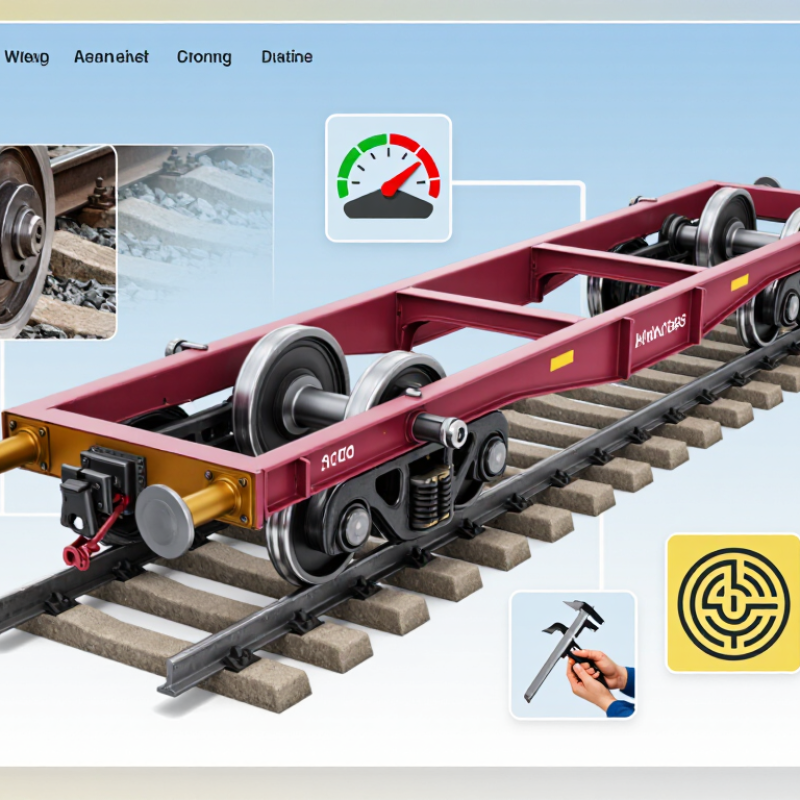
How to Choose the Right Railway Wagon Axle?

Railway Wagon Axle Basics and Their Role in Train Operations

How to Choose the Right Railway Wagon Axle?

Railway Wagon Axle Basics and Their Role in Train Operations

A wagon axle carries vertical loads, guides the wheelset, and transfers braking forces through the track. Its failure can cause overheating, wheel damage, or derailment. Therefore, axle selection begins with the wagon’s real operating profile, not a catalog number.

UIC loading guidance commonly references 22.5 tonnes per axle for heavy freight routes. However, this figure is not universal. Route limits, curve radius, speed, braking cycles, and seasonal temperature changes must also be checked. The European Union Agency for Railways reports that derailments remain a significant railway safety concern, which makes axle integrity a practical operating issue. Material grade, hollow or solid design, wheel-seat geometry, and fatigue resistance all affect service life.

Look closely at the details.

During inspection, technicians should examine wheel seats for fretting marks, journals for scoring, and surfaces for cracks. Non-destructive testing, including ultrasonic inspection, can reveal defects hidden beneath smooth steel. The UIC Railway Safety Database and national rail safety reports support using documented inspection intervals and failure records when setting maintenance plans. A new axle may still be unsuitable if its load rating conflicts with the wagon frame or bearing arrangement. I would not assume that a heavier axle is automatically safer; extra mass can increase unsprung forces and energy consumption. In practice, the right choice balances axle load, fatigue life, maintainability, and the route’s actual demands.


Key Axle Specifications: Load, Speed, Gauge, and Compatibility

How to Choose the Right Railway Wagon Axle?

A railway wagon axle must match its working load, not only its overall dimensions. Check the static axle load, payload distribution, and expected vertical impacts. Track joints, curves, and uneven loading can create forces beyond the rated value. A suitable axle should also resist repeated bending and fatigue during long service. Material grade, heat treatment, and proven inspection procedures matter greatly. In practical maintenance, small surface marks near the wheel seat deserve attention. They may develop into serious cracks.

Speed changes the axle’s operating demands. Higher speeds increase rotational stress, vibration, and heat around the bearings. Confirm the axle’s maximum operating speed under the actual wheel diameter and bearing arrangement. Braking conditions also matter. Emergency braking can produce sharp thermal and mechanical loads. Do not rely on a catalogue speed alone. Test conditions may differ from service conditions.

Gauge and compatibility must be checked together. The axle length, wheel spacing, wheel profile, bearing journals, and brake equipment must suit the wagon frame. Even a small dimensional error can cause poor wheel alignment or unsafe bearing loading. Compare certified drawings with measured components before installation. A spreadsheet can still mislead when units are mixed. I have seen selection decisions change after checking millimetres against inches. Review axle records, non-destructive test results, and maintenance history. Leave room for doubt when data is incomplete.

How to Choose the Right Railway Wagon Axle?

Key axle specifications include permitted axle load, operating speed, track gauge, wheel profile, bearing capacity, braking requirements, and infrastructure compatibility.

The chart shows representative freight-wagon design envelopes commonly used for preliminary axle selection. Actual limits depend on the railway infrastructure, wagon design, wheel and rail profiles, braking system, bearing rating, loading gauge, and applicable national standards. A compatible axle must satisfy both the required load rating and the permitted operating speed for the target gauge.

How to Match Axle Materials with Operating Conditions

How to Choose the Right Railway Wagon Axle?

Choosing axle material starts with the wagon’s actual operating conditions, not a catalogue strength value. A forged, heat-treated alloy steel usually suits heavy loads and repeated service. Its fatigue resistance matters more than peak tensile strength. Measure the real duty.

Axles on high-speed wagons face millions of stress cycles, so clean steel, controlled grain structure, and reliable heat treatment are essential. For heavy-haul wagons, higher toughness can prevent sudden fracture under impact loads. Low temperatures make this issue more serious. A material that performs well in mild weather may become less forgiving in winter. Water changes everything. Corrosion near wheel seats and bearing fits can create small defects that grow under rotation. Protective coatings help, but they cannot replace accurate machining and inspection.

During selection, compare axle material with axle load, speed, braking heat, track quality, climate, and maintenance intervals. Require documented chemistry, heat-treatment records, and ultrasonic inspection from qualified suppliers. Hardness testing is useful, yet hardness alone can mislead. Toughness, residual stress, surface finish, and dimensional accuracy also influence service life. I would not treat a material table as a final answer. Field records sometimes reveal unexpected damage patterns. A careful engineer reviews those findings and adjusts the specification when necessary. Even a strong axle can fail when its material suits the load but not the environment.

Safety Standards, Testing Requirements, and Service Life

How to Choose the Right Railway Wagon Axle?

A suitable railway wagon axle begins with its operating profile. Record axle load, gauge, speed, braking forces, and route conditions. Curves, gradients, and harsh weather can change the design margin. The axle material should meet the applicable railway standard, such as EN 13261 or an equivalent national requirement. Do not select by load rating alone. Wheel-seat dimensions, bearing fits, and corrosion protection must also match the complete wheelset.

Testing should verify both manufacturing quality and long-term resistance. Chemical analysis confirms the steel grade. Ultrasonic inspection can reveal internal cracks that visual checks may miss. Dimensional checks are essential around fillets, journals, and wheel seats. Fatigue testing should represent repeated service loads, not only a single overload. Traceability matters. Each axle should retain heat numbers, inspection records, and machining data throughout its life.

Service life depends on maintenance as much as design. Inspect for rolling contact marks, corrosion pits, overheating, and small surface cracks. Measure critical diameters instead of relying on appearance. A clean axle is not always a sound axle. One weakness in my own checklist is treating inspection intervals as fixed; actual mileage, loading, and climate may require adjustment. Replacement decisions should follow recorded measurements and qualified engineering review. When uncertainty remains, removing one axle from service is safer than guessing.

A Step-by-Step Method for Selecting the Correct Wagon Axle

How to Choose the Right Railway Wagon Axle?

A Step-by-Step Method for Selecting the Correct Wagon Axle

Choosing a wagon axle requires more than matching dimensions. Begin by confirming the wagon’s gross load, tare weight, wheel diameter, track gauge, and operating speed. Record the load carried by each axle, not only the total vehicle weight. Small errors here can weaken the entire selection.

Next, identify the service environment. Freight wagons carrying heavy materials may need different axle strength than low-speed maintenance wagons. Check curve frequency, braking forces, temperature changes, moisture, and track conditions. Then select the axle material, diameter, journal size, and wheel-seat geometry according to the calculated loads and applicable railway standards. Leave room for fatigue resistance. Static strength alone is not enough.

Review bearing compatibility, wheel mounting tolerances, braking clearance, and lubrication requirements. Ask for material certificates, heat-treatment records, dimensional reports, and non-destructive test results. I have seen projects delay delivery because bearing dimensions were checked too late. Do not repeat that mistake. A practical inspection should include straightness, surface defects, runout, and axle-seat condition. If possible, validate the design through calculations and a controlled trial under representative loads. A spreadsheet helps, but field evidence matters more. Recheck every assumption before approval.

How to Choose the Right Railway Wagon Axle? - A Step-by-Step Method for Selecting the Correct Wagon Axle

Use the following sequence to define the axle load, geometry, material, braking interface, inspection requirements, and approval basis before placing an axle order.

Step Selection Dimension What to Check Typical Engineering Reference or Input Selection Output
1 Wagon Duty and Operating Route Identify the wagon type, cargo, empty mass, maximum payload, annual mileage, operating speed, track gauge, climate, and route conditions. Consider whether the wagon will run on domestic or international infrastructure. Freight wagon design specification, infrastructure manager requirements, gauge profile, route classification, operating temperature range, and maintenance plan. Define the axle application, service severity, gauge, and operational envelope before selecting dimensions.
2 Calculate the Required Axle Load Calculate the maximum static wheelset load from the fully loaded wagon. Include the wagon tare mass, payload, uneven loading allowance, dynamic effects, and the number of wheelsets carrying the load. Axle load = total loaded wagon mass ÷ number of axles
Apply the applicable dynamic and design safety factors required by the governing railway standard.
Select an axle load category that is not lower than the calculated maximum service load. Common freight applications may use axle loads such as 20 t, 22.5 t, or 25 t, subject to route approval.
3 Confirm Wheelset and Track Gauge Match the axle to the required wheelset gauge and wheel arrangement. Verify wheel back-to-back distance, wheel seat spacing, bearing positions, brake disc locations, and clearance to the bogie frame. Track gauge is the distance between the inner faces of the rails. Standard gauge is 1,435 mm, while other networks use different gauges. Wheelset dimensions must follow the approved vehicle design. Freeze the axle general arrangement drawing, wheel seat locations, bearing journal positions, and all gauge-related dimensions.
4 Determine the Axle Geometry Check wheel seat diameter and length, journal diameter and length, fillet radii, center section diameter, shoulder locations, bearing fits, and required machining allowances. Dimensions must be compatible with the wheel, bearing, bogie, axlebox, brake system, and available wheelset maintenance equipment. Choose a proven axle profile with adequate fatigue strength, correct interference fits, and sufficient clearance for assembly and inspection.
5 Select Axle Material and Steel Grade Evaluate tensile strength, yield strength, toughness, cleanliness, hardenability, fatigue performance, weldability limitations, and resistance to corrosion-related damage. Common railway axle specifications include EN 13261 or equivalent national and international standards. Material certification and heat-treatment records are required. Select a certified railway axle steel grade that satisfies the required mechanical properties, impact toughness, cleanliness, and fatigue performance.
6 Check Braking and Accessory Interfaces Confirm whether the axle carries tread brakes, disc brakes, speed sensors, grounding devices, axle-end monitoring equipment, or other mounted components. Verify brake disc mounting geometry, bolt or shrink-fit requirements, sensor targets, cable routing, axle-end protection, and thermal loads from braking. Select the axle version and end configuration that accommodate all braking, monitoring, earthing, and maintenance interfaces without reducing fatigue strength.
7 Perform Strength and Fatigue Verification Assess vertical bending, lateral loads, torsion, braking forces, press-fit stresses, thermal effects, and stress concentration at fillets and shoulders. Use the applicable railway axle design method, such as EN 13103-1 or an equivalent approved standard. Consider both static strength and fatigue service cycles. Approve the axle geometry only when calculated stresses, fatigue safety, and local stress concentrations meet the specified limits.
8 Define Surface and Manufacturing Requirements Specify forging quality, heat treatment, straightening limits, machining tolerances, surface roughness, fillet quality, decarburization limits, and protection against corrosion. Axles are generally manufactured from forged steel and require controlled heat treatment, precision machining, and documented process control. Create a manufacturing specification covering raw material, forging, heat treatment, machining, dimensional tolerances, and surface condition.
9 Set Inspection and Non-Destructive Testing Define checks for chemical composition, mechanical properties, dimensions, runout, surface defects, internal discontinuities, and press-fit surfaces. Typical controls include ultrasonic testing for internal defects, magnetic particle or equivalent surface inspection, visual examination, dimensional inspection, and hardness testing where specified. Select an axle supplier and inspection plan capable of providing traceability from steel heat to finished axle and test results.
10 Verify Wheelset Assembly Compatibility Confirm wheel bore, axle seat tolerances, required interference, pressing force, wheelset balance, wheel profile, and bearing mounting procedure. The wheel, axle, and bearing are an integrated wheelset. Pressing, gauging, and inspection must follow the approved assembly procedure. Release the axle only when it is compatible with the selected wheels and bearings and the complete wheelset can be assembled and inspected correctly.
11 Check Maintenance and Reprofiling Needs Consider wheel reprofiling, bearing replacement, ultrasonic inspection intervals, corrosion monitoring, axle journal condition, and limits for re-machining or removal from service. Maintenance intervals depend on mileage, load spectrum, route conditions, wheel wear, bearing condition, and the vehicle maintenance plan. Choose an axle design with accessible inspection zones, adequate journal life, clear condemning limits, and documented maintenance instructions.
12 Confirm Compliance and Documentation Review design approval, material certificates, heat-treatment records, dimensional reports, non-destructive testing results, fatigue calculations, and traceability documentation. Depending on the market and vehicle approval route, compliance may involve EN, UIC, national railway regulations, or other recognized technical specifications. Select the axle configuration that satisfies the complete technical file, approval pathway, route restrictions, and lifecycle maintenance requirements.

Important: The final axle size, material grade, load rating, tolerances, testing scope, and approval requirements must be confirmed by a qualified railway vehicle engineer against the applicable vehicle and infrastructure standards.

Get in touch with us,
We will contact you shortly!

Get in touch with us by filling up the enquiry form. We will contact you shortly!

    What is the difference between Unline(Non-Epoxy Coated) or Lining(Epoxy Coated) Metal Drum?

    What are Unline(Non-Epoxy Coated) and Lining(Epoxy Coated) drums compatible with?

    What is the difference between Grade A and Grade B Metal Drum ?

    What content is suitable to fill in a Recon Grade A or Grade B Drum?

    What is the difference between Open Top and Close Top Drums and their usage?

    What type of content are Metal or Plastic Drums suitable for?

    Will there be any contamination in the reconditioned metal, plastic drums or IBC tanks?

    What is the drum gauge(thickness) and weight for reconditioned metal drums?

    Do you sell New Packaging Products too?

    What additional services do you provide apart from selling reconditioned and new containers.?

    Do you offer labelling and silkscreen on the containers ?

    Are you able to ship overseas ?

    Leading the Way
    to Carbon Neutrality

    Drumming sustainability into every aspect of our operations, we strive to create a greener and more conscious future for generations to come.
    Contact Us
    WhatsApp
    Email
    Join Our Newsletter

    Sign up for our newsletter for exclusive discounts and latest news of new launches!

      Logo Logo Logo Logo Logo
      Scroll to Top