
10 Heavy Cargo Drone Buying Tips for Global Buyers?

Buying a Heavy Cargo Drone is not simply a choice between payload numbers and advertised flight distance. Global buyers must examine the entire operating system.

Raffaello D’Andrea, a robotics researcher and founder of Verity, has emphasized a practical principle: “Autonomy must earn trust through predictable behavior.” That idea matters when a drone carries a 30-kilogram load over warehouses, construction sites, or remote infrastructure. A reliable purchase begins with verified payload capacity, not brochure maximums. Ask whether the stated payload includes batteries, safety equipment, and weather protection. It often does not.

Look closely at flight time under real weight. A drone that claims forty minutes may deliver less than twenty-five minutes with wind, cold temperatures, and repeated climbs. Check battery replacement costs, charging speed, spare-parts availability, and maintenance training. Small details matter. A cracked propeller should not stop an international operation for six weeks.

Buyers should also assess obstacle avoidance, navigation redundancy, communication range, landing accuracy, and software updates. Demonstrations should use your intended cargo box, route length, and terrain. Request service records and independent test data where possible. Marketing language can hide uncertainty.

No supplier is perfect. Some systems remain expensive, noisy, or difficult to repair outside their home market. That is worth admitting. A responsible evaluation also considers local aviation requirements, insurance, operator qualifications, privacy safeguards, and environmental limits. The best Heavy Cargo Drone is not always the fastest or largest model. It is the one that performs safely, repeatedly, and economically in your actual operating conditions.
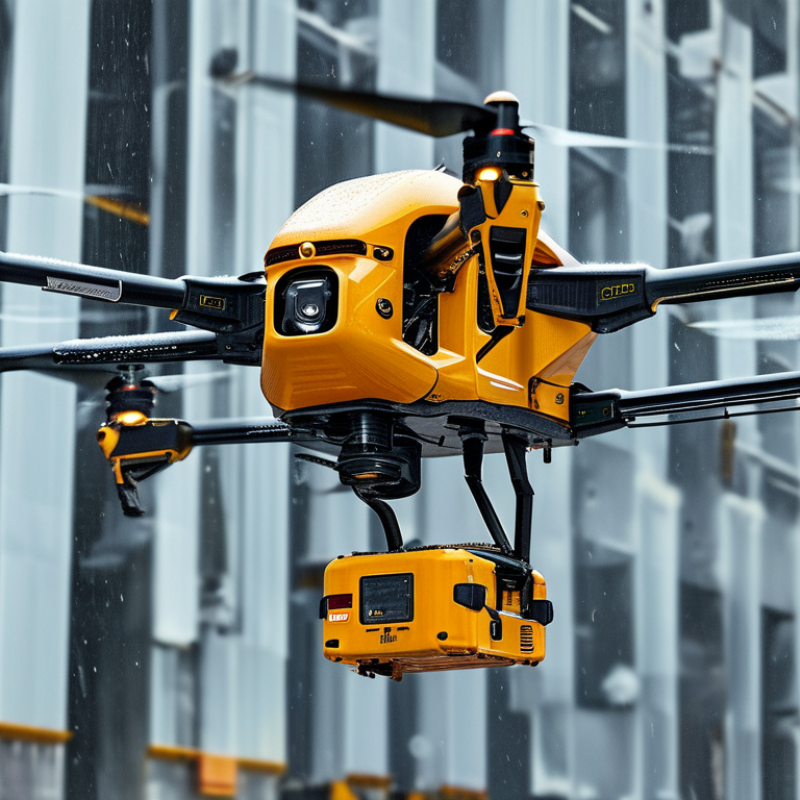
10 Heavy Cargo Drone Buying Tips for Global Buyers?

Define the Cargo Mission, Payload Needs, and Operating Environment

10 Heavy Cargo Drone Buying Tips for Global Buyers

Define the cargo mission before comparing aircraft. A drone carrying medical supplies needs different features from one moving tools between construction sites. Record the cargo weight, dimensions, loading frequency, and delivery distance. Include packaging, batteries, and safety equipment in the payload calculation. The stated payload is not always the usable payload. Leave a practical reserve.

Map the operating environment in detail. Note wind, rain, heat, cold, altitude, and landing surfaces. A heavy load may reduce flight time sharply in strong wind. Narrow urban spaces require accurate positioning and controlled descent. Remote sites may need stronger communications and easier battery handling. Measure the actual route, not just the straight-line distance. Obstacles matter.

Ask for test data under conditions resembling your worksite. Request payload charts, endurance results, maintenance intervals, training needs, and emergency procedures. Check whether operators can inspect the aircraft without specialized tools. Local aviation requirements, insurance rules, and site permissions also affect the purchase. A compliant aircraft can still fail operationally if support is weak.

The first estimate is often wrong. Recheck seasonal weather and loading delays. A spreadsheet cannot show every muddy landing area. Run a supervised trial with representative cargo before committing to a large fleet. Keep written records of flight time, battery temperature, payload stability, and delivery accuracy. These details support a more reliable buying decision.


Check Flight Performance, Range, Capacity, and Battery Specifications

Global buyers should examine flight performance under realistic working conditions, not only in calm factory demonstrations. Check hover stability, climb speed, braking response, and control precision with a useful load attached. A drone that feels smooth without cargo may drift during a windy delivery. Test it outdoors when possible. Small details matter.

Range figures often reflect empty flights, ideal temperatures, and a new battery. Ask for measured range at full payload, including takeoff, return, and a safe reserve. Hills, wind, cold air, and repeated stops can reduce usable distance. I once trusted a published range and planned too tightly. That was a mistake. Leave room for changing conditions.

Payload capacity must include cameras, containers, mounting hardware, and battery weight. Confirm the center of gravity and the maximum approved load for continuous operation. Then inspect battery voltage, capacity, charging time, cycle life, and protection features. A higher-capacity battery may increase flight time, but it can also increase total weight. Check replacement availability and storage requirements before purchase. Keep records from test flights. They reveal patterns that sales sheets miss. A simple spreadsheet helps, though it cannot replace field judgment. Test at least several battery cycles, because early results can look unusually good.

10 Heavy Cargo Drone Buying Tips for Global Buyers

Check flight performance, range, payload capacity, and battery specifications before selecting a heavy cargo drone.

The chart compares anonymized heavy-lift cargo drone classes using representative values commonly reported for this market: maximum payload, practical route range, maximum endurance, and battery energy. Buyers should confirm whether specifications refer to maximum or useful payload, one-way or round-trip range, and ideal or operational conditions. Wind, temperature, altitude, reserve power, battery aging, and local aviation regulations can significantly reduce real-world performance.

Verify Safety Features, Certifications, and Local Aviation Regulations

When buying a heavy cargo drone, safety verification should begin before comparing payload ratings. Ask the supplier for current test reports, airworthiness documents, and clear operating limits. A polished brochure is not evidence. Check whether the aircraft has redundant flight controls, battery protection, obstacle detection, emergency landing logic, and a reliable command-link backup. Confirm the actual payload, not only the maximum advertised figure.

Certifications must match the aircraft configuration and your operating location. A certificate for one battery, software version, or cargo module may not cover another. Contact the relevant civil aviation authority directly. Check registration, pilot licensing, operational approval, remote identification, flight corridors, and restrictions near airports or populated areas.

Rules can differ between neighboring countries. Do not rely only on a distributor’s interpretation.

Test the safety systems in controlled conditions. Review what happens after signal loss, low battery, sensor failure, or strong wind. Request maintenance intervals, spare-part support, training records, and incident reporting procedures. Inspect the cargo box, locking points, and load distribution with real containers. Small details matter. A heavy drone may meet a paper specification but perform poorly in rain or cold weather.

No checklist is perfect. That is the uncomfortable part. Build time for independent inspection, local legal review, and a limited pilot program before regular operations.

Compare Manufacturers, Customization Options, Pricing, and Warranty Terms

10 Heavy Cargo Drone Buying Tips for Global Buyers

Buying a heavy cargo drone requires more than comparing payload figures on a product sheet. In field evaluations, I inspect flight logs, battery cycle data, and payload test conditions. Ask each manufacturer for these records before comparing performance. One aircraft may lift 100 kilograms in calm air, yet manage only 70 kilograms in wind. That difference matters. Compare motor redundancy, obstacle sensing, control range, maintenance access, and noise levels. Verify documentation for local aviation and radio requirements. Independent testing can reveal weaknesses that sales demonstrations hide.

Customization should solve a measured operational problem, not simply decorate the airframe. Specify container dimensions, loading height, release systems, navigation sensors, and battery-swapping methods. Request CAD drawings and a prototype before approving volume production. A custom mount can shift the center of gravity. Test it with partial and full loads. Do not ignore software updates or operator training. I once underestimated loading time; the drone met its payload target but missed the delivery window. That mistake changed my evaluation checklist.

Compare delivered pricing, not factory quotes alone. Include shipping, batteries, chargers, spare rotors, training, software, inspections, and local support. Request an itemized five-year cost model. Warranty terms need precise limits, including coverage duration, battery treatment, crash exclusions, replacement timing, and service locations. A 24-month airframe warranty means little if claims require overseas shipping and six weeks of downtime. Ask who pays freight and which parts are stocked locally. Get every promise in writing.

Assess Testing, Maintenance Support, Spare Parts, and Operator Training

10 Heavy Cargo Drone Buying Tips for Global Buyers

Tip 1:

Request documented flight tests with realistic cargo weights. A factory demonstration may use ideal weather, fresh batteries, and a short route. Ask for repeated flights, emergency landing procedures, wind limits, and payload stability records. Testing should include takeoff, hovering, delivery, return flight, and landing. Check whether results come from controlled sites or independent evaluators. Small details matter.

Tip 2:

Examine maintenance support before discussing price. Confirm service response times, inspection intervals, diagnostic tools, and technician qualifications. A clear maintenance manual should show torque values, battery checks, software updates, and replacement procedures. Ask whether regional technicians can handle routine work safely. Remote assistance helps, but it cannot repair every damaged component. This is easy to underestimate.

Tip 3:

Build a spare-parts plan for twelve to twenty-four months. Identify critical items, including propellers, motors, landing gear, batteries, connectors, and control units. Check storage conditions, shelf life, shipping channels, and import documentation. Keep a parts inventory near the operating site. Waiting several weeks for one connector can stop an entire project.

Tip 4:

Evaluate operator training through practical assessment, not classroom attendance alone. Training should cover route planning, weather judgment, cargo attachment, battery handling, abnormal alerts, and incident reporting. Require supervised flights with gradually heavier loads. Ask for retraining options after software or hardware changes. A confident operator may still miss a warning. That uncomfortable gap deserves attention.

Get in touch with us,
We will contact you shortly!

Get in touch with us by filling up the enquiry form. We will contact you shortly!

    What is the difference between Unline(Non-Epoxy Coated) or Lining(Epoxy Coated) Metal Drum?

    What are Unline(Non-Epoxy Coated) and Lining(Epoxy Coated) drums compatible with?

    What is the difference between Grade A and Grade B Metal Drum ?

    What content is suitable to fill in a Recon Grade A or Grade B Drum?

    What is the difference between Open Top and Close Top Drums and their usage?

    What type of content are Metal or Plastic Drums suitable for?

    Will there be any contamination in the reconditioned metal, plastic drums or IBC tanks?

    What is the drum gauge(thickness) and weight for reconditioned metal drums?

    Do you sell New Packaging Products too?

    What additional services do you provide apart from selling reconditioned and new containers.?

    Do you offer labelling and silkscreen on the containers ?

    Are you able to ship overseas ?

    Leading the Way
    to Carbon Neutrality

    Drumming sustainability into every aspect of our operations, we strive to create a greener and more conscious future for generations to come.
    Contact Us
    WhatsApp
    Email
    Join Our Newsletter

    Sign up for our newsletter for exclusive discounts and latest news of new launches!

      Logo Logo Logo Logo Logo
      Scroll to Top