
How to Choose the Best Automotive Film for Your Business?
Choosing the best Automotive Film for your business starts with a clear view of the work you do. A tinting studio may prioritize optical clarity and reliable installation. A fleet operator may care more about durability, consistent appearance, and manageable replacement costs. The right choice depends on your customers, vehicles, climate, and service capacity—not just the film’s advertised features. Small details matter. How does the film look beside a black door frame? Can staff handle its liner quickly without wasting material? Does its performance information come from documented testing?
Compare films by purpose, construction, visible-light transmission, heat rejection, glare reduction, and warranty terms. Ask suppliers for technical data, sample rolls, and written guidance on installation and care. Test samples under real shop lighting and on representative vehicles. Record results, including application time and customer feedback. One imperfect test can still reveal a useful gap. Treat it as a reason to investigate, not proof that a product will fail. For a transparent editorial framing, consider this illustrative remark from fictional automotive-film consultant Jordan Lee: “A film earns its place when its performance fits the vehicle, the installer, and the customer’s expectations.” This is an original illustrative quote, not a verified statement from a real expert. This guide will help you compare options, assess suppliers, and make a decision grounded in evidence and day-to-day business needs.
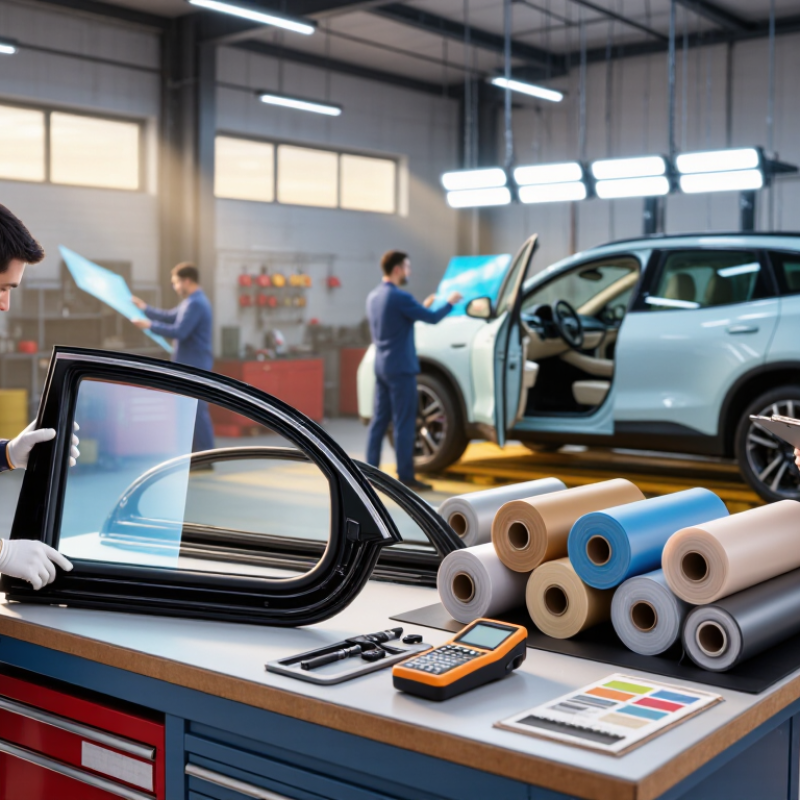
Define Your Business Needs and Intended Film Applications
Choosing the best automotive film starts with defining your business needs, not comparing product names. Identify the vehicles you service, the surfaces you cover, and the results customers expect. A window-tinting shop may prioritize heat reduction and clear visibility. A detailing studio may need paint protection for bumpers, mirrors, and door edges. A fleet provider may value consistent installation speed more than complex customization.
Consider your working environment carefully. Outdoor installations expose film to dust, wind, and changing temperatures. Indoor shops still need clean floors, controlled lighting, and enough space to position large panels. Local climate matters too. Strong sunlight, heavy rain, winter salt, and frequent gravel roads can affect material selection. Test small samples on typical vehicles before committing. A film that looks excellent on a dark sedan may behave differently on a curved van window.
Your team’s skills should influence the decision. Some applications require heat-forming tools, precision knives, slip solutions, or specialized software. Training takes time and creates costs that are easy to overlook. I have seen businesses focus on film price, then struggle with slow installation and excess waste. That mistake deserves honest review. Measure average job time, rejected pieces, and customer requests. Include removal work in the calculation. A reliable choice should fit your workflow, equipment, budget, and service promises without forcing your team to improvise every afternoon.

Identify the Main Types of Automotive Film
Automotive film comes in several main types, and each serves a different business need. Window film reduces glare, manages cabin heat, and improves privacy. Its performance depends on visible light transmission, heat rejection, and installation quality. Always check local visibility requirements before recommending a shade.
Paint protection film uses a clear, flexible layer to help protect painted surfaces from stone chips, light scratches, and road debris. It suits high-end vehicles and daily drivers that face rough roads. Vinyl wrap changes a vehicle’s color or finish without repainting it. It can support fleet identity, seasonal promotions, or resale preparation. Decorative films offer creative effects, but their durability may vary with cleaning habits and weather exposure.
Tips: Keep real samples in your workshop. Test them under sunlight, fluorescent lights, and close inspection. Ask customers about parking, mileage, washing methods, and expected service life. A film that looks perfect on a sample panel may perform differently on curved doors or older paint. I once underestimated installation time around mirrors and trims; that mistake affected scheduling. Build extra labor time into your quotation. Also record the film type, surface condition, installation date, and care instructions. Clear records strengthen customer trust and help your team improve after each job.
How to Choose the Best Automotive Film for Your Business?
Identify the Main Types of Automotive Film
This chart compares representative mid-range performance values for common automotive film types. Ceramic films generally provide the strongest infrared rejection, while dyed films are typically the most economical option. Actual results vary according to film construction, visible light transmission, installation quality, and testing method.
Compare Performance, Durability, and Installation Requirements
Automotive film should match the vehicle’s purpose, climate, and daily workload. Compare visible light transmission, heat rejection, glare reduction, and optical clarity. A darker film is not automatically better. In a delivery vehicle, clear visibility may matter more than maximum shade. Test samples near a window and inside a parked vehicle. Colors can look different under workshop lights.
Durability depends on film construction, surface coating, and exposure conditions. Look for stable performance against sunlight, heat, moisture, and repeated cleaning. Check whether the film resists bubbling, fading, peeling, and small scratches. Ask for documented testing and a clear warranty. A lower purchase price may become expensive after early replacement. Still, laboratory results do not perfectly predict every vehicle or climate.
Installation requirements can change the real cost. Curved glass, tight edges, old adhesive, and rubber seals require different preparation. Clean tools and controlled temperature are essential. Dust is unforgiving. An experienced installer should explain curing time, maintenance limits, and possible visual changes during drying. One practical mistake is judging the film immediately after installation; moisture can create temporary haze. Even experienced teams can miss a small edge during a busy day, so inspection under direct light remains necessary.
Evaluate Suppliers, Standards, and Total Ownership Costs
Choosing an automotive film for business use requires more than comparing roll prices. A supplier must provide clear technical data, stable production records, and responsive after-sales support. Ask for samples before placing a large order. Inspect the film under workshop lighting, then test adhesion on curved panels and painted surfaces.
Standards matter because appearance can hide weak performance. Request documented results for weathering, color stability, tensile strength, and adhesive aging. Confirm whether testing follows recognized automotive or materials standards. Do not accept vague phrases such as “premium quality” without measurable evidence. A reliable supplier should explain test conditions, sample preparation, and report dates. Independent verification is even better.
Look beyond the purchase invoice. Total ownership cost includes installation time, failed applications, replacement rolls, training, storage, and customer complaints. A cheaper film may create visible edges after several months. That can damage trust and consume labor. Calculate cost per successfully completed vehicle, not cost per roll. Include warranty terms, claim procedures, and delivery reliability in the calculation. I once underestimated rework time because the first sample looked excellent. The real problem appeared on complex mirrors and deep contours. Small tests prevent expensive assumptions. Keep records of batch numbers, installation temperatures, and curing times. They make supplier discussions more precise and reveal recurring problems. Expect some uncertainty. Field conditions are rarely perfect.
| Evaluation dimension | What to compare | Evidence to request from suppliers | Standards, compliance, or checks | Total ownership cost impact |
|---|---|---|---|---|
| Film construction | Compare dyed, metallized, carbon, and ceramic products. Construction affects appearance, signal compatibility, heat-management claims, and price; performance varies by specific product. | Product data sheet identifying the film construction, layers, available shades, and any installation limitations. | Ask for product-specific test results and confirm the tested film matches the product being quoted. | Compare the installed price with expected service life, warranty coverage, and potential replacement cost—not just the initial roll price. |
| Optical performance | Review visible light transmittance (VLT), visible reflectance, and haze. VLT describes the proportion of visible light transmitted through the tested sample. | Test reports showing the measurement method, sample construction, and results for the exact film shade. | Confirm local rules for the vehicle window and application location. Legal limits can differ by jurisdiction and by front, rear, and windshield glazing. | Incorrect shade selection can lead to rework, removal, customer complaints, or regulatory penalties. |
| Solar and heat performance | Compare total solar energy rejected, infrared measurements, and ultraviolet transmission only when the supplier defines the metric and test conditions. These figures are not interchangeable. | Independent or traceable test reports, including the measurement method, wavelengths, and whether results apply to film alone or a film-and-glass system. | Check that competing products were tested using comparable methods and glazing samples; avoid comparing differently defined claims as if they were equivalent. | Better-documented performance can support customer expectations and reduce disputes over results that depend on glass type, climate, and installation. |
| Safety and glazing compatibility | Check compatibility with the vehicle’s glass, defroster lines, sensors, antennas, and any existing coatings. Film does not replace compliant safety glazing. | Written installation guidance, exclusions, removal instructions, and details of any compatibility testing. | In the United States, FMVSS No. 205 addresses glazing materials; applicable vehicle and aftermarket-film requirements depend on the glazing and jurisdiction. Verify local rules before installation. | Compatibility problems can cause installation failures, damage during removal, or additional labor and warranty claims. |
| Supplier quality system | Assess batch consistency, traceability, packaging, storage instructions, technical support, and how defective material is handled. | Quality procedures, lot identification examples, complaint-resolution process, and any current management-system certificates. | ISO 9001 certification concerns a quality management system; it is not, by itself, proof that a particular film meets a performance or legal requirement. | Consistent supply and documented quality controls can reduce scrap, installation delays, and time spent resolving defects. |
| Installation support | Evaluate technical training, application guidance, sample availability, and support for different vehicle shapes and glass types. | Training materials, recommended tools and procedures, sample rolls, and a defined escalation contact. | Confirm installers follow applicable local licensing, consumer-protection, and workplace requirements. | Training and clear procedures may reduce film waste, installation time, and callbacks. |
| Warranty and claims | Compare coverage terms for defects such as peeling, bubbling, discoloration, or adhesive failure. Check exclusions and transferability. | Full written warranty, claim steps, required proof of purchase, coverage period, remedy, and responsibility for labor or removal. | Review the actual warranty wording; a stated warranty duration does not establish product performance or guarantee that every failure is covered. | Estimate the cost of inspection, removal, replacement material, labor, and vehicle downtime that may not be covered. |
| Supply reliability | Check normal lead times, stock availability, minimum order quantities, shade continuity, and notification of product changes. | Written lead-time estimates, reorder terms, product-change notices, and procedures for urgent or back-ordered items. | Use purchase specifications that identify the exact product, shade, and relevant performance documentation. | Include carrying costs for inventory and the cost of delayed jobs, substitutions, or mismatched replacement film. |
| Total cost of ownership (TCO) | Compare the full cost over the period you expect to use or sell the product, rather than comparing material price alone. | A written quote separating film, freight, duties or taxes, tools, training, and any volume or warranty conditions. | Use consistent assumptions and the same evaluation period for every supplier; label estimates separately from quoted charges. | TCO = purchase price + freight and taxes + installation labor + waste and rework + warranty handling + inventory and downtime costs. |
| Business fit | Match the film range to your customer segment, vehicle mix, local climate, legal requirements, and service capacity. | Trial samples and a pilot-order plan with agreed acceptance criteria for appearance, installation, and documentation. | Record the products and test documents reviewed, and recheck compliance when product specifications or regulations change. | A small pilot can reveal actual labor, waste, and customer-service costs before a larger purchasing commitment. |
Note: Performance, service life, pricing, and legal limits vary by product, vehicle glazing, installation, and location. Verify current local requirements and rely on product-specific documentation rather than generic category claims.
Select and Validate the Film for Your Business Operations
Selecting film starts with the work, not the catalog. Map each vehicle’s duty cycle: long highway shifts, frequent loading, outdoor parking, or repeated customer handovers. These conditions create different priorities, from glare control to cabin heat and surface durability. International Window Film Association (IWFA) technical guidance reports that some films block up to 99% of ultraviolet radiation. Treat this as a maximum, not a fleet-wide guarantee; verify the tested product and conditions.
Ask suppliers for visible-light transmission, solar-energy rejection, UV transmission, haze, abrasion resistance, and warranty terms. ISO 13837 provides methods for measuring solar transmittance in vehicle safety glazing. Compare results using the same glass type where possible. Then inspect installed samples in actual vehicles. Check visibility at dusk and in rain; a bright workshop is not enough. Record installation time, rework, cleaning limits, and driver feedback during a pilot. Lab performance can disappoint in daily use.
Tips: Test one vehicle from each common model. Photograph the film beside a dashboard under midday sun, then repeat at dusk. Keep the test log simple. Missing data is a warning.
Article Source:
Get in touch with us,
We will contact you shortly!
What is the difference between Unline(Non-Epoxy Coated) or Lining(Epoxy Coated) Metal Drum?

Unline drums with internally bare metal surface is more susceptible to corrosion and rust while Lining drums are internally coated with Phenolic Epoxy Coating to provide a non-reactive barrier between the drum surface and your product, less risk of contamination. Note: Our Unline drums are coated with an anti-rust agent after washing to reduce risk of rust.
What are Unline(Non-Epoxy Coated) and Lining(Epoxy Coated) drums compatible with?

In Singapore, Recon Unline Drums are usually more costly than Recon Lining Drums. Hence, we recommend Recon Unline Drums to fill aromatics like Thinner, Xylene, Toulene& other solvents like Hexane, BA, CA, EA, MC, White spirit, etc.
We recommend the lower-priced Recon Lining Drums to fill hydrocarbons like IPA, Methanol, Ethanoland oil-based products like diesel, petrol, lubricants, engine, hydraulic, base, transmission fluid, additives, waste oil, etc.;
What is the difference between Grade A and Grade B Metal Drum ?

Grading of used drums are usually based on physical conditions like rustiness, deformities and residual contents. Grade A drums are totally free from internal rust, serious dents and are easy to clean. Grade B drums have different degrees of rust internally and aesthetically inferior compared to Grade A drums.
What content is suitable to fill in a Recon Grade A or Grade B Drum?

Recon Grade A drum is suitable to fill more costly virgin grade products while Recon Grade B drum is more suitable for recycled or waste products.
What is the difference between Open Top and Close Top Drums and their usage?

Closed top drums are for water and other liquid products. Open Top drums can be used for liquid too but are primarily for more viscous products. The Open Top (or open head with a lid) allows you to get in and out of the drum with your product easier.
What type of content are Metal or Plastic Drums suitable for?

Metal drums offer additional protection when dealing with potentially flammable substances. They provide superior fire resistance, impact protection, and longevity for storing class 1, 2, and 3 volatile chemicals.
Plastic HDPE Drums are suitable for corrosive chemicals like acids, alkaline and also water-based products.
Will there be any contamination in the reconditioned metal, plastic drums or IBC tanks?

All our reconditioned containers (metal/plastic drums, carboys, IBC tanks) are washed thoroughly with specially formulated cleaning agent, rinsed with clean water, dried, and tested for possible leakages during the recondition process. Stringent quality inspection is being conducted 100% on every reconditioned product before they are qualified for sale & delivery.
What is the drum gauge(thickness) and weight for reconditioned metal drums?

Reconditioned metal drums gauge can be 0.9mm to 1.0mm all round. Their weight can vary from 16 to 18kg.
Do you sell New Packaging Products too?

Yes, we are also a distributor for new pallets, metal drums, plastic drums, carboys, IBCs and stainless-steel tanks.
What additional services do you provide apart from selling reconditioned and new containers.?

We are an NEA licensed toxic industrial waste collector, who can collect and dispose of used toxic waste containers in Singapore.
Do you offer labelling and silkscreen on the containers ?

We can provide labelling and silk-screening on the containers.
Are you able to ship overseas ?

Yes, we can arrange export our products to any country in the world.
Leading the Way
to Carbon Neutrality