
7 Tips for Choosing Seamless Stainless Steel Pipe Suppliers

Selecting reliable Seamless Stainless Steel Pipe Suppliers requires more than comparing prices or downloading a product catalog. The supplier’s manufacturing controls can affect pressure safety, corrosion resistance, delivery stability, and total project cost. A polished website is not proof. Verify it.

Industry demand remains substantial. World Stainless reported global crude stainless steel production of approximately 58.4 million tonnes in 2023. This volume reflects continuing demand from chemical processing, energy, food equipment, construction, and water infrastructure. Fortune Business Insights also valued the global stainless steel market at about USD 130.87 billion in 2023, showing why supplier quality varies widely across regions and applications.

This guide presents seven practical checks for evaluating potential partners. Review mill certificates, heat numbers, chemical composition, mechanical test results, and traceability records. Confirm whether pipes comply with relevant specifications, such as ASTM A312 or ASME B36.19M, when those standards match your design requirements. Ask for recent third-party inspection reports, not only internal assurances.

Experience matters. A supplier familiar with duplex, austenitic, or high-temperature grades can identify risks before production begins. Inspecting surface finish, wall thickness, ovality, and end preparation can reveal problems that photographs hide. Delivery performance also deserves evidence, including production schedules and documented export experience.

Do not overlook communication. Small misunderstandings can create expensive rework. Request clear answers about tolerances, packaging, testing, and nonconforming products. Some suppliers may offer lower quotes by reducing inspection depth or using unclear material substitutions. That possibility deserves careful questioning.

A dependable choice combines technical competence, transparent records, stable capacity, and honest limitations. These seven tips help buyers move from attractive claims toward evidence-based supplier selection.
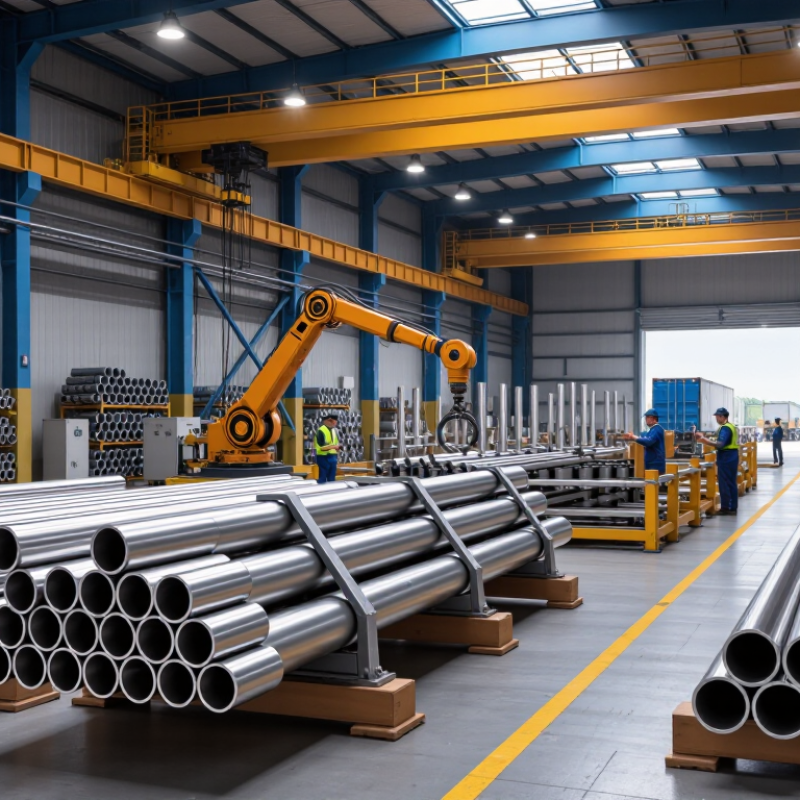
7 Tips for Choosing Seamless Stainless Steel Pipe Suppliers

Define Your Seamless Stainless Steel Pipe Requirements

Before comparing Seamless Stainless Steel Pipe Suppliers, define the service conditions in writing. State the outside diameter, wall thickness, length, grade, and required quantity. Include the fluid, operating pressure, temperature range, and corrosion exposure. These details help determine whether 304, 316L, duplex, or another alloy is suitable. Do not treat “stainless steel” as a complete specification. It is not.

Specify the governing standard, such as ASTM, ASME, EN, or another applicable requirement. Ask whether the pipe needs annealing, pickling, passivation, polishing, or special surface protection. For critical systems, define testing requirements before requesting prices. These may include hydrostatic testing, eddy current testing, ultrasonic inspection, dimensional checks, and positive material identification. Require material test certificates, heat numbers, and traceability from production to delivery. Details matter.

In pipe sourcing work, I have seen accurate drawings fail because the tolerances were missing. Clarify ovality, straightness, end preparation, and allowable wall-thickness variation. Confirm whether the supplier can provide sample reports and inspection records before production. Packaging also deserves attention, especially for long-distance transport. Plastic caps, dry wrapping, and wooden supports can prevent damage and contamination. Measure twice. A small omission may create expensive rework, and some project teams discover this too late. Allow room for review, because an initial specification may still overlook installation limits or changing process conditions.


Verify Supplier Experience, Certifications, and Manufacturing Capabilities

7 Tips for Choosing Seamless Stainless Steel Pipe Suppliers

Verify Supplier Experience, Certifications, and Manufacturing Capabilities

Tip 1

Check experience with your required alloy, dimensions, and service conditions. A supplier familiar with small-bore instrumentation tubing may not be suited to heavy-wall process pipe. Ask for examples of comparable orders, including how they handled tolerances and delivery changes. Ask for evidence.

Tip 2

Review certificates carefully. Confirm the certificate’s scope, issuing body, validity, and manufacturing site rather than relying on a logo or a scanned document. Request sample inspection records and material test reports showing heat numbers that match pipe markings.

Tip 3

Examine what the supplier actually makes in-house. Ask whether piercing, heat treatment, straightening, and testing happen at the stated facility or are outsourced. This affects lead times and traceability.

Tip 4

Match inspection methods to the specification. Discuss dimensional checks and any required nondestructive testing before ordering. A polished brochure tells you little. A clear sample report tells you more.

Tip 5

Visit the facility when practical, or request a live video walkthrough of production and inspection areas. Look for organized material storage, readable identification tags, and calibrated instruments. I would still verify those details in writing; a brief visit can miss important gaps.

Tip 6

Ask how nonconforming pipe is segregated and how corrective actions are documented.

Tip 7

Compare suppliers using the same written specification, not price alone. A low quote can omit testing, documentation, or packaging needed to protect pipe ends during shipment.

Compare Pipe Grades, Dimensions, Standards, and Quality Control

Choosing a seamless stainless steel pipe supplier starts with service conditions, not a catalog label. Compare grades against temperature, media, and cleaning requirements. For example, 316 often offers better chloride resistance than 304, but it is not immune to every corrosive environment. Ask for material test reports and heat-number traceability. Small details matter.

Check dimensions carefully. Confirm outside diameter, wall thickness, length, and permitted tolerances against the drawing. A mismatch of a few millimeters can complicate fit-up or affect the intended pressure margin. Do not compare quotations until units and measurement points match. Standards matter too. Verify the exact product specification, grade, testing requirements, and revision required for the project. A certificate name alone does not prove every supplied length meets the order.

Quality control should be visible in records, not just promises. Ask which checks are performed, such as dimensional inspection, heat-treatment verification, and non-destructive examination when specified. Review inspection reports and clarify how rejected or repaired sections are identified. Independent inspection may help with critical orders. Still, no checklist is perfect. Supplier comparisons can feel tedious, and paperwork may be incomplete; resolve gaps before production rather than assuming they are harmless.

Compare Stainless Steel Pipe Dimensions Before Choosing a Supplier

Standard outside diameters for selected NPS sizes, in millimeters. Use the required pipe schedule to confirm wall thickness and inside diameter; verify dimensions against the applicable standard and purchase specification.

Outside diameter values are based on ASME B36.19M stainless steel pipe dimensions. NPS is a nominal size designation, not a direct measurement of outside diameter.

Evaluate Pricing, Production Lead Times, and Delivery Arrangements

A low quotation can be misleading if it excludes inspection, cutting, protective caps, or freight. Ask suppliers for an itemized price based on the same grade, outside diameter, wall thickness, and tolerance. Check whether inspection records and material traceability documents are included. Small differences add up. A quote should also state how long its pricing remains valid, especially when raw material costs may change.

Production lead times need similar scrutiny. Ask whether the pipe is in stock or made to order, and request separate estimates for production, inspection, packing, and transit. A promised ship date is not always a delivery date. Ask what updates you will receive if a production step slips. Confirm that the schedule matches your installation window, not just your purchasing plan. Delivery details matter too: verify the destination, unloading arrangements, packaging, and whether partial shipments are possible. End caps and secure supports can help protect pipe ends and surfaces during handling. No spreadsheet catches every risk; I have seen a neat comparison miss a basic question about unloading access. Get key commitments in writing, then check that the supplier’s proposed schedule and delivery method fit your site conditions.

Check Samples, Customer References, Warranty Terms, and Support

Before choosing a seamless stainless steel pipe supplier, inspect a sample from the same grade and production route you plan to order. Check the surface for laps, pits, and uneven finish; measure outside diameter and wall thickness at several points. Request a material test certificate and confirm its heat number matches the sample. A sample is useful, but it cannot prove every production batch is consistent. Keep that limitation in mind.

Ask for customer references from projects with similar pipe sizes, service conditions, and delivery volumes. Speak directly with a buyer about rejected material, response times, and how problems were resolved. The World Stainless Association’s Stainless Steel in Figures 2024 reports 58.4 million tonnes of global stainless steel production in 2023. That scale means buyers have many sourcing options, but it does not guarantee equal quality or traceability. Verify claims with records, not polished sales language. Small details matter.

Read warranty terms before approving a purchase order. Check what defects are covered, how long claims remain valid, and who pays for inspection or replacement. Ask support staff how they handle missing certificates, delayed shipments, or a failed inspection. Request one named contact and a written response-time commitment. Test the process with a specific question. A vague promise of “full support” is not enough; clear steps and documented responsibilities are better.

Get in touch with us,
We will contact you shortly!

Get in touch with us by filling up the enquiry form. We will contact you shortly!

    What is the difference between Unline(Non-Epoxy Coated) or Lining(Epoxy Coated) Metal Drum?

    What are Unline(Non-Epoxy Coated) and Lining(Epoxy Coated) drums compatible with?

    What is the difference between Grade A and Grade B Metal Drum ?

    What content is suitable to fill in a Recon Grade A or Grade B Drum?

    What is the difference between Open Top and Close Top Drums and their usage?

    What type of content are Metal or Plastic Drums suitable for?

    Will there be any contamination in the reconditioned metal, plastic drums or IBC tanks?

    What is the drum gauge(thickness) and weight for reconditioned metal drums?

    Do you sell New Packaging Products too?

    What additional services do you provide apart from selling reconditioned and new containers.?

    Do you offer labelling and silkscreen on the containers ?

    Are you able to ship overseas ?

    Leading the Way
    to Carbon Neutrality

    Drumming sustainability into every aspect of our operations, we strive to create a greener and more conscious future for generations to come.
    Contact Us
    WhatsApp
    Email
    Join Our Newsletter

    Sign up for our newsletter for exclusive discounts and latest news of new launches!

      Logo Logo Logo Logo Logo
      Scroll to Top