China Top 10 Type C Car Charger Manufacturers Worldwide
China’s automotive electronics sector has produced a wide range of Type C Car Charger products for local and international markets. These manufacturers serve passenger vehicles, commercial fleets, and aftermarket retailers. Their offerings often include USB-C Power Delivery, multiple charging ports, compact housings, and support for 12V or 24V systems.
This guide examines ten notable Chinese manufacturers connected with this product category. It considers factory experience, design capability, charging performance, safety features, quality control, and export reliability. Practical details matter. A good charger should fit firmly in the vehicle socket, remain stable on uneven roads, and avoid excessive heat during extended use. Cable compatibility also deserves attention, especially when users expect fast charging for phones, tablets, or navigation devices.
Company information, production claims, and certifications should be checked carefully. A polished product page proves very little. No list is perfect. Rankings can change as factories improve, prices shift, or new suppliers enter the market. Some manufacturers may have stronger engineering teams, while others offer better customization or lower minimum order quantities. That difference can be important for distributors and fleet buyers.
The following overview is designed to support informed supplier research. It highlights manufacturers with visible industry experience and relevant production capabilities, while recognizing that independent audits, samples, and direct communication remain necessary. Performance claims should be tested, not simply repeated. A reliable Type C Car Charger is more than a fast charging label; it requires stable output, durable materials, controlled heat, and consistent manufacturing.
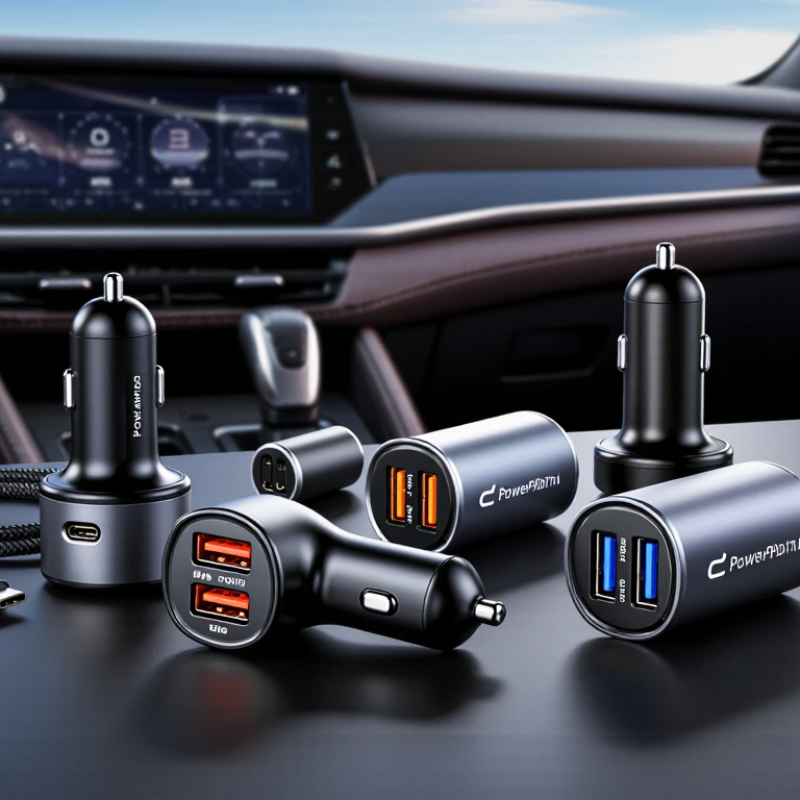
What Defines a Type-C Car Charger Manufacturer
A Type-C car charger manufacturer is defined by more than assembly capacity. It must understand power delivery, thermal control, connector durability, and vehicle electrical systems. Experienced engineers test charging stability across different car models, cable lengths, and phone temperatures. They also design protection against overcurrent, overvoltage, short circuits, and excessive heat. Small details matter. A loose port can interrupt charging on a rough road.
Reliable manufacturers build repeatable processes. They inspect incoming components, monitor soldering quality, and test finished chargers before shipment. Professional facilities usually provide documented test records, traceable batches, and clear specifications for output power. Independent laboratory testing can support claims about safety and electromagnetic compatibility. However, certificates alone are not enough. A document may show compliance, but it cannot reveal every production weakness.
Strong suppliers also communicate honestly with buyers. They explain realistic charging performance instead of promising maximum speed in every vehicle. Their teams can discuss chipset selection, heat dissipation, warranty handling, and customization limits. Practical experience often appears in simple choices, such as reinforced cable joints and a compact housing that does not block nearby controls. No manufacturer is perfect. Even a mature factory may face component changes, testing delays, or occasional quality variation. The important question is whether it detects problems, reports them clearly, and improves the process. That habit defines a dependable Type-C car charger manufacturer worldwide.
How China’s Type-C Car Charger Industry Has Developed
China’s Type-C car charger industry has developed from basic 5V adapters into a specialized electronics sector. Early products often offered one charging port and limited protection. Today, manufacturers commonly support USB Power Delivery, multiple voltage levels, and faster charging for phones, tablets, and compact laptops.
This growth followed China’s dense electronics supply chain. Connector suppliers, chip makers, mold factories, and testing laboratories often operate within short transport distances. Engineers can revise a circuit board quickly after testing it in a 12V or 24V vehicle system. Production lines now check heat, current stability, vibration resistance, and short-circuit protection. Small details matter. A loose socket can reduce user confidence.
Export demand also pushed manufacturers toward clearer technical documentation and more consistent quality control. Experienced factories test chargers during long charging cycles, not only during final inspection. They examine cable fit, surface temperature, and performance under unstable vehicle voltage. Compliance work has become more important as markets apply different safety and electromagnetic requirements.
However, development is uneven. Some suppliers still prioritize low prices over thermal design or component traceability. Higher wattage does not automatically mean better performance. This industry needs more transparent testing data and longer field feedback. A charger that works well on a factory bench may behave differently inside a hot car during summer traffic. That gap deserves closer attention.
China’s Type-C Car Charger Industry Development Context
China’s rapidly expanding new energy vehicle market has increased demand for in-car digital charging accessories, including USB Type-C car chargers. The chart compares annual new energy vehicle production and sales in China from 2019 to 2024.
Source: China Association of Automobile Manufacturers (CAAM), annual new energy vehicle production and sales data. Figures are shown in millions of vehicles.
Criteria for Ranking the Top 10 Chinese Manufacturers
China Top 10 Type C Car Charger Manufacturers Worldwide
Ranking the top Chinese Type C car charger manufacturers requires more than comparing factory size or export volume. We assess charging stability, port durability, heat control, and compatibility with modern devices. Engineers should verify power delivery protocols, circuit protection, and performance during voltage changes. A reliable manufacturer also provides clear test records, traceable components, and consistent production samples.
Manufacturing experience matters, but it cannot replace current evidence. We examine quality systems, incoming material checks, aging tests, and inspection procedures before shipment. Independent certifications support credibility, although certificates alone do not prove daily reliability. We also consider production capacity, response speed, warranty handling, and technical communication. Factory visits help, yet they may not reveal long-term failure rates. That limitation deserves attention.
Tips: Request samples from several production batches. Test charging in hot and cold conditions. Check cable fit, plug strength, and output stability. Ask for recent inspection reports, not old documents. A low price can be attractive, but hidden compromises may appear later. Ranking remains imperfect when public data is limited, so buyers should confirm claims through independent testing and small trial orders.
China Top 10 Type C Car Charger Manufacturers Worldwide - Criteria for Ranking the Top 10 Chinese Manufacturers
| Rank | Anonymized Manufacturer | Product Compliance
(20%) | Power & Protocol Capability
(18%) | Safety Engineering
(15%) | Manufacturing Capacity
(15%) | Quality Management
(12%) | Global Market Support
(10%) | Warranty & Service
(10%) | Overall Score
(100) |
| 1 | Manufacturer 01 | Documented | High | High | High | Documented | Broad | Clear | 92 |
| 2 | Manufacturer 02 | Documented | High | High | High | Documented | Broad | Clear | 90 |
| 3 | Manufacturer 03 | Documented | High | High | Medium–High | Documented | Broad | Clear | 88 |
| 4 | Manufacturer 04 | Documented | Medium–High | High | High | Documented | Broad | Clear | 86 |
| 5 | Manufacturer 05 | Documented | Medium–High | High | Medium–High | Documented | Broad | Clear | 84 |
| 6 | Manufacturer 06 | Documented | Medium–High | Medium–High | High | Documented | Broad | Clear | 82 |
| 7 | Manufacturer 07 | Documented | Medium | Medium–High | Medium–High | Documented | Moderate | Clear | 79 |
| 8 | Manufacturer 08 | Documented | Medium | Medium–High | Medium | Documented | Moderate | Clear | 77 |
| 9 | Manufacturer 09 | Documented | Medium | Medium | Medium | Documented | Moderate | Clear | 74 |
| 10 | Manufacturer 10 | Documented | Medium | Medium | Medium | Documented | Moderate | Clear | 72 |
Ranking criteria and evidence requirements - Product compliance: Verification of applicable USB Type-C and USB Power Delivery requirements, together with market-specific regulatory documentation.
- Power and protocol capability: Support for USB Power Delivery, PPS where offered, stable power negotiation, multi-port load management, and suitable 12 V/24 V vehicle input operation.
- Safety engineering: Over-voltage, over-current, over-temperature, short-circuit, surge, and reverse-polarity protection supported by test records.
- Manufacturing capacity: Documented production facilities, process control, testing equipment, capacity planning, and ability to support repeat orders.
- Quality management: Quality-system certification, incoming-material inspection, in-process testing, final inspection, traceability, and corrective-action procedures.
- Global market support: Export documentation, regional compliance capability, packaging localization, logistics support, and technical communication.
- Warranty and service: Clearly defined warranty terms, product-failure handling, replacement procedures, engineering support, and after-sales response time.
Profiles of China’s Top 10 Type-C Car Charger Manufacturers
China Top 10 Type C Car Charger Manufacturers Worldwide
Profiles of China’s Top 10 Type-C Car Charger Manufacturers
China’s leading Type-C car charger manufacturers typically combine product design, circuit engineering, tooling, and high-volume assembly. Their profiles differ sharply. Some focus on compact chargers for passenger vehicles. Others build multi-port units for commercial fleets and travel retailers. According to the USB Implementers Forum, USB Power Delivery 3.1 can support up to 240 watts, although most car chargers operate far below that level because vehicle sockets and thermal limits restrict output. Safety matters more than headline wattage.
Look closely at factory evidence. Strong suppliers usually provide laboratory reports, temperature testing, surge protection data, and traceable production records. Independent market research from Grand View Research identifies rising demand for in-vehicle charging as connected devices and electric vehicles expand. That trend supports China’s manufacturing base, but it does not prove every supplier is reliable. A serious profile should examine connector durability, cable compatibility, idle power consumption, and performance under summer cabin temperatures. Small details matter.
For buyers, the top ten should be compared by engineering depth, not export volume alone. Ask whether the supplier controls firmware, validates charging protocols, and repeats tests after tooling changes. Some manufacturers still present incomplete efficiency figures. That deserves caution. Factory audits, sample testing, and certification verification remain necessary before large orders. The best profiles therefore include production capacity, customization experience, quality controls, and transparent limitations. Market rankings can be useful, but they are never perfect.
Global Markets and Future Trends for Chinese Type-C Car Chargers
Chinese Type-C car charger manufacturers are expanding beyond domestic sales into Europe, North America, Southeast Asia, and the Middle East. Their strongest advantage is flexible production. Factories can adjust connector types, charging power, packaging, and vehicle compatibility for different markets. Field testing often reveals practical details. A charger may work well in a compact car but overheat inside a parked vehicle under strong sunlight. Reliable suppliers therefore test thermal performance, electromagnetic compatibility, vibration resistance, and repeated insertion cycles.
Global buyers increasingly expect USB-C Power Delivery, compact designs, and stable output for phones, tablets, navigation systems, and selected laptops. However, higher wattage is not automatically better. A 100-watt charger needs suitable cables, heat control, and clear protection systems. Importers must also review regional safety rules, labeling requirements, and certification documents before shipment. Documentation quality can expose weak manufacturing control.
Future demand will likely favor gallium nitride components, dual-port charging, recyclable materials, and intelligent power distribution. Fleet operators may seek chargers that record usage or limit power peaks, while private drivers may prefer quiet, low-profile models. Yet the market is not perfectly predictable. Faster charging can increase heat, and extra electronic features may reduce repairability. Chinese manufacturers that combine transparent testing with restrained design may gain trust more steadily than those chasing impressive specifications alone. Some claims still need independent verification.