
Top 10 Food Packaging Plants for Global Buyers
Choosing a reliable Food Packaging Plant is not simply a matter of comparing prices. Global buyers must examine materials, production controls, certifications, and delivery performance. A plant may look impressive during a factory tour, yet small details often reveal more. Are workers checking seal strength? Are storage areas clean and dry? Can the supplier trace one carton back to its production line?
Walter Soroka, a respected packaging specialist, described packaging as “the science, art, and technology of enclosing and protecting products for distribution, storage, sale, and use.” This principle remains practical for food manufacturers. Strong packaging must protect freshness, survive long-distance transport, and present clear product information. It should also support responsible material use without creating avoidable waste.
This guide reviews ten Food Packaging Plant options serving international buyers. The comparison considers manufacturing experience, quality systems, equipment capability, customization, export readiness, and communication. Some plants may offer advanced automation. Others may provide stronger flexibility for smaller orders. Not every supplier will fit every market.
That matters.
A buyer seeking frozen-food trays needs different performance from a buyer purchasing coffee pouches or bakery boxes. Product moisture, temperature, filling speed, and shipping conditions can change the decision. We also acknowledge an uncomfortable reality: supplier information is not always equally transparent. Factory claims require careful verification through samples, audits, test reports, and customer references. These plants are therefore presented as practical candidates, not automatic guarantees. A thoughtful buyer should still ask difficult questions before signing a contract.
Global Food Packaging Market: A $1 Trillion+ Industry in 2024
Top 10 Food Packaging Plants for Global Buyers
Global Food Packaging Market: A $1 Trillion+ Industry in 2024
The global food packaging market exceeded $1 trillion in 2024, although estimates vary by product scope. Flexible films, cartons, cans, trays, and glass containers all contribute to this scale. Demand continues rising with urban diets, online grocery delivery, and longer distribution routes. Packaging now protects food from moisture, oxygen, light, impact, and temperature changes.
A practical review of ten food packaging plants should examine more than production volume. Buyers need evidence of food-safety systems, traceability, material testing, and worker training. During a plant audit, inspect resin or paper storage, clean-room controls, printing areas, and finished-goods warehouses. Ask for migration test results, batch records, and documented corrective actions. Small details matter.
A reliable plant should also manage export pressure. Check pallet strength, carton compression, container loading, and humidity protection. For frozen meals, test seals after cold exposure. For retort products, verify heat resistance and seal integrity. Recycled content can support sustainability goals, but performance and local regulations still require careful review. A neat ranking can mislead. The largest facility may not offer the best flexibility, communication, or minimum order terms. My own preference is a balanced supplier: technically capable, transparent during audits, and willing to discuss failures without hiding them. That honesty is not common enough.
The table presents representative high-volume food-packaging production hubs. Company names, brands, and commercially sensitive plant-capacity figures are excluded. Food-contact requirements refer to the regulatory frameworks commonly used for buyer qualification in each market.
| Rank | Facility ID | Production Hub | Primary Packaging Segments | Common Formats | Main Materials | Typical Buyer Markets | Relevant Food-Contact Frameworks | Capacity Disclosure |
|---|---|---|---|---|---|---|---|---|
| 1 | FP-01 | Guangdong, China | Flexible food packaging and prepared-food packs | Pouches, sachets, laminated rolls, retort bags | PET, PE, PP, aluminum foil, paper laminates | Asia-Pacific, North America, Europe, Middle East | China GB 4806 series; destination-market requirements | Not publicly disclosed |
| 2 | FP-02 | Jiangsu, China | Rigid plastic containers and thermoformed food trays | Cups, trays, tubs, lids, clamshells | PP, PET, PS, recycled PET where approved | East Asia, Southeast Asia, Europe | China GB 4806 series; EU Regulation 1935/2004 for exports | Not publicly disclosed |
| 3 | FP-03 | Maharashtra, India | Flexible laminates, snack packaging, and sachets | Pillow bags, stand-up pouches, sachets, roll stock | BOPP, PET, PE, CPP, paper, metallized films | South Asia, Africa, Middle East, Southeast Asia | India IS 10146 and applicable food-contact regulations; destination-market rules | Not publicly disclosed |
| 4 | FP-04 | Bangkok, Thailand | Flexible packaging for seafood, sauces, and processed foods | Vacuum bags, retort pouches, sachets, laminated films | PA, PE, PET, PP, aluminum foil | ASEAN, Japan, Australia, North America, Europe | Thai FDA requirements; EU and US food-contact rules for exports | Not publicly disclosed |
| 5 | FP-05 | Lombardy, Italy | Paperboard cartons and premium food-service packaging | Folding cartons, sleeves, bakery boxes, coated papers | Virgin paperboard, recycled fiber, water-based coatings | European Union, United Kingdom, Switzerland, North Africa | EU Regulation 1935/2004; EU Framework Regulation 2023/2006; national paper-contact guidance | Not publicly disclosed |
| 6 | FP-06 | North Rhine-Westphalia, Germany | High-barrier films, lidding materials, and recyclable structures | Lidding films, thermoform webs, mono-material pouches | PE, PP, PET, EVOH, paper-based barrier structures | European Union, United Kingdom, North America | EU Regulation 1935/2004; EU Regulation 10/2011 for plastics | Not publicly disclosed |
| 7 | FP-07 | Ohio, United States | Flexible packaging, meat films, and food-service products | Vacuum pouches, shrink films, bags, lidding films | PE, PA, PET, PP, multilayer barrier films | United States, Canada, Mexico, Latin America | US FDA 21 CFR; Canadian food-packaging requirements; destination-market rules | Not publicly disclosed |
| 8 | FP-08 | Quebec, Canada | Paperboard, flexible packaging, and frozen-food packaging | Cartons, pouches, bags, wraps, freezer-resistant packs | Paperboard, PE, PET, PP, aluminum-laminated films | Canada, United States, Europe | Health Canada food-packaging guidance; US FDA 21 CFR for exports | Not publicly disclosed |
| 9 | FP-09 | São Paulo, Brazil | Flexible films, beverage packaging, and food-service containers | Pouches, sachets, cups, trays, shrink films | PE, PP, PET, paperboard, aluminum foil | South America, Central America, North America | Brazil ANVISA food-contact rules; Mercosur technical regulations | Not publicly disclosed |
| 10 | FP-10 | Hokkaido, Japan | Retort packaging, chilled-food trays, and seafood packs | Retort pouches, trays, lidding films, vacuum packs | PP, PE, PET, PA, aluminum foil, paperboard | Japan, South Korea, Southeast Asia, North America | Japan Food Sanitation Act; destination-market food-contact requirements | Not publicly disclosed |

Plant Selection Criteria: ISO 22000, BRCGS, HACCP, and FDA Compliance
Choosing among the top 10 food packaging plants requires more than comparing prices or production capacity. ISO 22000 shows whether a plant manages food-safety risks through a structured system. HACCP confirms practical control at critical points, from raw-material receiving to sealed cartons. BRCGS assessments add detailed requirements for hygiene, traceability, site security, and supplier control. FDA compliance should include applicable facility registration, preventive controls, labeling, and traceability duties. FDA does not issue one universal “FDA certification” for packaging plants. That distinction matters.
The World Health Organization estimates that contaminated food causes 600 million illnesses and 420,000 deaths each year. This figure makes verification more than paperwork. Ask for recent audit scope, corrective-action records, environmental monitoring results, and mock-recall performance.
The ISO Survey 2023 recorded more than 39,000 ISO 22000 certificates worldwide, but certification numbers alone cannot prove daily discipline.
Walk through the plant. Check cleanable surfaces, sealed ingredient storage, pest barriers, and temperature logs. Small gaps matter. A polished audit file may still hide weak shift-level habits.
One practical concern is often overlooked: subcontracted printing, coating, or warehousing can break traceability. Buyers should test one batch backward and forward within hours, not days.
Independent laboratory results also deserve review, although testing frequency should match product risk. Reliable selection combines certificates, direct observation, worker interviews, and evidence from the last production season.
Top 10 Packaging Plants by Capacity, Technology, and Export Reach
Top 10 Food Packaging Plants for Global Buyers
A practical review of ten high-capacity food packaging plants should examine more than annual output. Capacity matters, but uptime, material control, and export discipline matter just as much. Smithers’ The Future of Global Flexible Packaging to 2028 projects continued growth in flexible packaging, driven by convenience foods and longer distribution routes. Plants serving global buyers therefore need high-speed forming, filling, sealing, and inspection systems.
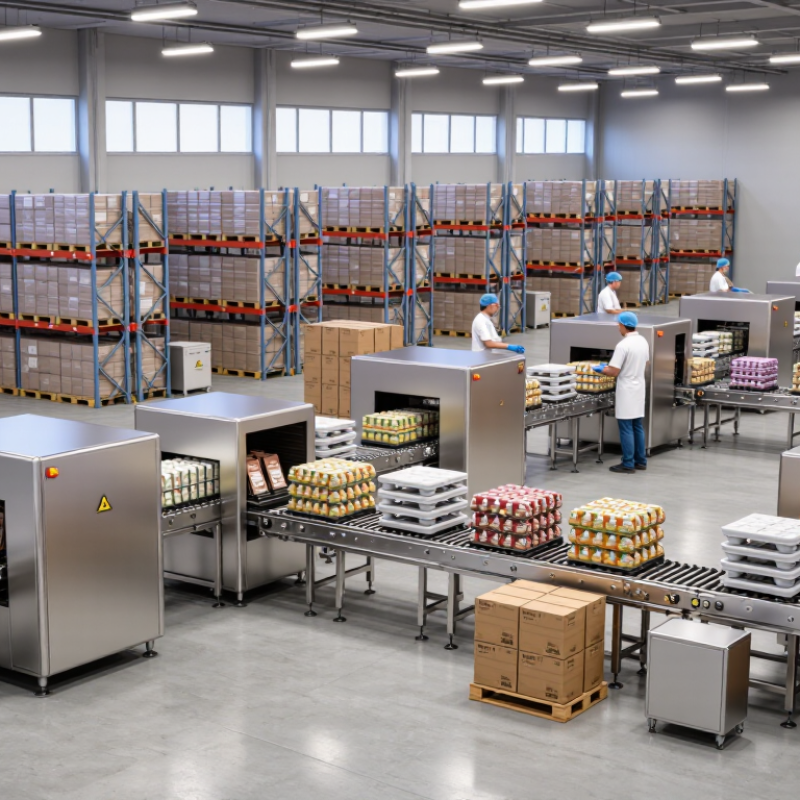
The strongest facilities usually combine automated lines with strict traceability. Metal detectors, vision cameras, and oxygen testing are now common checkpoints. PMMI’s 2024 packaging trends research highlights automation, sustainability, and workforce efficiency as major investment priorities. Plants using robotic case packing can reduce handling errors, especially during night shifts. Some facilities also operate cleanrooms, temperature-controlled warehouses, and digital production dashboards. Small details matter.
Export reach separates a capable plant from a dependable partner. The best-performing sites maintain multilingual documentation, stable pallet standards, and tested loading procedures. UN Comtrade data shows how strongly food and packaging supply chains depend on cross-border trade. However, export volume alone can mislead. A plant may ship widely but struggle with seasonal demand or port delays. The ranking is not flawless. Buyers should verify audit records, production samples, lead times, and backup capacity before signing contracts. ISO 9001-based quality systems help, but daily execution still decides whether cartons arrive intact.
Sustainability Benchmark: Recycled Content, Waste Rates, and Carbon Data
Top 10 Food Packaging Plants for Global Buyers should be judged by measured sustainability, not attractive claims.
The OECD’s Global Plastics Outlook reports that only 9% of global plastic waste was recycled in 2019. Therefore, buyers should request verified post-consumer recycled content, separated from factory scrap. A credible plant can show resin certificates, supplier batches, and monthly production records.
Numbers matter.
Waste performance needs a clear denominator. Ask for kilograms of waste per tonne of finished packaging, process scrap rates, recycling rates, and landfill volumes.
A practical audit may find trim bins beside the extrusion line, rejected seals near packing equipment, and cleaning water recorded separately.
The United Nations Environment Programme estimates that plastic pollution could fall by 80% by 2040 with existing solutions. Still, plant-level data often remains incomplete. That weakness deserves attention.
Carbon reporting should follow the GHG Protocol and state operational boundaries. Buyers need Scope 1 and Scope 2 emissions, electricity sources, and kilograms of CO2e per tonne of packaging. Scope 3 data for resin, transport, and end-of-life impacts adds useful context.
Renewable electricity alone does not prove low carbon. A plant may reduce electricity emissions while using energy-intensive virgin materials.
Carbon figures should include the reporting year, calculation method, renewable-energy certificates, and independent verification. Some figures will be imperfect. Transparent limits are more reliable than polished averages.
Global Buyer Checklist: MOQ, Lead Time, Certifications, and Total Cost
Top 10 Food Packaging Plants for Global Buyers
A global buyer should compare the top ten food packaging plants with the same specification sheet. Ask each plant to quote the exact material, thickness, dimensions, closure type, and print colors. A low MOQ may look attractive, but it can hide higher tooling costs or unused inventory. Small orders hurt margins. Request pricing for 5,000, 50,000, and 200,000 units to reveal volume differences.
Lead time must include artwork approval, sampling, production, inspection, and shipping to your destination port. Get these dates in writing. Confirm whether the plant keeps resin, film, or paper stock available. A two-week production promise means little if materials arrive after ten days.
Request recent food-contact declarations, migration test results, quality certificates, and factory audit records. Certifications should match the destination market and packaging type, not merely appear on a sales sheet.
Calculate total cost, not only the factory price. Include plates, molds, laboratory testing, freight, duties, insurance, inspection, storage, and currency changes. Check carton quantity and pallet dimensions; poor loading can increase freight sharply. Ask how defects are measured and what remedy applies. Photos of sealed samples help, but they do not replace physical testing. One weakness remains easy to miss: a supplier may pass certification checks yet communicate poorly during a delayed shipment. Trial orders and documented response times can expose that risk before a large commitment.
Article Source:
Get in touch with us,
We will contact you shortly!
What is the difference between Unline(Non-Epoxy Coated) or Lining(Epoxy Coated) Metal Drum?

Unline drums with internally bare metal surface is more susceptible to corrosion and rust while Lining drums are internally coated with Phenolic Epoxy Coating to provide a non-reactive barrier between the drum surface and your product, less risk of contamination. Note: Our Unline drums are coated with an anti-rust agent after washing to reduce risk of rust.
What are Unline(Non-Epoxy Coated) and Lining(Epoxy Coated) drums compatible with?

In Singapore, Recon Unline Drums are usually more costly than Recon Lining Drums. Hence, we recommend Recon Unline Drums to fill aromatics like Thinner, Xylene, Toulene& other solvents like Hexane, BA, CA, EA, MC, White spirit, etc.
We recommend the lower-priced Recon Lining Drums to fill hydrocarbons like IPA, Methanol, Ethanoland oil-based products like diesel, petrol, lubricants, engine, hydraulic, base, transmission fluid, additives, waste oil, etc.;
What is the difference between Grade A and Grade B Metal Drum ?

Grading of used drums are usually based on physical conditions like rustiness, deformities and residual contents. Grade A drums are totally free from internal rust, serious dents and are easy to clean. Grade B drums have different degrees of rust internally and aesthetically inferior compared to Grade A drums.
What content is suitable to fill in a Recon Grade A or Grade B Drum?

Recon Grade A drum is suitable to fill more costly virgin grade products while Recon Grade B drum is more suitable for recycled or waste products.
What is the difference between Open Top and Close Top Drums and their usage?

Closed top drums are for water and other liquid products. Open Top drums can be used for liquid too but are primarily for more viscous products. The Open Top (or open head with a lid) allows you to get in and out of the drum with your product easier.
What type of content are Metal or Plastic Drums suitable for?

Metal drums offer additional protection when dealing with potentially flammable substances. They provide superior fire resistance, impact protection, and longevity for storing class 1, 2, and 3 volatile chemicals.
Plastic HDPE Drums are suitable for corrosive chemicals like acids, alkaline and also water-based products.
Will there be any contamination in the reconditioned metal, plastic drums or IBC tanks?

All our reconditioned containers (metal/plastic drums, carboys, IBC tanks) are washed thoroughly with specially formulated cleaning agent, rinsed with clean water, dried, and tested for possible leakages during the recondition process. Stringent quality inspection is being conducted 100% on every reconditioned product before they are qualified for sale & delivery.
What is the drum gauge(thickness) and weight for reconditioned metal drums?

Reconditioned metal drums gauge can be 0.9mm to 1.0mm all round. Their weight can vary from 16 to 18kg.
Do you sell New Packaging Products too?

Yes, we are also a distributor for new pallets, metal drums, plastic drums, carboys, IBCs and stainless-steel tanks.
What additional services do you provide apart from selling reconditioned and new containers.?

We are an NEA licensed toxic industrial waste collector, who can collect and dispose of used toxic waste containers in Singapore.
Do you offer labelling and silkscreen on the containers ?

We can provide labelling and silk-screening on the containers.
Are you able to ship overseas ?

Yes, we can arrange export our products to any country in the world.
Leading the Way
to Carbon Neutrality