
China Top 10 Puree Pouch Filling Machine Manufacturers

Choosing the right Puree Pouch Filling Machine requires more than comparing prices or browsing attractive product photos. Purees vary widely in viscosity, particle size, temperature, and filling behavior. A machine suited to smooth mango puree may struggle with chunky tomato sauce or fiber-rich fruit blends.

This guide examines China’s top 10 manufacturers through practical purchasing criteria. We consider filling accuracy, pouch compatibility, sealing stability, production speed, cleaning access, and after-sales support. We also review stainless-steel construction, servo control systems, dosing methods, and the manufacturer’s experience with food-processing applications. Small details matter. For example, a narrow filling nozzle can create splashing, while poor seal temperature control may cause leakage during transport.

Reliable evidence should come from factory audits, machine trials, technical drawings, and customer references. Product demonstrations alone are not enough. A polished video can hide difficult maintenance or inconsistent performance. That deserves attention.

The ranking should therefore be viewed as a practical reference, not an absolute verdict. Different businesses need different solutions. A small producer may value flexible changeovers, while a large factory may prioritize continuous output and automated cleaning. Budget, local service, spare-part availability, and regulatory documentation also influence the final decision.

Some information may change over time. Manufacturers upgrade machines, adjust specifications, or expand service networks. Readers should verify current details before signing a contract. Careful testing remains essential. The best choice is the machine that performs consistently with your puree, pouch material, operators, and production targets.
China Top 10 Puree Pouch Filling Machine Manufacturers

What Is a Puree Pouch Filling Machine?

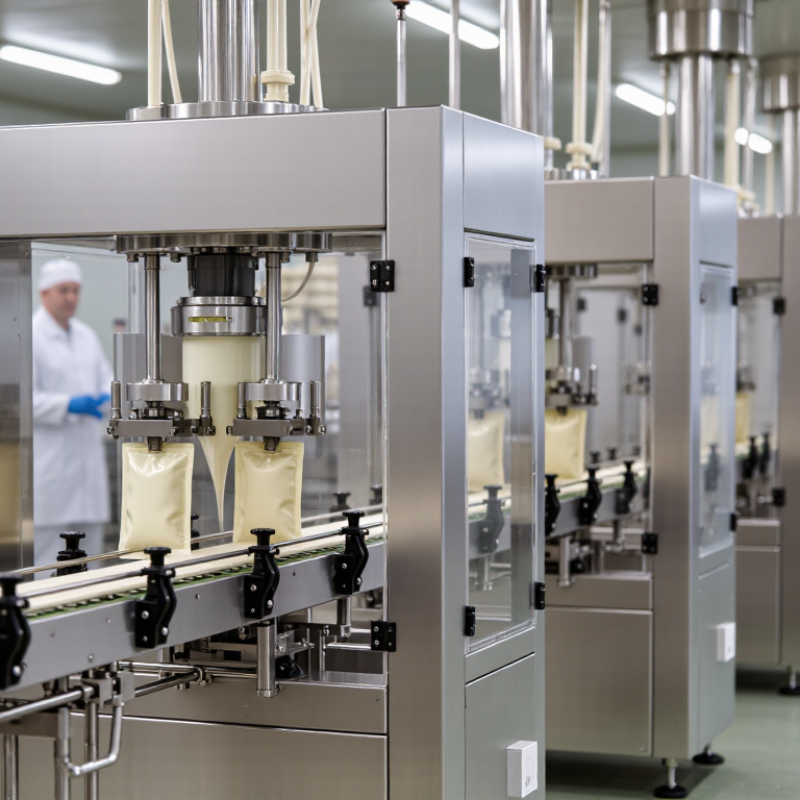
A puree pouch filling machine doses thick foods into flexible pouches, then seals them under controlled conditions. It commonly handles fruit puree, vegetable blends, sauces, and infant foods. The process starts with a heated or ambient hopper. A piston or servo pump moves a measured portion through a sanitary nozzle. Film alignment matters. A small shift can create leaks, wrinkles, or weak seals.

Modern systems often combine pouch feeding, filling, heat sealing, coding, and inspection. Operators should match the pump to viscosity and particle size. Smooth apple puree behaves differently from pumpkin puree with fibers. A practical line may fill 30 to 120 pouches per minute, depending on pouch size and sealing design. PMMI industry reports identify automation, hygienic design, and flexible packaging as major equipment priorities. These trends reflect real factory pressure, not just marketing language.

Packaging also affects food waste. The UNEP Food Waste Index Report 2024 estimates that about 1.05 billion tonnes of food were wasted in 2022. A well-sealed pouch cannot solve poor storage or weak sanitation. It can, however, reduce exposure to air, moisture, and handling. That benefit depends on correct cleaning, seal-temperature control, and routine testing. In practice, production teams sometimes trust machine settings too quickly. That is a mistake worth revisiting. Seal samples should be checked during every shift, especially when puree temperature or recipe texture changes.


Key Features of Leading Puree Pouch Filling Machines

Leading puree pouch filling machines must balance accuracy, hygiene, speed, and gentle product handling. PMMI’s 2024 packaging machinery report valued the U.S. market at more than $11 billion, showing strong demand for automated filling systems. For puree processors, servo-driven piston pumps can deliver consistent volumes, even when viscosity changes slightly. That matters when filling fruit, vegetable, or baby-food purees.

Hygienic construction is equally important. Stainless-steel contact parts, tool-free access, rounded surfaces, and effective clean-in-place systems reduce residue around valves and nozzles.

Flexible packaging research from Smithers also identifies convenience formats as a continuing growth area, increasing pressure for reliable pouch sealing and fewer rejected packs. Modern machines often include temperature-controlled jaws, automatic film tracking, and vision checks for seal defects. Useful features, but not magic.

Changeover speed deserves close attention. A machine may advertise high output, yet cleaning and format adjustments can consume valuable production hours. Servo control, recipe storage, and a clear touchscreen can shorten these interruptions. Data logging also supports traceability and maintenance planning.

Tips: Test the machine with your actual puree, including seeds, fibers, and temperature changes. Measure fill accuracy after prolonged running, not only during a showroom demonstration. Check seal strength, cleaning time, noise, and operator access. No machine is perfect. A small unexplained variation can become expensive waste at scale. Compare total operating cost, not only the purchase price.

Selection Criteria for the Top 10 Manufacturers

China Top 10 Puree Pouch Filling Machine Manufacturers

Selecting the top ten manufacturers requires more than comparing prices. A reliable review should examine filling accuracy, hygiene design, output stability, and service evidence. PMMI industry reports identify labor shortages and automation as major packaging priorities. Therefore, machines with recipe control, automatic cleaning support, and quick changeover deserve higher scores.

For puree, viscosity changes can expose weak designs. Test samples should include mango, tomato, and fiber-rich blends. Record fill-weight variation, pouch leakage, sealing temperature, and downtime. A practical benchmark is ±1% filling accuracy, but product texture may affect results. Check stainless-steel contact parts, weld quality, sensor protection, and access for sanitation. EHEDG hygienic-design guidance and ISO 9001 records can support the evaluation, though certificates alone prove little. Service response matters. Ask for spare-parts lead times and remote troubleshooting records.

Tips: Request a live factory test. Bring your own puree.

A useful scorecard can assign 30% to performance, 20% to hygiene, 20% to reliability, 15% to technical support, and 15% to total ownership cost. Smithers’ flexible-packaging research highlights continuing demand for lightweight pouch formats, but growth does not guarantee good equipment. Inspect five years of operating references, not only polished videos. I would also question unusually high speed claims. Real production includes cleaning, film changes, rejected pouches, and operator adjustments. No scorecard is perfect. Leave room for site-specific risks.

China Top 10 Puree Pouch Filling Machine Manufacturers - Selection Criteria for the Top 10 Manufacturers

No. Selection Criterion Recommended Screening Benchmark Evaluation Method Suggested Weight Why It Matters for Puree Pouches
1 Filling Accuracy and Repeatability Target filling accuracy of approximately ±1% to ±2%, depending on product viscosity and filling volume. Review test reports using the actual puree, pouch size, and target fill volume. 18% Accurate dosing reduces product giveaway, underfilled packs, and customer complaints.
2 Production Speed Confirm the rated output in pouches per minute at the required pouch format and filling volume; do not rely only on the maximum catalog speed. Conduct a witnessed factory acceptance test under representative production conditions. 14% Actual throughput is affected by product properties, pouch dimensions, sealing time, and operator intervention.
3 Pouch and Film Compatibility Support the required premade pouch or roll-film structure, pouch width, length, spout arrangement, and laminate thickness. Check machine drawings, sealing specifications, and sample-pouch trial results. 12% Compatibility directly influences sealing quality, leakage rates, waste, and future packaging flexibility.
4 Hygienic and Sanitary Design Product-contact parts should use suitable food-grade stainless steel, have smooth surfaces, and minimize dead zones and exposed threads. Inspect materials, weld quality, drainability, access points, and cleaning procedures. 12% Puree is a food product and may contain sugars, fibers, or acids that increase cleaning and contamination risks.
5 Sealing Performance Stable heat-sealing temperature, pressure, and dwell time with no visible contamination, wrinkles, channels, or leakage. Perform seal-integrity, burst, visual, and leakage tests using production packaging materials. 10% A reliable seal protects the puree from leakage, oxidation, and microbial ingress.
6 Changeover and Adjustability Tool-less or low-tool adjustments for filling volume, pouch size, sealing parameters, and product changeover. Time a complete changeover and verify the first acceptable production run. 10% Fast, repeatable changeovers improve availability when multiple puree recipes or pouch sizes are produced.
7 Cleaning and Product Recovery Provide accessible filling paths, removable product-contact components, suitable drainage, and documented cleaning instructions. Review cleaning time, disassembly steps, rinse access, and product-loss measurements. 8% Efficient cleaning supports food safety, reduces downtime, and limits puree waste between batches.
8 Controls, Monitoring, and Safety PLC-based control, recipe storage, temperature monitoring, fault alarms, emergency stops, and protection for moving or heated parts. Inspect the control architecture and test alarms, interlocks, sensors, and data-recording functions. 6% Clear controls improve process consistency, operator safety, troubleshooting, and production traceability.
9 Documentation and Compliance Support Provide manuals, electrical diagrams, spare-parts lists, risk information, material certificates, and applicable conformity documents. Verify document completeness and confirm that certificates apply to the proposed machine configuration. 5% Complete documentation simplifies installation, validation, maintenance, audits, and international shipment.
10 After-Sales Service and Spare Parts Assess remote support, commissioning assistance, training, spare-parts availability, response procedures, and warranty terms. Request service-level details, spare-parts lead times, training plans, and references for comparable applications. 5% Responsive support helps reduce downtime and protects the long-term operating value of the filling line.
Total Evaluation Weight 100% Use the weighted score together with a practical product trial and a total-cost-of-ownership review.

Reference note: The benchmarks above are practical screening criteria for puree pouch filling equipment. Final performance should be confirmed with the intended puree formulation, pouch material, filling volume, production speed, and applicable food-packaging requirements.

Profiles of China’s Top 10 Puree Pouch Filling Machine Manufacturers

China’s top ten puree pouch filling machine manufacturers show different strengths in automation, hygiene, and pouch handling. One focuses on compact piston fillers for small fruit puree batches. Another builds servo-controlled systems for stable 100–500 gram dosing. A third combines filling and sealing in one compact frame, saving valuable floor space. Two manufacturers specialize in rotary machines with faster pouch indexing. Their designs suit medium and high-volume plants.

Several profiles stand out for practical engineering. One manufacturer uses heated hoppers to reduce viscosity changes during filling. Another adds automatic nozzle cleaning, which helps limit product residue around the seal. Aseptic-oriented equipment appears in some portfolios, but buyers should verify sterilization claims carefully. One supplier develops machines for spouted pouches, while another supports multiple pouch widths through adjustable guides. These details matter when switching between mango puree, apple sauce, and thicker vegetable blends. Ask for test videos using your actual formula.

The remaining manufacturers emphasize customization, remote diagnostics, or lower entry costs. Useful options include touchscreen recipes, servo-driven pumps, and stainless-steel contact parts. Yet no profile is flawless. Some stated speeds reflect ideal conditions, not continuous factory output. Cleaning time, seal quality, and operator training can change the real result. During evaluation, request material certificates, filling accuracy records, and a factory acceptance test. A careful comparison reveals more than a polished brochure.

The chart compares typical maximum filling speeds for ten widely used puree pouch machine configurations. Actual output depends on pouch size, product viscosity, filling volume, sealing method, and the number of lanes.

How to Compare Suppliers and Choose the Right Machine

When comparing China’s top puree pouch filling machine manufacturers, do not start with speed. Start with your product. Puree viscosity, fruit fiber, temperature, and pouch size affect every result. A machine rated at 120 pouches per minute may slow sharply with thick mango puree. Request a live test using your own formula and packaging film. Check filling accuracy, seal strength, leakage rates, and changeover time.

USD 291.5 billion Grand View Research valued the global flexible packaging market at about USD 291.5 billion in 2023.

4.7% CAGR It forecasts a 4.7% compound annual growth rate through 2030.

This growth supports continued investment in pouch equipment, but market demand does not guarantee supplier quality. PMMI industry reports also identify automation, labor shortages, and hygienic design as major packaging investment factors. Ask suppliers for stainless-steel grades, clean-in-place details, electrical standards, and documented machine acceptance tests. Certifications alone are not enough.

Tips: Compare total ownership cost, not only the quotation. Include spare parts, installation, training, utilities, and annual maintenance. Ask for three verified production references. Watch a complete filling cycle, including film loading and cleaning. A low-cost machine can become expensive after repeated seal faults. I have seen buyers overlook after-sales response time. That mistake is easy to make. Leave room for doubt, and measure every promise.

Get in touch with us,
We will contact you shortly!

Get in touch with us by filling up the enquiry form. We will contact you shortly!

    What is the difference between Unline(Non-Epoxy Coated) or Lining(Epoxy Coated) Metal Drum?

    What are Unline(Non-Epoxy Coated) and Lining(Epoxy Coated) drums compatible with?

    What is the difference between Grade A and Grade B Metal Drum ?

    What content is suitable to fill in a Recon Grade A or Grade B Drum?

    What is the difference between Open Top and Close Top Drums and their usage?

    What type of content are Metal or Plastic Drums suitable for?

    Will there be any contamination in the reconditioned metal, plastic drums or IBC tanks?

    What is the drum gauge(thickness) and weight for reconditioned metal drums?

    Do you sell New Packaging Products too?

    What additional services do you provide apart from selling reconditioned and new containers.?

    Do you offer labelling and silkscreen on the containers ?

    Are you able to ship overseas ?

    Leading the Way
    to Carbon Neutrality

    Drumming sustainability into every aspect of our operations, we strive to create a greener and more conscious future for generations to come.
    Contact Us
    WhatsApp
    Email
    Join Our Newsletter

    Sign up for our newsletter for exclusive discounts and latest news of new launches!

      Logo Logo Logo Logo Logo
      Scroll to Top