Top 10 Types of IBC Water Tanks for Global Buyers?

Choosing the right ibc water tank is not simply a matter of comparing prices. Global buyers must examine capacity, liner material, valve design, frame strength, cleaning access, and transport conditions. A tank used for drinking water faces different demands from one serving construction sites, farms, emergency storage, or industrial processing. Even a familiar 1,000-liter model may perform poorly when exposed to strong sunlight, rough roads, freezing temperatures, or repeated handling.

Packaging specialist David Cahn once said, “The best IBC is the one matched to the water, movement, and maintenance reality.” That practical observation matters. A collapsible tank can save warehouse space, while a rigid composite tank may offer better protection during long-distance shipping. Stainless steel models provide durability, but their higher cost may not suit every purchasing plan. Food-grade polyethylene tanks need verified materials and traceable production records. Details matter.

This guide reviews the top 10 types of ibc water tank available to international buyers. It considers construction, mobility, hygiene, reuse, customization, and typical application. Each type has advantages, but none is perfect. That is worth admitting. A supplier’s attractive specification sheet cannot replace testing, inspection, and clear documentation. Buyers should confirm applicable local requirements before placing an order. They should also question vague claims about durability, certification, and service life. The right choice is practical, documented, and suitable for the actual site—not merely impressive in a catalogue.
Top 10 Types of IBC Water Tanks for Global Buyers?

IBC Water Tanks: Definition, Structure, and Common Applications

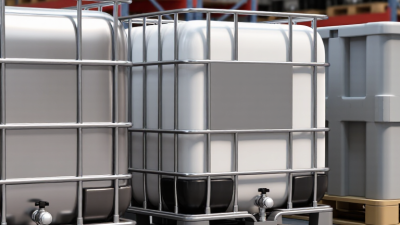
IBC water tanks are reusable bulk containers designed to store and move water efficiently. Most models hold about 1,000 liters, although capacities vary by market and application. A typical tank uses a molded HDPE inner bottle, a galvanized steel cage, and a pallet-style base. The bottle limits leakage. The cage resists impact. The base supports lifting and transport.

The top opening usually includes a screw cap, while the lower section has a discharge valve. Gaskets and fittings must match the stored water and operating temperature. For drinking water, buyers should select food-contact materials and verify cleaning, testing, and local compliance documents. UV protection matters in outdoor storage. Direct sunlight can weaken plastic over time. It is an overlooked detail.

Common IBC types include potable-water tanks, rainwater tanks, agricultural tanks, emergency tanks, construction-site tanks, and insulated or reinforced versions. Some use translucent bottles for quick level checks. Others add opaque layers to reduce algae growth. Farms may need wider valves for faster filling, while households often prefer compact footprints. A 1,000-liter tank can fit on a small pallet, but a full unit may weigh over one metric ton. Plan the floor and lifting method carefully. A larger tank is not always better. Many buyers focus on capacity and forget access, drainage, and regular inspection. Clean water still needs clean handling.

Rigid Plastic IBC Tanks for General Water Storage

Among the top 10 types of IBC water tanks, rigid plastic IBC tanks remain practical for general water storage. Their common 1,000-liter format fits warehouses, farms, construction sites, and emergency supply areas. A steel cage protects the inner polyethylene bottle from impact. Forklift pockets also support safer movement.

The WHO and UNICEF Joint Monitoring Programme reported that 2.2 billion people lacked safely managed drinking water in 2022. This pressure makes reliable storage important, especially where supply is intermittent. However, a rigid tank is not automatically suitable for drinking water. Buyers should request food-contact documentation, UV resistance data, and testing records for the valve and gasket. ISO 9001 production controls can improve consistency, but certification alone does not prove cleanliness. I have seen buyers focus on capacity and overlook the tank’s previous use. That mistake can create real contamination risks.

Tips: Choose opaque plastic for outdoor storage, because sunlight encourages algae growth. Keep the tank on a level, load-bearing surface. Inspect seams, caps, and outlets before filling. For potable water, clean the tank with an approved procedure and confirm local requirements. A 1,000-liter tank is convenient, but not always ideal; narrow access doors, low floors, or frequent manual handling may require a smaller unit.

Top 10 Types of IBC Water Tanks for Global Buyers? - Rigid Plastic IBC Tanks for General Water Storage
Rank IBC Tank Type Nominal Capacity Typical Outer Dimensions
(L × W × H)
Typical Empty Weight Tank Material Common Outlet Suitable Water-Storage Use Key Buyer Considerations
1 Standard 1,000-L Composite IBC 1,000 L
(264 US gal)
1,200 × 1,000 × 1,160 mm Approx. 55–70 kg UV-stabilized HDPE bottle with galvanized or painted steel cage DN50 / 2-inch valve Rainwater collection, process water, utility water and non-potable storage Common pallet footprint; verify stack rating, valve type and food-contact approval when required
2 600-L Compact Composite IBC 600 L
(159 US gal)
1,200 × 800 × 1,000 mm Approx. 35–50 kg HDPE inner container with steel or polymer support frame DN50 / 2-inch valve Small commercial sites, workshops, gardens and temporary water reserves Requires less floor space than a 1,000-L unit; suitable for locations with limited access
3 800-L Narrow-Base IBC 800 L
(211 US gal)
Approx. 1,200 × 800 × 1,160 mm Approx. 45–60 kg Blow-molded HDPE with protective cage DN50 / 2-inch valve General utility water, agricultural support and construction-site storage Good capacity-to-footprint ratio; check compatibility with pallet trucks and access doors
4 1,000-L Food-Contact IBC 1,000 L
(264 US gal)
1,200 × 1,000 × 1,160 mm Approx. 55–70 kg Virgin HDPE inner bottle with documented food-contact compliance DN50 / 2-inch valve Potable-water reserve, food-processing water and hygienic utility applications Request material declarations, cleaning history and potable-water certification for the destination market
5 1,000-L UV-Resistant Outdoor IBC 1,000 L
(264 US gal)
1,200 × 1,000 × 1,160 mm Approx. 55–75 kg UV-stabilized HDPE with reinforced cage and weather-resistant components DN50 / 2-inch valve Outdoor rainwater storage, irrigation and emergency non-potable water Use a cover or shade where possible; sunlight can promote algae growth and degrade exposed components
6 1,250-L High-Capacity Composite IBC 1,250 L
(330 US gal)
Approx. 1,200 × 1,000 × 1,650 mm Approx. 65–85 kg HDPE inner tank with steel cage or heavy-duty frame DN50 / 2-inch valve Large-volume utility water, irrigation and industrial service water Higher storage volume may reduce handling space; confirm height clearance and stacking limits
7 1,500-L Vertical IBC Tank 1,500 L
(396 US gal)
Approx. 1,200 × 1,200 × 1,650 mm Approx. 85–115 kg Rotomolded or blow-molded HDPE with rigid external support DN50 / 2-inch valve Fixed-site water storage for farms, facilities and remote locations Usually intended for stationary use; a level foundation is essential for safe operation
8 2,000-L Heavy-Duty IBC Tank 2,000 L
(528 US gal)
Approx. 2,000 × 1,000 × 1,400 mm Approx. 120–160 kg Heavy-wall HDPE with steel frame or molded structural supports DN50 or DN80 valve Industrial utility water, irrigation and high-demand non-potable storage Requires suitable lifting equipment, floor loading capacity and a properly supported installation area
9 Double-Wall Spill-Containment IBC 1,000 L
(264 US gal)
Approx. 1,250 × 1,050 × 1,300 mm Approx. 90–140 kg Inner HDPE tank enclosed by a secondary HDPE or steel containment shell DN50 / 2-inch valve Facilities requiring additional protection against leaks and accidental discharge Useful where secondary containment is preferred; the outer shell is not a substitute for local regulations
10 Collapsible-Framed IBC for Seasonal Storage 500–1,000 L
(132–264 US gal)
Approx. 1,200 × 1,000 × 1,160 mm when assembled Approx. 35–65 kg Flexible liner or semi-rigid HDPE tank with folding or removable frame Typically DN50 / 2-inch valve Seasonal rainwater, emergency reserves and temporary water distribution Efficient for empty return transport; inspect the liner, frame and fittings before every filling cycle

Note: Dimensions, empty weights, valve sizes and capacities are typical industry ranges and can vary by design, wall thickness, frame configuration and regional requirements. Confirm the manufacturer’s technical drawing, load rating and applicable potable-water or regulatory approvals before purchase.

Flexible IBC Bladder Tanks for Temporary and Mobile Use

Flexible IBC bladder tanks suit temporary water storage, remote projects, and mobile supply points. Their collapsible design saves space during transport and empty return journeys. A filled bladder rests inside a protective frame or support structure. This helps control movement and reduces handling damage.

Capacity, fabric quality, and outlet position matter in daily use. Choose materials suitable for the intended water type and local regulations. Potable water applications require verified food-contact materials and clean filling equipment. Industrial or irrigation water may need different specifications. The tank should stand on a level surface, away from sharp stones, heat sources, and vehicle traffic. A small leak can become a serious loss overnight.

Tips: Inspect seams, valves, and fittings before every deployment. Keep the bladder covered when sunlight is intense. Do not drag a filled unit. Leave room for expansion and secure hoses against sudden pulling. Drain and dry the tank fully before storage. These steps seem basic, but they are often skipped during rushed field work. Flexible tanks are practical, not indestructible. Buyers should review cleaning access, replacement parts, warranty terms, and transport weight before purchase. A cheaper tank may create higher costs if downtime or water contamination follows. Testing one unit in real working conditions is often wiser than ordering many immediately.

Specialized IBC Tanks for Potable, Industrial, and Chemical Water

Top 10 Types of IBC Water Tanks for Global Buyers

Specialized IBC tanks support potable, industrial, and chemical water applications. Potable-grade tanks use approved inner liners and smooth surfaces for easier sanitation. Food-contact models suit drinking water and beverage processing. Insulated tanks help control temperature during transport or storage.

Other useful types include UV-resistant, opaque, industrial-duty, chemical-resistant, bunded, heated, and custom-outlet IBC tanks. Chemical-resistant designs should match the liquid’s concentration, temperature, and contact time. Never assume one polymer suits every solution. A tank may appear clean but still retain odors or residues. That detail matters.

Tips: Check the liner material, valve type, gasket, and outlet size before ordering. Ask for test records, material declarations, and cleaning instructions. Confirm local requirements for potable-water contact. For industrial use, inspect the cage, pallet, and lifting points. For chemical water, request compatibility data from the manufacturer. A practical trial with the actual liquid is safer than relying only on a catalog chart. Mistakes happen, especially when water quality changes between seasons.

Top 10 Types of IBC Water Tanks for Global Buyers

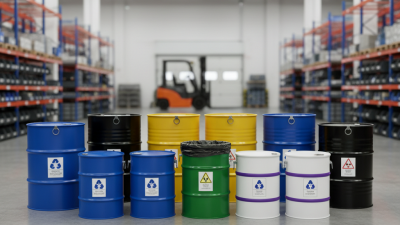
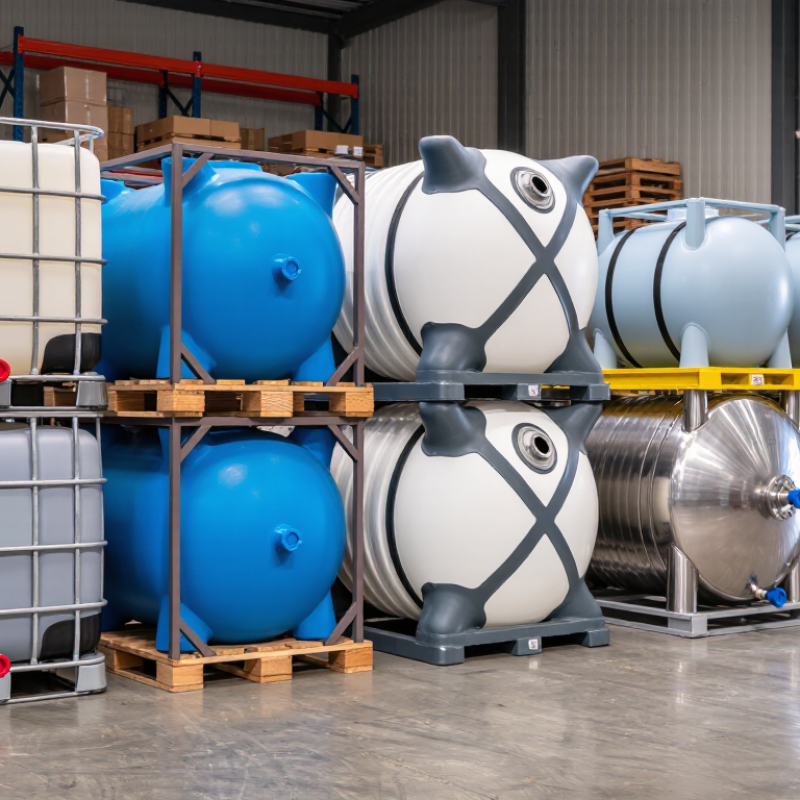
Specialized IBC tanks for potable, industrial, and chemical water applications, compared by common nominal capacity.

Most IBC water tanks use a nominal capacity of approximately 1,000 liters, while stainless-steel and large-volume formats are also available in larger capacities. Potable and food-grade tanks should use compliant materials, chemical tanks require suitable compatibility and certification, and heated or insulated models are selected for temperature-sensitive liquids. Capacities shown are representative market formats and may vary by specification and local regulations.

How Global Buyers Should Compare IBC Tank Types and Suppliers

Global buyers comparing the top 10 types of IBC water tanks should start with the water, not the catalog. Standard HDPE composite tanks suit many general storage needs. Stainless steel tanks offer stronger corrosion resistance and easier cleaning. Insulated tanks help protect temperature-sensitive water. Foldable, baffled, steel-frame, and reinforced designs serve different transport and handling conditions. The cheapest option can become expensive when fittings fail or cleaning takes too long.

Ask each supplier for exact tank dimensions, wall thickness, valve material, frame coating, and usable capacity. Request recent test reports, production photos, material declarations, and traceability records. Confirm whether the tank is new, refurbished, or previously used.

For drinking-water applications, check destination-market requirements and documented hygiene testing. Do not accept vague claims such as “food grade” without supporting evidence. Small details matter.

I have seen comparison sheets overlook pallet access and forklift clearance. That mistake can delay unloading. Compare sample units, spare-part availability, packaging quality, and response times before placing a large order. A reliable supplier explains weaknesses openly. That matters. Delivery history should be checked against real references, not only polished certificates. Some suppliers provide excellent tanks but weak after-sales support. Others communicate well but offer inconsistent valves. The right choice depends on water quality, climate, transport routes, cleaning routines, and local service capacity.

Get in touch with us,
We will contact you shortly!

Get in touch with us by filling up the enquiry form. We will contact you shortly!

    What is the difference between Unline(Non-Epoxy Coated) or Lining(Epoxy Coated) Metal Drum?

    What are Unline(Non-Epoxy Coated) and Lining(Epoxy Coated) drums compatible with?

    What is the difference between Grade A and Grade B Metal Drum ?

    What content is suitable to fill in a Recon Grade A or Grade B Drum?

    What is the difference between Open Top and Close Top Drums and their usage?

    What type of content are Metal or Plastic Drums suitable for?

    Will there be any contamination in the reconditioned metal, plastic drums or IBC tanks?

    What is the drum gauge(thickness) and weight for reconditioned metal drums?

    Do you sell New Packaging Products too?

    What additional services do you provide apart from selling reconditioned and new containers.?

    Do you offer labelling and silkscreen on the containers ?

    Are you able to ship overseas ?

    Leading the Way
    to Carbon Neutrality

    Drumming sustainability into every aspect of our operations, we strive to create a greener and more conscious future for generations to come.
    Contact Us
    WhatsApp
    Email
    Join Our Newsletter

    Sign up for our newsletter for exclusive discounts and latest news of new launches!

      Logo Logo Logo Logo Logo
      Scroll to Top