
China Top Pouch Machinery Manufacturers and Suppliers?
China has become a major sourcing base for pouch machinery, serving food, beverage, pharmaceutical, cosmetic, and household product manufacturers. Its suppliers offer equipment for filling, sealing, forming, coding, and packaging inspection. However, supplier selection requires more than comparing prices or factory photographs.
A reliable evaluation should examine machine structure, material compatibility, production speed, sealing stability, and control-system quality. Ask whether the manufacturer has tested similar pouch formats, such as stand-up pouches, flat sachets, or spouted bags. Request sample results using your actual film, product, and filling weight. Small details matter. A clean seal can decide product shelf life.
Experienced suppliers usually provide layout drawings, installation guidance, operator training, and spare-parts planning. Their technical teams should explain changeover time, cleaning procedures, and expected maintenance needs. Certifications can support confidence, but they should be checked against the machine model and destination market. A certificate alone proves little.
This guide reviews China’s leading pouch machinery manufacturers and suppliers through practical sourcing criteria. It considers manufacturing experience, customization ability, after-sales response, automation options, and documented customer applications. Factory visits, video inspections, and reference calls can reveal more than polished websites. No shortlist is perfect. Even a capable supplier may struggle with unusual materials or unstable product flow. Buyers should therefore define measurable requirements before requesting quotations. The best choice is not always the fastest machine. It is the equipment that runs consistently, protects product quality, and remains supportable after installation.
What Is Pouch Machinery and How Does It Work?
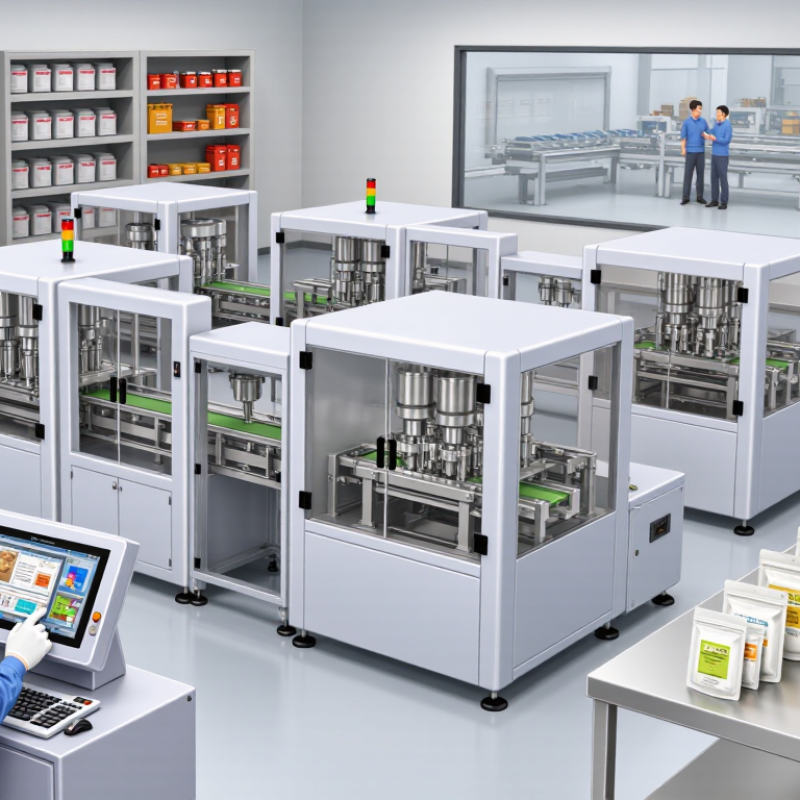
Pouch machinery converts flat film or pre-made materials into filled, sealed packages. It may form a pouch, measure product, fill it, and seal its edges. Depending on the design, it handles powders, granules, liquids, or small solid items. The process looks simple. Inside the machine, sensors track film position and sealing temperature. A forming collar shapes the film around a product tube, while rollers control movement.
A typical cycle begins when film unwinds from a roll. The machine prints or detects registration marks, then creates a back or side seal. A dosing unit releases a measured portion before horizontal jaws close the top seal. A cutter separates each pouch from the continuous web. Servo motors, pneumatic parts, and programmable controls coordinate these actions. In practical evaluations, stable sealing matters more than impressive speed. Dust, uneven film, and changing product density can cause weak seals or inaccurate filling. Supplier engineering support becomes valuable here.
Chinese manufacturers and suppliers offer vertical and pre-made pouch systems for different production scales. A reliable evaluation should examine material compatibility, filling accuracy, changeover time, cleaning access, and spare-part response. Ask for a sample test using your actual film and product. Do not trust speed figures alone. Fast machines may struggle with humid powders or narrow sealing windows. That limitation deserves honest discussion. Operators also need clear training and safe access around heated sealing areas. A suitable pouch machine should deliver repeatable results during ordinary shifts, not only during demonstrations.
China Top Pouch Machinery Manufacturers and Suppliers? – What Is Pouch Machinery and How Does It Work?
Pouch machinery converts flexible packaging film into sealed pouches through film unwinding, forming, filling, sealing, cutting, coding, and inspection. The table below summarizes common pouch-machine categories, operating characteristics, and supplier evaluation criteria without listing company or brand information.
| Machine Category | Typical Pouch Format | Primary Working Process | Typical Output Range | Common Fill-Volume Range | Suitable Products | Typical Film Structure | Key Selection Criteria |
|---|---|---|---|---|---|---|---|
| Vertical Form-Fill-Seal Machine | Pillow bags, gusseted bags, block-bottom bags, and some quad-seal bags | Forms a film tube vertically, doses the product, creates a longitudinal seal, makes the end seal, and cuts the pouch. | Approximately 30–120 bags per minute, depending on product characteristics and number of filling lanes. | About 5 g–5 kg | Snacks, grains, powders, frozen foods, pet food, coffee, and household products | PE, laminated PET/PE, OPP/CPP, PET/AL/PE, and other heat-sealable laminates | Product flowability, dosing accuracy, film width, sealing temperature, dust control, and required production speed |
| Premade Pouch Filling and Sealing Machine | Stand-up pouches, flat pouches, zipper pouches, spouted pouches, and shaped pouches | Loads premade bags, opens the pouch, fills the product, removes air when required, and heat-seals the opening. | Approximately 20–80 pouches per minute; multi-lane systems can be faster. | About 50 g–5 kg | Sauces, liquid foods, detergents, pet treats, snacks, cosmetics, and personal-care products | Multilayer heat-sealable laminates, including PET/PE, PET/CPP, NY/PE, and barrier structures | Pouch dimensions, zipper or spout requirements, filling method, product viscosity, seal cleanliness, and changeover time |
| Horizontal Form-Fill-Seal Machine | Three-side-seal pouches, four-side-seal pouches, sachets, and stick packs | Feeds or forms film horizontally, doses the product, makes transverse and longitudinal seals, and cuts individual packs. | Approximately 40–300 packs per minute, depending on pack size, lane configuration, and product type. | About 1 g–500 g | Single-use cosmetics, pharmaceutical sachets, wet wipes, condiments, samples, and powders | Paper/PE, PET/PE, PET/CPP, foil laminates, and other compatible flexible structures | Pack dimensions, dosing system, seal pattern, web registration, tear-notch requirements, and product-contact regulations |
| Multi-Lane Sachet Machine | Small flat sachets and stick packs produced in multiple lanes | Unwinds a wide film web, divides it into lanes, fills each lane, seals the packs, and cuts or perforates the finished web. | Approximately 100–1,200 sachets per minute in total, depending on the number of lanes and pack format. | About 0.5 g–50 g | Salt, sugar, instant coffee, pharmaceutical powders, shampoo, lotion, and condiment portions | Heat-sealable mono-material films, laminated films, and foil-based barrier laminates | Lane balance, dosing consistency, web tension, registration accuracy, seal integrity, and ease of cleaning |
| Liquid and Paste Pouch Machine | Flat pouches, stand-up pouches, spouted pouches, and three-side-seal bags | Measures liquid or paste with a pump or piston filler, fills the pouch, controls product splash, and seals the package. | Approximately 20–100 pouches per minute, depending on viscosity and filling volume. | About 10 ml–2,000 ml | Juice, sauces, edible oil, detergent, shampoo, hand gel, and cosmetic creams | PE-based laminates, PET/PE, PET/CPP, NY/PE, and high-barrier foil laminates | Viscosity, foaming behavior, filling accuracy, clean-seal performance, pump compatibility, and CIP or washdown needs |
| Powder Pouch Machine | Stick packs, sachets, pillow bags, and gusseted pouches | Uses an auger, cup, or another volumetric dosing system to measure powder before pouch forming, sealing, and cutting. | Approximately 30–150 pouches per minute, depending on powder behavior and filling system. | About 1 g–2,000 g | Flour, spices, milk powder, coffee, pharmaceuticals, nutritional powders, and chemicals | PE laminates, PET/PE, PET/CPP, PET/AL/PE, and other dust-resistant barrier films | Bulk density, particle size, dust generation, auger accuracy, anti-static design, extraction, and seal contamination control |
| Granule and Solid-Product Pouch Machine | Pillow bags, gusseted bags, quad-seal bags, and stand-up pouches | Weighs or volumetrically measures solid products, transfers them into formed pouches, then seals and cuts the package. | Approximately 20–100 pouches per minute, depending on target weight and product size. | About 10 g–5 kg | Rice, nuts, seeds, candy, hardware parts, pet food, and dried fruit | PE, OPP/CPP, PET/PE, PET/AL/PE, and recyclable polyolefin structures | Product fragility, target-weight tolerance, weigher configuration, drop height, sealing temperature, and bag stability |
| Vacuum and Gas-Flushing Pouch Machine | Vacuum pouches, modified-atmosphere pouches, and flat barrier bags | Removes air, introduces a specified gas mixture when required, and seals the pouch under controlled conditions. | Approximately 5–40 pouches per minute, depending on pouch size, vacuum level, and chamber design. | About 100 g–10 kg | Meat, seafood, cheese, coffee, medical products, and oxygen-sensitive foods | High-barrier PA/PE, PET/PE, PET/AL/PE, EVOH-based laminates, and other approved barrier structures | Residual oxygen target, vacuum level, gas flow, barrier performance, seal strength, chamber size, and product protection |
| Spouted Pouch Machine | Premade spouted pouches and pouches with fitments | Positions or inserts a spout, fills the pouch, heat-seals the fitment area, and checks the closure or seal. | Approximately 15–60 pouches per minute, depending on spout size and pouch construction. | About 100 ml–2,000 ml | Baby food, beverages, sauces, detergents, personal-care products, and refill products | PE/PE, PET/PE, PET/CPP, NY/PE, and high-barrier multilayer films | Fitment dimensions, cap compatibility, leak prevention, aseptic or hygienic requirements, fill accuracy, and pouch orientation |
| Automatic Inspection and Packing Module | Finished pouches from vertical, horizontal, or premade-pouch lines | Checks seal appearance, pouch presence, weight, coding, metal contamination, or leaks before counting and case packing. | Designed to match the upstream line; commonly 30–300 packs per minute. | Determined by the upstream filling machine | Food, pharmaceutical, chemical, household, and personal-care products | Compatible with the pouch material used by the primary packaging line | Inspection accuracy, reject mechanism, traceability, data logging, line synchronization, and applicable safety requirements |
- Film handling: A reel of flexible packaging film is unwound while tension and registration are controlled.
- Pouch forming: The film is folded around a forming collar or positioned as a premade pouch.
- Filling: The product is measured by an auger, volumetric cup, multihead weigher, piston, pump, or other dosing system.
- Sealing and cutting: Heated sealing jaws or ultrasonic systems create hermetic or specified seals, followed by cutting or perforation.
- Quality control: Sensors, checkweighers, vision systems, metal detectors, and leak testers may be integrated into the line.
- Important note: Output figures are representative industry ranges rather than guaranteed capacities. Actual performance depends on pouch size, film structure, product characteristics, filling accuracy, sealing temperature, automation level, and local electrical and safety requirements.



Get in touch with us,
We will contact you shortly!
What is the difference between Unline(Non-Epoxy Coated) or Lining(Epoxy Coated) Metal Drum?

What are Unline(Non-Epoxy Coated) and Lining(Epoxy Coated) drums compatible with?
What is the difference between Grade A and Grade B Metal Drum ?
What content is suitable to fill in a Recon Grade A or Grade B Drum?
What is the difference between Open Top and Close Top Drums and their usage?
What type of content are Metal or Plastic Drums suitable for?
Will there be any contamination in the reconditioned metal, plastic drums or IBC tanks?
What is the drum gauge(thickness) and weight for reconditioned metal drums?
Do you sell New Packaging Products too?
What additional services do you provide apart from selling reconditioned and new containers.?
Do you offer labelling and silkscreen on the containers ?
Are you able to ship overseas ?
Leading the Way
to Carbon Neutrality