
China Top Stainless Steel Barrels Suppliers?
Choosing China’s top stainless steel barrels suppliers requires more than comparing prices. Buyers must examine material grades, welding quality, surface treatment, capacity, and delivery controls. A polished photograph proves very little. The factory floor tells a clearer story.
Materials scientist John D. Verhoeven explains, “Stainless steels are iron-based alloys containing at least 10.5% chromium.” This principle matters when checking supplier claims. Reliable manufacturers should provide heat numbers, mill certificates, and traceable inspection records. Grade 304 stainless steel suits many general applications. Grade 316L offers stronger resistance in chloride-rich or demanding environments. The correct choice depends on the product, cleaning process, and storage conditions.
A serious review should inspect barrel seams, lid fit, gasket compatibility, internal polishing, and passivation procedures. Ask whether each unit receives pressure, leak, and dimensional testing. Food, beverage, chemical, and pharmaceutical buyers may also require hygienic welds and documented quality systems. Factory audits can reveal uneven polishing, crowded production areas, or weak packaging practices. Small details often create expensive problems later.
Supplier experience matters. Export history matters more. Request sample barrels before placing a large order. Confirm tolerances in writing. Check whether the supplier can maintain the same finish across repeated batches. No supplier ranking is perfect. Some capable factories communicate poorly, while polished sales teams may hide production limits. That contradiction deserves attention. The strongest China stainless steel barrels suppliers combine technical evidence, responsive communication, stable production, and honest limitations. This guide examines those factors for buyers seeking dependable quality, not simply the lowest quotation.
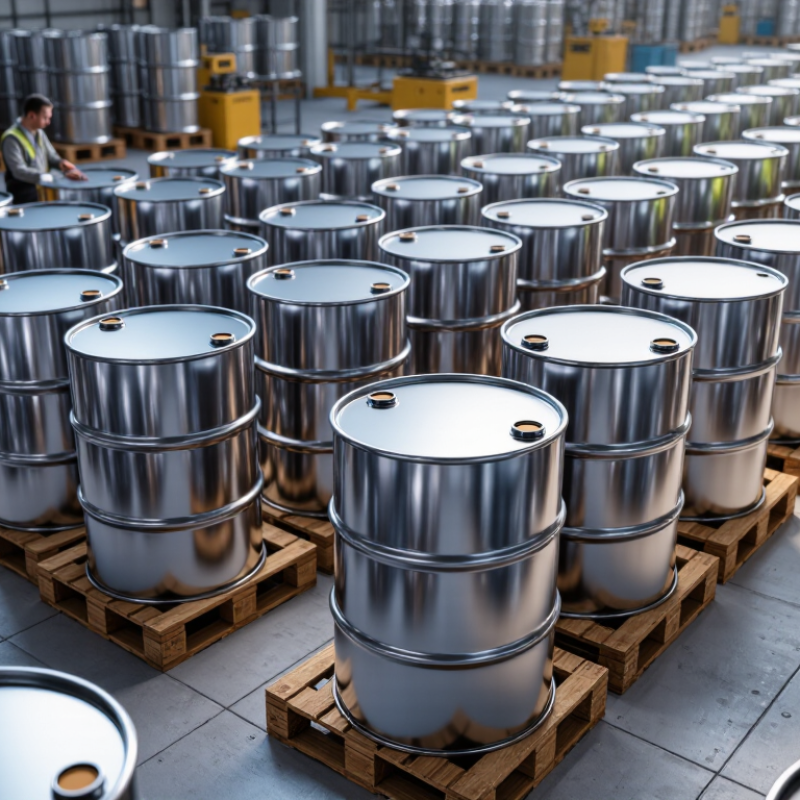
What Are Stainless Steel Barrels and How Are They Used?
Stainless steel barrels are cylindrical containers made from corrosion-resistant steel, commonly in 304 or 316 grades. They store liquids, powders, and some bulk materials in demanding environments. Their smooth interior helps reduce residue and supports easier cleaning. Many models hold about 30 or 55 gallons.
In food and beverage facilities, barrels may hold oils, syrups, sauces, or brewing ingredients. Pharmaceutical and laboratory operations use them for controlled material handling.
Workshops also use them for water, approved chemicals, and production components. Removable lids allow filling and inspection, while threaded fittings support hoses, valves, or sampling ports. Gaskets must match the stored material and operating temperature.
From practical handling, seam quality matters as much as steel grade. A polished surface can still fail if welds contain pits or crevices. I would inspect the lid seal, base ring, drain area, and interior finish before purchase.
Check the supplier’s material certificate, wall thickness, cleaning method, and load limits. Not every stainless barrel is pressure-rated. Never assume it is. Temperature changes, stacking, and repeated washing can affect service life.
I have also found that a slightly heavier barrel may be easier to manage safely, although it costs more and requires better lifting equipment. Supplier reliability depends on consistent dimensions, traceable materials, and responsive technical support._久久爱
Why China Is a Major Stainless Steel Barrel Manufacturing Hub
China Top Stainless Steel Barrels Suppliers?
China has become a major stainless steel barrel manufacturing hub because its supply chain is unusually complete. Steel mills, metal processors, welding workshops, and testing laboratories often operate within the same industrial regions. This shortens production cycles and reduces transport costs. It also makes custom orders more practical.
Manufacturers commonly work with 304 and 316L stainless steel for food, chemical, and industrial applications. Skilled technicians use deep drawing, precision welding, polishing, and passivation to improve durability. A reliable supplier should provide material certificates, dimensional reports, weld inspection records, and leak-testing results. Ask for samples.
Production capacity is another advantage. Chinese factories can produce small trial batches or large container orders with flexible tooling. Many suppliers also support custom lids, handles, thicknesses, and surface finishes. However, quality is not automatically consistent. Some workshops may focus too heavily on price. A factory audit should examine raw material storage, welding control, cleaning procedures, and final inspection.
The details matter. Uneven polishing can trap residue. Poorly fitted lids may leak during transport. Buyers should compare several suppliers, not only their quotations. Factory photographs are useful, but independent inspections are stronger evidence. China offers strong manufacturing resources, yet careful verification remains necessary. The picture is not perfect. That is why technical documents and production samples deserve more trust than attractive promises.
How to Identify Top Stainless Steel Barrel Suppliers in China
Identifying top stainless steel barrel suppliers in China requires more than comparing prices. World Stainless reported approximately 58.4 million tonnes of global stainless crude steel production in 2023, with China contributing about 36.2 million tonnes. This scale supports strong manufacturing capacity, but it does not guarantee consistent barrel quality. A capable supplier should explain its material sources, production controls, and export experience clearly.
Request a material certificate for every batch. Check whether the steel grade matches the specification, such as 304 or 316L. Ask for EN 10204 3.1 documentation, heat numbers, wall-thickness records, and weld inspection results. The barrel should also pass leak, pressure, dimensional, and surface-finish checks. Inspectors should examine weld seams closely, especially around the lid, bung, and bottom corner. Small defects matter.
Factory audits reveal more than websites. Review ISO 9001 certification, calibration records, corrective-action reports, and worker training files. Compare production capacity with verified customs data, while remembering that HS classifications for barrels can vary. A polished factory tour can still mislead. No checklist is perfect. I would request a trial order before signing a large contract. Independent laboratory testing is useful when food, chemical, or pharmaceutical contact is involved. Reliable suppliers accept traceability, sample testing, and reasonable rejection terms without hesitation.
How to Identify Top Stainless Steel Barrel Suppliers in China
A reliable supplier should provide material certificates that match the stainless steel grade ordered. This chart uses the midpoint of the typical ASTM A240 chemical composition ranges for 304 and 316L stainless steel. Request heat-number traceability, mill test certificates, and independent inspection records before placing an order.
Which Standards and Features Define Quality Stainless Steel Barrels?
China Top Stainless Steel Barrels Suppliers?
Which Standards and Features Define Quality Stainless Steel Barrels?
Quality stainless steel barrels begin with traceable material, not a bright finish. The International Stainless Steel Forum reported 58.4 million tonnes of stainless steel production in 2023. That scale makes supplier verification essential. Ask for mill certificates showing grade, heat number, chemical composition, and mechanical properties. Common options include 304 stainless steel for general service and 316L for stronger corrosion resistance. However, grade selection depends on the stored material and cleaning method.
ASTM A240 covers stainless steel plate used in pressure vessels and general applications. EN 10088 defines stainless steel grades and technical delivery conditions in Europe. These standards support material control, but they do not guarantee a well-built barrel. Check weld penetration, internal polishing, edge finishing, lid fit, gasket compatibility, and dimensional tolerance. A smooth surface can still hide weak welds. Request dye-penetrant or leak-test records when suitable. For food-contact use, confirm applicable regulatory documentation in the destination market. ISO 9001 certification may show process discipline, yet it is not proof of every barrel’s quality.
Tips: Inspect one sample before placing a large order. Measure wall thickness at several points. Look for pits around welds and rough seams inside the barrel. Confirm the actual working temperature, stacking load, and closure design. Supplier photographs help, but independent inspection is safer. I would not rely on certificates alone; paperwork can be correct while workmanship remains uneven.
China Top Stainless Steel Barrels Suppliers? - Which Standards and Features Define Quality Stainless Steel Barrels?
| Quality Dimension | Recommended Specification | Relevant Standard or Reference | What to Check with a Supplier | Quality Indicator |
|---|---|---|---|---|
| Material Grade | 304 or 304L for general food, chemical, and industrial use; 316L where improved chloride and corrosion resistance is required. | ASTM A240, ASTM A276, EN 10088-2, EN 10088-3, or GB/T 3280 and GB/T 1220. | Request a material test certificate showing the grade, heat number, chemical composition, and mechanical properties. | Traceable material |
| Corrosion Resistance | 316L is generally preferred for salt-containing, acidic, pharmaceutical, and coastal environments. 304L is suitable for many less aggressive applications. | Grade selection should be based on the actual chemical, temperature, concentration, and exposure conditions. | Confirm compatibility with the stored product and ask whether weld areas are pickled and passivated. | Application matched |
| Sheet Thickness | Common fabricated barrel bodies use approximately 0.8–2.0 mm stainless steel, depending on capacity, stacking, pressure, and handling requirements. | Thickness should be specified on the approved drawing and verified against the required design load. | Check thickness at multiple points with a calibrated gauge; include a permitted negative tolerance in the purchase specification. | Uniform wall thickness |
| Typical Capacity | Common sizes include approximately 20 L, 30 L, 50 L, 100 L, 200 L, and 220 L. Actual capacity depends on the design and filling method. | Nominal capacity, working capacity, and maximum filling level should be clearly distinguished. | Verify internal volume, external dimensions, tare weight, and safe filling percentage before ordering. | Dimensionally verified |
| Surface Finish | Typical finishes include 2B for general service and polished or brushed finishes for improved cleanability and appearance. | Surface roughness should be stated as a measurable Ra value where hygiene or cleanability is important. | For hygienic service, confirm the internal Ra requirement, polishing direction, absence of embedded iron, and smooth transitions. | Cleanable surface |
| Weld Quality | Continuous, uniform welds with no visible cracks, pinholes, undercut, excessive spatter, or incomplete fusion. | Welding procedures may be qualified under ISO 15614-1; welder qualification may follow ISO 9606-1. | Ask for the welding procedure, inspection method, and evidence of weld cleaning, pickling, and passivation. | Defect-free welds |
| Leak Tightness | Barrels intended for liquids should be leak-tight at the body, bottom, lid, bung, gasket, and welded fittings. | Use a documented leak-test method suitable for the design, such as air-pressure or water-fill testing. | Confirm test pressure, test duration, acceptance criteria, sampling plan, and whether every barrel is tested. | No leakage |
| Lid and Closure | Options may include a removable cover, clamp ring, bolted lid, threaded bung, or sanitary clamp connection. | Closure design should match the required sealing performance, filling method, cleaning method, and transport conditions. | Check gasket material, food or chemical compatibility, torque requirements, replacement availability, and seal compression. | Secure closure |
| Gasket Material | Common choices include silicone, EPDM, PTFE, and other application-specific elastomers. | Material selection depends on temperature, chemicals, oils, solvents, food contact, and cleaning agents. | Request the gasket material specification, operating temperature range, and applicable food-contact or chemical-resistance documentation. | Compatible seal |
| Food and Hygienic Use | Use smooth internal surfaces, crevice-minimized construction, drainable geometry, and corrosion-resistant 304L or 316L materials. | Applicable requirements may include FDA food-contact rules, EU food-contact framework requirements, or 3-A criteria when relevant. | Verify product-contact materials, cleaning validation requirements, weld finish, and the absence of inaccessible product-retention areas. | Hygienic design |
| Mechanical Strength | The barrel should withstand normal lifting, rolling, stacking, vibration, and handling without permanent deformation. | For dangerous-goods transport, applicable UN performance requirements may apply to the complete certified packaging design. | Review load limits, stacking height, drop or vibration-test evidence where required, and the intended transport classification. | Handling resistant |
| Dimensional Accuracy | Critical dimensions include body diameter, height, opening diameter, lid fit, base profile, and pallet or lifting clearances. | Dimensions and tolerances should be defined in a controlled technical drawing or purchase specification. | Request an inspection report covering critical dimensions and confirm compatibility with racks, pumps, pallets, and filling equipment. | Consistent fit |
| Surface Protection | Stainless steel should be free from carbon-steel contamination, adhesive residue, sharp edges, and harmful surface discoloration. | Pickling and passivation practices should be appropriate for the stainless steel grade and fabrication process. | Check whether dedicated stainless-steel tools are used and whether final cleaning prevents free-iron contamination. | Clean stainless surface |
| Documentation | A complete supply file should include drawings, material certificates, inspection records, test results, and packing information. | ISO 9001 certification can indicate a quality-management system but does not replace product-specific inspection evidence. | Confirm document format, batch traceability, revision control, certificate authenticity, and retention period. | Documented quality |
| Packaging and Delivery | Barrels should be protected against dents, scratches, moisture, contamination, and movement during inland or sea transport. | Packaging should reflect the selected Incoterm, shipping duration, stacking method, and destination handling conditions. | Inspect corner protection, lid protection, pallet stability, moisture control, labels, and pre-shipment photographs. | Transit protected |
| Supplier Evaluation | Prioritize verified manufacturing capability, stable process control, responsive technical support, and repeatable inspection results. | Evaluate quality systems, inspection procedures, production capacity, and conformity to the approved sample. | Use a pre-production sample, first-article inspection, defined acceptance criteria, and periodic quality audits. | Repeatable supply |
How to Compare Prices, Customization, and Supplier Services
China Top Stainless Steel Barrels Suppliers?
Comparing suppliers requires more than the quoted unit price. The International Stainless Steel Forum reported 58.4 million tonnes of stainless steel production in 2023. That scale does not guarantee better barrel quality. Ask for the grade, wall thickness, working volume, and surface finish. A 304 barrel may cost less than 316, but chemical exposure can make the cheaper option expensive. Review metal surcharges, tooling, packaging, freight, and import charges together. Request a sample invoice with every cost shown.
Customization should be measured, not promised. Confirm dimensions, lid design, gasket material, fittings, weld treatment, polishing level, and leak-test pressure. For food, beverage, or pharmaceutical use, request material certificates under EN 10204 3.1, weld inspection records, and cleaning procedures. The International Organization for Standardization highlights traceability and process control across quality systems, yet paperwork alone cannot prove production discipline. Ask for dated factory photos or a live inspection.
Supplier service often decides the real purchase cost. A capable supplier should explain tolerances, production time, replacement handling, and spare-part availability. Compare response speed using the same technical brief. It exposes vague answers quickly. I would still keep a small allowance for defects and transport delays; my own comparisons have underestimated packaging damage. Price matters, but predictable service protects the project better.
Related Posts
-
2025 Top Trends in Stainless Steel Barrels for Every Industry
-
How to Choose the Right Stainless Steel Barrels for Your Needs?
-

Top Uses and Benefits of Poly Drums in Industrial and Commercial Applications
-
China Best Reconditioned Drums for Quality Sound and Sustainability?
-
Why Choose Plastic Drums for Global Shipping?
-
How to Choose the Right Plastic Drum Barrel for Your Needs?

Get in touch with us,
We will contact you shortly!
What is the difference between Unline(Non-Epoxy Coated) or Lining(Epoxy Coated) Metal Drum?

Unline drums with internally bare metal surface is more susceptible to corrosion and rust while Lining drums are internally coated with Phenolic Epoxy Coating to provide a non-reactive barrier between the drum surface and your product, less risk of contamination. Note: Our Unline drums are coated with an anti-rust agent after washing to reduce risk of rust.
What are Unline(Non-Epoxy Coated) and Lining(Epoxy Coated) drums compatible with?

In Singapore, Recon Unline Drums are usually more costly than Recon Lining Drums. Hence, we recommend Recon Unline Drums to fill aromatics like Thinner, Xylene, Toulene& other solvents like Hexane, BA, CA, EA, MC, White spirit, etc.
We recommend the lower-priced Recon Lining Drums to fill hydrocarbons like IPA, Methanol, Ethanoland oil-based products like diesel, petrol, lubricants, engine, hydraulic, base, transmission fluid, additives, waste oil, etc.;
What is the difference between Grade A and Grade B Metal Drum ?

Grading of used drums are usually based on physical conditions like rustiness, deformities and residual contents. Grade A drums are totally free from internal rust, serious dents and are easy to clean. Grade B drums have different degrees of rust internally and aesthetically inferior compared to Grade A drums.
What content is suitable to fill in a Recon Grade A or Grade B Drum?

Recon Grade A drum is suitable to fill more costly virgin grade products while Recon Grade B drum is more suitable for recycled or waste products.
What is the difference between Open Top and Close Top Drums and their usage?

Closed top drums are for water and other liquid products. Open Top drums can be used for liquid too but are primarily for more viscous products. The Open Top (or open head with a lid) allows you to get in and out of the drum with your product easier.
What type of content are Metal or Plastic Drums suitable for?

Metal drums offer additional protection when dealing with potentially flammable substances. They provide superior fire resistance, impact protection, and longevity for storing class 1, 2, and 3 volatile chemicals.
Plastic HDPE Drums are suitable for corrosive chemicals like acids, alkaline and also water-based products.
Will there be any contamination in the reconditioned metal, plastic drums or IBC tanks?

All our reconditioned containers (metal/plastic drums, carboys, IBC tanks) are washed thoroughly with specially formulated cleaning agent, rinsed with clean water, dried, and tested for possible leakages during the recondition process. Stringent quality inspection is being conducted 100% on every reconditioned product before they are qualified for sale & delivery.
What is the drum gauge(thickness) and weight for reconditioned metal drums?

Reconditioned metal drums gauge can be 0.9mm to 1.0mm all round. Their weight can vary from 16 to 18kg.
Do you sell New Packaging Products too?

Yes, we are also a distributor for new pallets, metal drums, plastic drums, carboys, IBCs and stainless-steel tanks.
What additional services do you provide apart from selling reconditioned and new containers.?

We are an NEA licensed toxic industrial waste collector, who can collect and dispose of used toxic waste containers in Singapore.
Do you offer labelling and silkscreen on the containers ?

We can provide labelling and silk-screening on the containers.
Are you able to ship overseas ?

Yes, we can arrange export our products to any country in the world.
Leading the Way
to Carbon Neutrality