
What Are A4 Adhesive Labels Used For?

A4 Adhesive Labels are simple sheets, yet they solve surprisingly varied identification problems. They help offices organize files, warehouses mark cartons, schools prepare folders, and small businesses present products clearly. Each sheet usually contains multiple peel-off labels, designed for inkjet or laser printing. That format makes short production runs practical. No expensive label press is required.

Industry consultant and label expert Mike Fairley captures their commercial value with the phrase, “Labels are the silent sales force.” His observation explains why a carefully printed A4 label can do more than display a name. It can show a product code, batch reference, barcode, price, address, or handling instruction. In a busy storeroom, a bold black barcode on a white label can save several minutes of searching. Small gains matter.

The best uses depend on adhesive strength, surface texture, moisture, temperature, and printer compatibility. Paper labels suit indoor documents and packaging. Synthetic materials may perform better on damp containers or frequently handled items. Still, “stronger” does not always mean “better.” A permanent adhesive can damage a box or leave residue. That is an easy detail to overlook.

This guide examines how A4 Adhesive Labels support shipping, inventory control, filing, branding, event preparation, and product identification. It also considers common mistakes, including poor alignment, overloaded designs, weak contrast, and unsuitable label materials. Practical results may vary. Testing one printed sheet first is often wiser than trusting the package description alone. The goal is not merely attractive labels. It is reliable information that remains readable, attached, and useful when work becomes busy.
What Are A4 Adhesive Labels Used For?

What Are A4 Adhesive Labels?

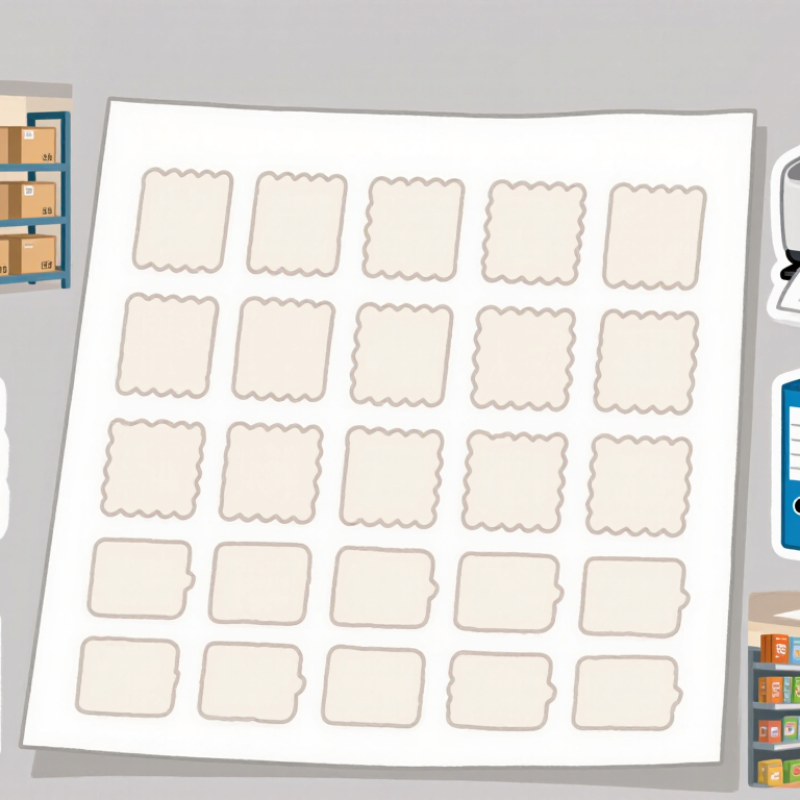
A4 adhesive labels are self-stick label sheets sized to 210 by 297 millimetres. Each sheet contains individual labels arranged in a fixed grid. The labels usually have a printable face, an adhesive layer, and a removable backing sheet. After printing, users peel away each label and apply it to a clean surface. Some sheets use permanent adhesive, while others are designed for easier removal.

These labels support everyday tasks in offices, warehouses, schools, and small workshops. They can identify envelopes, folders, storage boxes, product samples, cables, and parcels. A4 sheets also work well for barcodes, QR codes, price details, and return addresses. In my experience, neat alignment depends on the printer settings and the label template. A small margin error can shift every label.

Surface preparation matters. Dust, oil, and moisture can weaken the bond. Smooth cardboard, paper, glass, and sealed plastic usually provide better results. Rough or curved surfaces may cause lifting at the edges. They are not perfect for every job.

Users should check whether the sheets suit inkjet or laser printing. Heat-sensitive materials may react poorly inside certain printers. I once underestimated drying time on heavily printed labels, and smudging followed. That simple mistake showed why testing one sheet first is worthwhile. Storage also matters; excessive heat or humidity can affect the adhesive and paper.


Common Uses of A4 Adhesive Labels

A4 adhesive labels are practical sheets for organizing, identifying, and presenting information. Their standard size fits many office printers. Users can print addresses, file names, product details, or storage codes in small batches. This helps when handwriting would look uneven or take too long. In busy offices, labels can mark archive boxes, sample containers, equipment drawers, and outgoing envelopes.

Small businesses often use them for packaging and stock control. A label may show a product name, quantity, handling note, or scannable code. Clear text reduces picking errors when shelves become crowded. They also work well for classroom folders, event materials, library sections, and household storage. A4 sheets are flexible. One sheet can hold several label sizes, depending on the layout.

Good results require more than pressing Print. Check whether the sheet suits an inkjet or laser printer. Test one page before printing a large batch. Dusty plastic, damp cardboard, or curved surfaces may weaken adhesion. Labels can also peel when corners are rounded or rubbed repeatedly. Neat alignment is easy to underestimate. Leave enough space between designs, and keep important text away from edges. The process is simple, but small setup mistakes can waste a whole sheet.

Types of Materials and Adhesive Options

What Are A4 Adhesive Labels Used For?

Types of Materials and Adhesive Options

A4 adhesive labels support office filing, product identification, shipping, and stock control. Their material affects durability, print quality, and handling. Standard paper labels suit folders, invoices, cartons, and indoor storage. They are affordable and easy to write on. However, paper can wrinkle near sinks, cold rooms, or humid shelves. Polypropylene labels resist moisture and light splashes. Polyester offers greater strength for equipment tags and long-term identification. Plastic faces are useful. Yet, some printers handle them poorly without suitable settings.

The adhesive also needs careful selection. Permanent adhesive bonds firmly to cardboard, plastic, glass, or coated metal. It suits asset records and sealed packages. Removable adhesive works better for temporary signs, folders, and display changes. It should lift cleanly when the surface is smooth. Freezer applications require adhesive designed for low temperatures. High-tack options help labels stay attached to rough cartons or textured surfaces. A strong adhesive is not always better. It may damage paper or leave residue.

In practical use, surface preparation often decides success. Dust, oil, and condensation weaken the bond. Wipe the surface and let it dry fully. I have seen well-printed labels fail because cartons were slightly damp. That mistake is easy to miss. Check printer compatibility before buying plastic sheets. Test one label on the actual surface for twenty-four hours. Print alignment can also shift between batches, so leave a small safety margin around important text.

How to Design and Print A4 Adhesive Labels

How to Design and Print A4 Adhesive Labels

Designing and printing A4 adhesive labels starts with the label’s purpose. Will it identify folders, organize stock, or display product details? Each purpose needs a suitable size, adhesive strength, and information layout. Measure the surface before opening design software. A label that looks balanced on screen may cover a seam in practice. Leave a clear margin around text and important symbols. Keep type large enough for quick reading. Short lines work better.

Use an A4 grid that matches the adhesive sheet’s rows and columns. Confirm the label width, height, gaps, and corner shape from the sheet itself. Do not trust a generic template blindly. Build a test page on ordinary paper, then place it behind the adhesive sheet. Hold both against a window to check alignment. This simple step prevents wasted sheets. Use high-resolution images and strong contrast. Avoid placing vital text near cut lines. A small shift can remove a digit.

Before printing, choose the correct paper setting and feed one sheet at a time. Check whether the printer supports adhesive media safely. Print one test sheet first. Let the ink dry before stacking labels. I once treated alignment as final after one successful test. It was not. Humidity and a slightly curved sheet changed the result. Review spelling, dates, contact details, and barcode readability under normal lighting. Keep a record of the template and settings for repeat jobs. Still, inspect every batch, because consistency is never automatic.

Factors for Choosing the Right A4 Adhesive Labels

What Are A4 Adhesive Labels Used For?

A4 adhesive labels suit office filing, shipping, product samples, asset identification, event passes, and small-batch packaging. Their 210 × 297 mm sheet format works with many desktop printers. It also supports quick variable-data printing without dedicated machinery.

Smithers’ The Future of Global Printed Labels to 2028 estimated the worldwide printed-label market exceeded US$45 billion in 2023. The report also identified pressure-sensitive labels as a leading technology segment. That demand reflects a practical need for flexible, short-run labeling.

Choosing the right A4 adhesive labels requires more than checking the sheet size.

Start with the surface: paper, cardboard, plastic, glass, or a textured box. Smooth surfaces usually need less aggressive adhesive. Cold storage, humidity, heat, and frequent handling can change performance. Choose permanent adhesive for long-term identification, and removable adhesive when clean repositioning matters.

Paper labels are economical for files and indoor use. Polyester or polypropylene labels resist moisture better. Printer compatibility matters too. Laser and inkjet sheets use different coatings. Wrong materials may cause smearing, curling, or printer jams.

In my experience, testing a small batch exposes problems earlier. It is not perfect, but it prevents expensive reprinting. FINAT’s 2024 Radar reported weaker European self-adhesive label volumes in 2023, reminding buyers to control waste carefully. Consider label size, corner shape, opacity, and release quality before ordering. A low-cost sheet can become costly when application slows.

Get in touch with us,
We will contact you shortly!

Get in touch with us by filling up the enquiry form. We will contact you shortly!

    What is the difference between Unline(Non-Epoxy Coated) or Lining(Epoxy Coated) Metal Drum?

    What are Unline(Non-Epoxy Coated) and Lining(Epoxy Coated) drums compatible with?

    What is the difference between Grade A and Grade B Metal Drum ?

    What content is suitable to fill in a Recon Grade A or Grade B Drum?

    What is the difference between Open Top and Close Top Drums and their usage?

    What type of content are Metal or Plastic Drums suitable for?

    Will there be any contamination in the reconditioned metal, plastic drums or IBC tanks?

    What is the drum gauge(thickness) and weight for reconditioned metal drums?

    Do you sell New Packaging Products too?

    What additional services do you provide apart from selling reconditioned and new containers.?

    Do you offer labelling and silkscreen on the containers ?

    Are you able to ship overseas ?

    Leading the Way
    to Carbon Neutrality

    Drumming sustainability into every aspect of our operations, we strive to create a greener and more conscious future for generations to come.
    Contact Us
    WhatsApp
    Email
    Join Our Newsletter

    Sign up for our newsletter for exclusive discounts and latest news of new launches!

      Logo Logo Logo Logo Logo
      Scroll to Top