
7 Best Reconditioned Drums for Global Buyers?
Choosing the right reconditioned drums is not simply a price comparison. For global buyers, performance depends on material, previous contents, cleaning quality, closure design, and documented testing.
Packaging consultant Michael R. Hayes offers a practical warning: “A reconditioned drum earns trust through evidence, not appearance.” That principle matters when a steel drum arrives with fresh paint but incomplete inspection records. Buyers should examine wall thickness, seam condition, gasket flexibility, interior lining, and leak-test results. The best suppliers also provide clear photographs, batch identification, and storage guidance.
This guide reviews seven strong reconditioned drums for international purchasing needs. Each option is considered for durability, handling, compatibility, and supply consistency. Steel drums may suit demanding industrial materials, while plastic drums can reduce corrosion concerns for selected contents. Open-head designs support easier filling and cleaning. Tight-head models offer better protection during transport.
Details matter.
A reliable drum should show more than a polished exterior. Its closure must fit correctly, and its previous use should be disclosed whenever possible. Buyers must also confirm current transport, labeling, and packaging requirements in every destination market. These requirements can differ considerably.
No ranking is perfect. A drum that works well for one product may fail another application. That is why responsible selection includes technical review, sample inspection, and supplier communication before a large order. The recommendations below aim to make that process clearer, safer, and more practical for buyers sourcing reconditioned drums across borders.
What Are Reconditioned Drums and Why Do Global Buyers Choose Them?
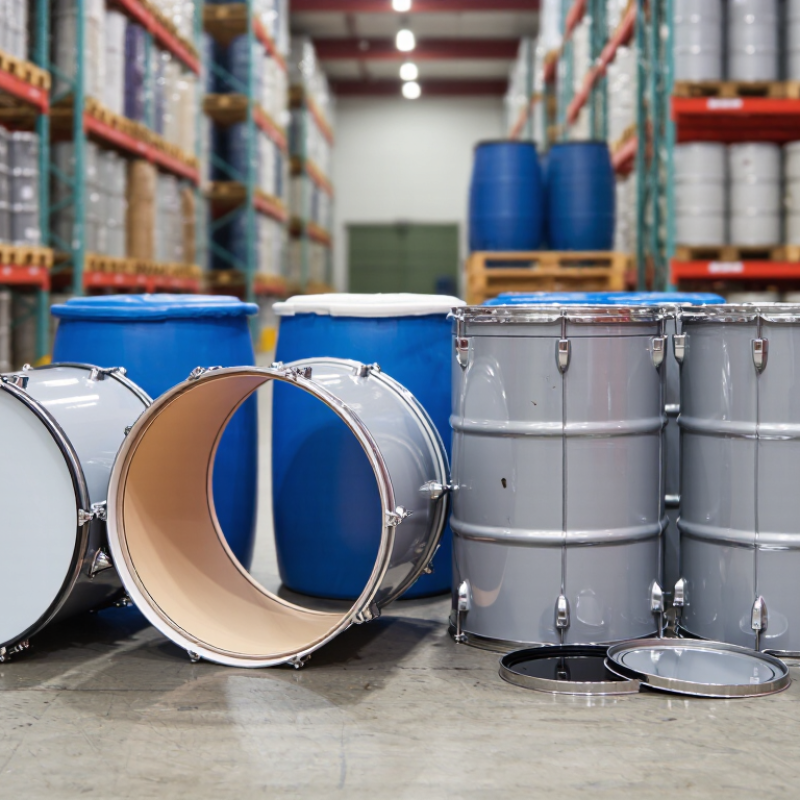
Reconditioned drums are containers professionally cleaned, inspected, repaired, and tested for another service cycle. They may be made from steel or high-density plastic. A reliable process checks dents, seams, closures, interior residue, and pressure performance. Inspection records should identify the drum’s material, capacity, previous use, and permitted application.
Global buyers choose them because they reduce purchasing costs and support circular supply chains. UNEP’s Global Resources Outlook 2024 reports that worldwide material extraction has tripled since 1970 and could rise by 60% by 2060. Reusing industrial packaging helps slow this pressure. The World Steel Association also reports that more than 680 million tonnes of steel are recycled globally each year. Reconditioned steel drums keep useful material in circulation longer.
The practical benefits are visible. A buyer may receive clean drums with tested closures, fewer production delays, and simpler inventory planning. Yet reconditioning is not automatically greener. Long transport routes, difficult residue removal, or repeated inspection failures can reduce its advantage. That deserves attention.
For international shipments, buyers should request cleaning certificates, inspection dates, wall-thickness checks, and documented performance testing. Application matters. A drum suitable for dry powders may not suit liquids or temperature changes. Local packaging and transport rules also differ, so technical approval should come before purchase. The cheapest drum is not always the safest choice.
7 Best Reconditioned Drums for Global Buyers
What Are Reconditioned Drums and Why Do Global Buyers Choose Them?
| Rank | Reconditioned Drum Type | Typical Capacity | Construction and Closure | Best Applications | Key Advantages for Global Buyers | Important Inspection Points | Hazardous-Goods Considerations |
|---|---|---|---|---|---|---|---|
| 1 | Open-Head Carbon Steel Drum | 30 gal / 114 L 55 gal / 208 L | Cylindrical carbon-steel body with a fully removable lid, gasket, and bolt-ring or lever-lock closure. | Powders, viscous products, adhesives, coatings, food ingredients with suitable liners, and goods requiring easy filling or discharge. | Wide availability, strong mechanical protection, easy cleaning, and practical access for manual loading. | Check for internal rust, dents affecting stability, lid flatness, gasket flexibility, ring alignment, and evidence of chemical residue. | May be suitable for regulated dangerous goods only when the drum has a valid, current UN performance marking for the specific packing group and contents. |
| 2 | Tight-Head Carbon Steel Drum | 30 gal / 114 L 55 gal / 208 L | Closed-head steel body with fixed top and threaded openings, commonly using a larger bung and a smaller vent or bung. | Liquid chemicals, lubricants, oils, industrial liquids, and products that benefit from a sealed container. | Good stackability, strong puncture resistance, and reduced exposure to moisture and contamination during ocean or road transport. | Inspect bung threads, plugs, gaskets, seams, bottom chime, interior corrosion, and pressure or leak-test results when required. | Confirm the current UN marking, closure instructions, permitted packing group, and compatibility of the contents with steel. |
| 3 | Open-Head HDPE Plastic Drum | 30 gal / 114 L 55 gal / 208 L Approx. 220 L designs | High-density polyethylene body with removable lid and gasket; closure may use a bolt ring or lever-lock ring. | Water-based products, detergents, agricultural formulations, powders, semi-solids, and liquids that may corrode steel. | Excellent resistance to rust and many aqueous chemicals, lower tare weight than steel, and convenient wide-mouth access. | Check whitening, brittleness, UV damage, deformation, odor, contamination history, lid condition, and gasket elasticity. | Plastic performance can change with temperature and chemical compatibility. Verify the applicable UN certification and material compatibility before shipment. |
| 4 | Tight-Head HDPE Plastic Drum | 30 gal / 114 L 55 gal / 208 L Approx. 220 L designs | Closed-head HDPE body with one or more threaded openings and replaceable plugs or caps. | Liquid detergents, water-based chemicals, agricultural liquids, personal-care ingredients, and non-corrosive industrial liquids. | Lightweight handling, no steel corrosion, good resistance to many aqueous formulations, and lower transport tare weight. | Inspect cap threads, seals, wall thickness, stress cracking, deformation, permeation odor, and the container's previous contents. | Do not assume universal chemical resistance. Check a compatibility chart and confirm that the current certification covers the exact product and transport route. |
| 5 | Reconditioned Fiber Drum | 15 gal / 57 L 30 gal / 114 L 55 gal / 208 L | Spiral-wound or convolute fiber body with a removable or fixed end; closures may include metal rings, plugs, or fitted lids. | Dry powders, granules, pigments, minerals, pharmaceutical intermediates, and other products not requiring high moisture resistance. | Low tare weight, efficient handling, cushioning for dry goods, and reduced metal use compared with all-steel construction. | Check for moisture absorption, soft spots, delamination, crushed edges, liner integrity, odor, and damage to the top or bottom ends. | Use only for products and routes permitted by the applicable certification. Fiber is generally less suitable for wet or moisture-sensitive contents without a verified liner. |
| 6 | Stainless-Steel Drum | 15 gal / 57 L 30 gal / 114 L 55 gal / 208 L | Stainless-steel body, available in open-head or tight-head configurations, with sanitary, threaded, or industrial closures. | High-purity ingredients, food-processing materials, cosmetics, specialty chemicals, and products requiring repeated cleaning. | High corrosion resistance, durable service life, cleanability, and suitability for demanding hygiene requirements. | Verify stainless grade, weld quality, passivation condition, surface finish, gasket material, dents, and any product residue. | Certification still depends on the exact design and condition. Confirm the applicable UN approval and closure requirements rather than relying only on the stainless-steel material. |
| 7 | Composite Plastic-and-Steel Drum | 55 gal / 208 L Approx. 220 L designs | Plastic inner container or liner supported by a steel outer shell, usually with a removable lid, bung system, or reinforced closure. | Liquids requiring a balance of chemical resistance, stacking strength, and protection against handling damage. | Combines the chemical resistance of plastic with the structural support and impact protection of steel. | Inspect the inner liner for cracks, swelling, permeation, or odor; inspect the outer shell, seams, closures, and interface between the plastic and steel components. | Certification applies to the complete packaging design. Confirm the current UN marking, permitted contents, filling limits, and closure instructions for the exact model. |
Buyer note: Reconditioned drums are cleaned, inspected, repaired, and tested for reuse, but the actual condition can vary by supplier, previous contents, cleaning method, and storage history. For international shipments, confirm capacity, material compatibility, closure condition, documentation, and any applicable UN, ADR, IMDG, or local transport requirements before purchase.
Related Posts
-

How to Choose the Right Open Top Drums for Your Needs?
-
How to Choose the Right Steel Barrels for Global Shipping?
-

2025 How to Buy Reconditioned Drums for Optimal Sound Quality
-
2026 Top Plastic Drum Barrel Types for Global Buyers
-

Unlocking Sustainability: The Benefits of Using Reconditioned IBCs in Modern Industries
-
Top Plastic Tanks for Every Need Which One Is Right for You



Get in touch with us,
We will contact you shortly!
What is the difference between Unline(Non-Epoxy Coated) or Lining(Epoxy Coated) Metal Drum?

What are Unline(Non-Epoxy Coated) and Lining(Epoxy Coated) drums compatible with?
What is the difference between Grade A and Grade B Metal Drum ?
What content is suitable to fill in a Recon Grade A or Grade B Drum?
What is the difference between Open Top and Close Top Drums and their usage?
What type of content are Metal or Plastic Drums suitable for?
Will there be any contamination in the reconditioned metal, plastic drums or IBC tanks?
What is the drum gauge(thickness) and weight for reconditioned metal drums?
Do you sell New Packaging Products too?
What additional services do you provide apart from selling reconditioned and new containers.?
Do you offer labelling and silkscreen on the containers ?
Are you able to ship overseas ?
Leading the Way
to Carbon Neutrality