Top Reconditioned IBC Suppliers for Global Buyers
Global buyers need more than a supplier list when sourcing a reconditioned ibc. They need evidence, consistency, and clear accountability. A reliable supplier should explain each step, from collection and draining to washing, inspection, testing, and final labeling. The details matter. Inspect the valve, gasket, cage, pallet, and inner bottle. Ask for photographs, batch records, and leak-test results. A clean appearance is not enough.
Packaging consultant Dr. Susan M. Selke has noted, “Reuse succeeds when performance is measured, not assumed.” That principle fits every international IBC purchase. Suppliers must show whether each unit meets the stated specification. They should also identify previous contents, cleaning methods, and material compatibility. Food, pharmaceutical, and industrial applications require different controls. Regional transport rules may also affect acceptance.
This guide examines top reconditioned ibc suppliers for global buyers. It considers inspection systems, refurbishment capacity, documentation, customization, export experience, and customer support. It also looks beyond marketing claims. A polished website proves little. A low price may conceal weak traceability or inconsistent cleaning. That risk deserves attention.
Some buyers may still focus mainly on cost. Understandable, but incomplete. One failed container can delay a shipment, damage a product, or create disposal problems. Supplier selection should therefore combine technical evidence with practical experience. Even strong suppliers are not perfect. Buyers should verify current certificates, test records, and application suitability before placing large orders.
What Reconditioned IBC Containers Are and Why Global Buyers Use Them
Top Reconditioned IBC Suppliers for Global Buyers
What Reconditioned IBC Containers Are and Why Global Buyers Use Them
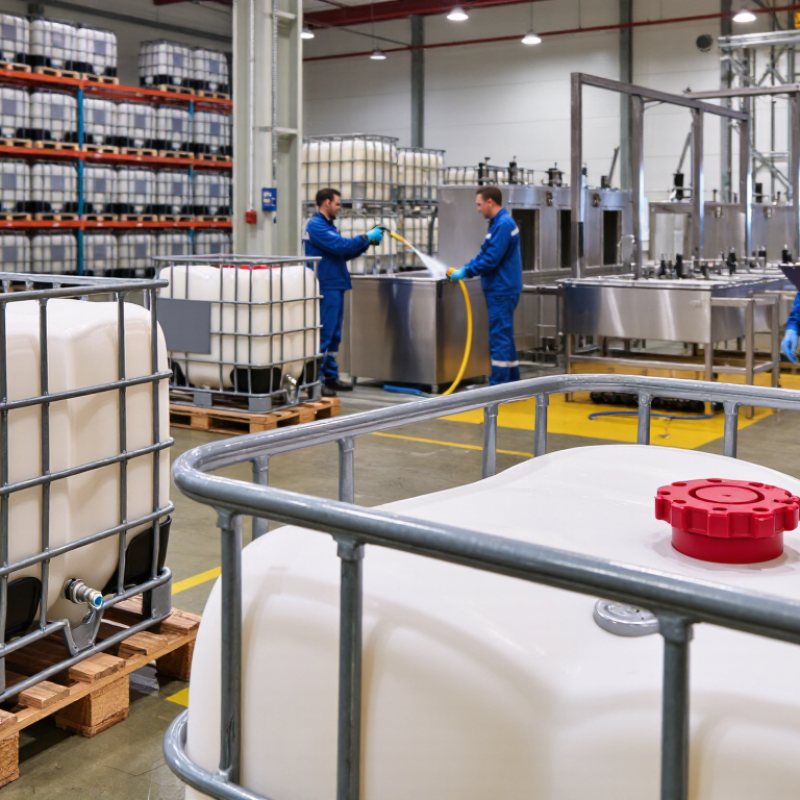
Reconditioned IBC containers are used tanks cleaned, inspected, and prepared for another service cycle. A typical unit includes a rigid cage, inner bottle, pallet base, valve, and protective cap. Qualified reconditioning facilities remove residue, examine welds, test valves, and replace damaged components. The process is practical, but it is not identical for every container.
Global buyers choose these tanks because they can reduce packaging costs and material waste. They also stack efficiently in warehouses and shipping areas. A 1,000-liter IBC may serve industries handling water-based liquids, approved chemicals, food ingredients, or industrial materials. Suitability depends on the previous contents, cleaning method, and product compatibility. Never rely only on appearance. A clean exterior can hide a weakened valve or a stressed inner bottle.
Tips: Ask for cleaning records, inspection dates, valve details, and product-contact history. Check dimensions, pallet condition, and load requirements before ordering. Request evidence of pressure or leak testing when relevant. Confirm that the container meets the destination market’s transport and handling rules. Small details matter. I once saw buyers focus on price while overlooking discharge fittings, creating delays at filling stations. A written specification prevents that mistake. Still, records may be incomplete, so independent inspection can be worthwhile for sensitive shipments.
Key Standards for Evaluating Reconditioned IBC Suppliers
Top Reconditioned IBC Suppliers for Global Buyers
Key Standards for Evaluating Reconditioned IBC Suppliers
A reliable supplier should prove more than product availability. Ask for inspection records, reconditioning dates, and clear photographs of each IBC. The tank, cage, pallet, valve, and gasket need separate checks. Look for cracks, distortion, rust, and weakened fittings. Small defects can become costly problems during storage or transport.
Compliance documents matter. Confirm whether the IBC meets applicable UN performance standards and transport regulations for its intended use. Request recent leak-test results and material compatibility information. A capable supplier should explain cleaning methods, previous contents, and contamination controls. Records should include batch numbers and traceable inspection details.
Details reveal experience. Test the valve before filling. Check the cap seal by hand. Review how damaged units are isolated. A supplier that welcomes independent audits usually has stronger processes. Low prices deserve careful questions. In practice, even good inspection systems can miss hidden liner damage. That risk should be discussed openly, not disguised by polished paperwork. Global buyers should compare test evidence, response times, replacement policies, and shipping preparation. Reliability is built through repeatable checks, honest communication, and evidence that matches the physical container.
Top Reconditioned IBC Suppliers by Region and Market Focus
Top reconditioned IBC suppliers serve different regional needs, transport routes, and storage conditions. European suppliers often emphasize documented inspection, traceability, and compatibility with strict industrial standards. Many offer 1,000-liter cages with cleaned bottles, tested valves, and replacement pallets.
In North America, suppliers commonly focus on bulk chemicals, food ingredients, coatings, and agricultural inputs. Buyers may find wider choices in valve types, outlet sizes, and delivery quantities. Regional warehouses can reduce freight damage and shorten lead times. Ask for cleaning certificates, inspection dates, previous-use declarations, and photographs of the actual units. A low price means little when a valve leaks during unloading.
Asian suppliers often support export packaging, manufacturing plants, and price-sensitive procurement programs. Their strengths may include large container volumes and flexible refurbishment options. However, buyers should verify washing processes, material compatibility, and port documentation before placing an order. Some suppliers describe units as reconditioned without explaining the repair scope. That gap matters. A repaired frame is not the same as a fully inspected container.
Suppliers serving the Middle East, Africa, and Latin America may prioritize durable cages, local stock, and mixed-load deliveries. Hot climates make UV exposure, gasket condition, and outdoor storage especially important. Experienced buyers compare regional service depth, not only unit cost. They also request batch-level records and independent test evidence when the application requires it. Small details often decide performance.
Container Quality, Certification, and Compliance Requirements
Global buyers evaluating reconditioned IBC suppliers should treat container quality and documentation as one decision. A bright white bottle proves little. Inspect the inner bottle for stress whitening, distortion, cracks, and chemical staining. Check the cage for bent bars, rust at welds, and secure corner supports. Test the valve, cap, gasket, and pallet fit before loading.
Request clear records for cleaning, leak testing, inspection dates, repairs, and traceability. If UN performance marking applies, verify that the marking matches current test records and the intended transport use. Food-contact applications may require material declarations and suitable hygiene controls. Requirements can also differ between origin, destination, and cargo type. Ask the supplier to explain those differences in writing.
Paperwork matters.
A practical mistake is accepting a generic certificate without checking its scope. The document should identify the container, inspection date, test method, and responsible facility. Photographs help, but they cannot replace physical inspection or independent verification. A reliable supplier should provide sample records, consistent serial numbers, and honest answers about previous use. Even experienced buyers can overlook valve compatibility or an aging pallet. Build those checks into the purchase specification, and allow room for rejection when evidence is incomplete.
UN IBC Drop-Test Heights by Packing Group
Key performance requirement for certified intermediate bulk containers used in regulated dangerous-goods transport
Under the UN Recommendations on the Transport of Dangerous Goods, the required drop-test height for applicable IBC designs varies by packing group: 1.8 m for Packing Group I, 1.2 m for Packing Group II, and 0.8 m for Packing Group III. Buyers of reconditioned IBCs should also verify the UN marking, inspection records, closure condition, material compatibility, and destination-market requirements.
How Global Buyers Can Select and Purchase from the Right Supplier
Top Reconditioned IBC Suppliers for Global Buyers
Global buyers should evaluate reconditioned IBC suppliers through evidence, not attractive pricing alone. Ask for cleaning records, inspection dates, previous contents, and repair details. A reliable supplier should explain how containers are tested after reconditioning. Check the cage, pallet, outlet valve, gasket, labels, and inner bottle carefully. Request clear photos and a recent inspection report for every product grade.
Specifications must match the intended application and destination requirements. Confirm capacity, dimensions, material compatibility, stacking limits, and closure type before ordering. Ask whether the supplier can provide traceability from inspection to shipment. Independent laboratory reports may support claims about cleanliness or material performance. However, documents should match the actual batch, not a generic file.
Request samples when practical. A small trial order can reveal packaging quality, communication speed, and delivery accuracy. Clarify payment terms, loading methods, export documents, and responsibility for transit damage. A low-cost offer may hide weak valves or inconsistent cleaning. That matters.
No supplier is perfect. Even experienced buyers can overlook small differences between batches. Build acceptance criteria into the purchase contract, including rejection procedures and replacement timelines. Keep photographs, serial records, and arrival inspection notes. These details make future disputes less subjective and help purchasing teams compare suppliers fairly.
Top Reconditioned IBC Suppliers for Global Buyers - How Global Buyers Can Select and Purchase from the Right Supplier
Anonymous supplier profiles and practical purchasing benchmarks for evaluating reconditioned intermediate bulk containers (IBCs)
| Supplier Profile | Typical Supply Region | Common IBC Formats | Typical Reconditioning Scope | Usable Capacity | Typical Technical Specification | Compliance Documents to Request | Typical Order Pattern | Key Verification Point | Best Fit for Global Buyers |
|---|---|---|---|---|---|---|---|---|---|
| Large-scale circular packaging specialist | Europe and the United Kingdom | Standard pallet-mounted IBCs; food, chemical and industrial grades | Exterior washing, cage inspection, valve and cap replacement where required, label removal, leak testing and visual grading | Commonly 600–1,000 litres | High-density polyethylene inner bottle with galvanized steel cage and pallet base; common footprint approximately 1,200 × 1,000 mm | UN marking where applicable, cleaning record, leak-test record, material declaration and product specification sheet | Full truckloads or scheduled repeat deliveries | Ask for traceable batch records, cleaning validation and photographs of the actual stock | Large importers seeking consistent grading, repeat supply and documented quality control |
| Regional industrial container reconditioner | North America | 275-gallon and 330-gallon IBCs; industrial liquid and non-hazardous applications | Sorting by previous contents, pressure or leak inspection, cage repair, valve replacement and exterior cleaning | Approximately 1,000–1,250 litres | Rigid HDPE bottle, steel cage and integrated pallet; outlet sizes commonly vary by stock configuration | UN specification information when required, inspection report, previous-use declaration and transport packaging documentation | Mixed pallet quantities to truckload purchases | Confirm previous contents, odor status, bottle color, outlet type and minimum remaining wall condition | Buyers needing flexible quantities and regional delivery within North America |
| Export-oriented reconditioning and trading supplier | East and Southeast Asia | 1,000-litre standard IBCs; industrial, agricultural and selected chemical applications | Cleaning, component replacement, cage straightening, pallet inspection, grading and export packing | Usually 1,000 litres | HDPE inner container with metal cage; common designs use a top fill opening and bottom discharge valve | Commercial invoice, packing list, certificate of origin where needed, inspection report and UN documentation where applicable | Container-load purchases, often with production or consolidation lead time | Verify loading photos, container count, moisture protection, stacking method and agreed inspection standard | Cost-sensitive buyers able to purchase by container and manage longer international transit |
| Food and beverage-focused reconditioner | Western Europe, North America and selected regional hubs | Food-contact or food-compatible IBCs, subject to prior-use screening | Controlled source selection, dedicated cleaning process, gasket and valve inspection, odor assessment and batch documentation | Commonly 600–1,000 litres | HDPE bottle and stainless-steel or coated components may be available depending on product specification | Food-contact declaration, cleaning certificate, allergen or previous-use statement, traceability record and migration documentation when relevant | Contract supply, palletized orders or scheduled replenishment | Confirm that the reconditioned unit is approved for the intended product and not merely described as “clean” | Food ingredient, beverage, cosmetic and other applications with strict contamination controls |
| Chemical and hazardous-goods specialist | Europe, North America and major industrial ports | UN-rated IBCs for compatible liquids and regulated transport applications | Controlled decontamination, valve and gasket replacement, cage inspection, leak testing and UN-marking verification | Commonly 1,000 litres; other sizes subject to availability | Composite IBC design with HDPE receptacle, steel cage and pallet; specification depends on liquid density, compatibility and transport rules | Valid UN packaging marking, test or inspection records, compatibility statement, safety documentation and batch traceability | Repeat industrial orders with pre-approved specifications | Check that the UN approval applies to the exact model, capacity, closure system and intended dangerous-goods category | Chemical manufacturers, distributors and logistics operators moving regulated liquids |
| Broker or stock-distribution supplier | Global trading hubs and port-adjacent warehouses | Mixed brands, models, capacities and condition grades | May include basic sorting and cleaning; reconditioning depth varies by source | Approximately 500–1,250 litres | Specifications vary by lot; bottle color, valve type, pallet material and cage condition must be confirmed before purchase | Lot-specific specification sheet, inspection report, previous-use information and shipping documents | Small lots, spot purchases and mixed loads | Require a written condition grade and prohibit substitutions without prior approval | Buyers prioritizing availability, short lead times or mixed-size procurement |
| Reusable packaging pool or service provider | Multi-country networks with local collection and return points | Standardized reusable IBC fleets, usually in high-turnover industrial formats | Formal inspection, cleaning, repair, component replacement and controlled redeployment | Often 600–1,000 litres | Standardized fittings and identification systems; exact configuration depends on the pool program | Asset history, cleaning record, inspection status, repair record and service-level documentation | Managed rental, subscription or long-term supply agreement | Review return logistics, ownership terms, loss charges, turnaround time and geographic service coverage | Companies seeking lower packaging waste and predictable multi-site availability |
| Small-batch specialist supplier | Local and regional industrial markets | Selected IBC sizes for non-hazardous liquids, water, detergents and general industrial use | Manual cleaning, visual inspection, basic valve replacement and cage or pallet sorting | Typically 600–1,000 litres | Condition and fittings can vary significantly between lots; product-specific approval is essential | Cleaning confirmation, condition report, product specification and delivery documentation | Single pallets or small repeat orders | Inspect a sample before volume purchase and define acceptable scratches, dents, discoloration and odor | Small and medium-sized buyers with straightforward applications and limited storage needs |
Related Posts
-
Unlocking Sustainability: The Benefits of Using Reconditioned IBCs in Modern Industries
-
10 Best Stainless Steel Tanks for Global Buyers?
-
10 Essential Tips for Choosing the Right Metal Barrel for Your Needs
-
China Top Plastic Drums for Industrial and Commercial Use Guide?
-
2026 Top Open Top Steel Drums for Global Suppliers?
-
What is HDPE Drums Benefits and Uses for Global Buyers?

Get in touch with us,
We will contact you shortly!
What is the difference between Unline(Non-Epoxy Coated) or Lining(Epoxy Coated) Metal Drum?

Unline drums with internally bare metal surface is more susceptible to corrosion and rust while Lining drums are internally coated with Phenolic Epoxy Coating to provide a non-reactive barrier between the drum surface and your product, less risk of contamination. Note: Our Unline drums are coated with an anti-rust agent after washing to reduce risk of rust.
What are Unline(Non-Epoxy Coated) and Lining(Epoxy Coated) drums compatible with?

In Singapore, Recon Unline Drums are usually more costly than Recon Lining Drums. Hence, we recommend Recon Unline Drums to fill aromatics like Thinner, Xylene, Toulene& other solvents like Hexane, BA, CA, EA, MC, White spirit, etc.
We recommend the lower-priced Recon Lining Drums to fill hydrocarbons like IPA, Methanol, Ethanoland oil-based products like diesel, petrol, lubricants, engine, hydraulic, base, transmission fluid, additives, waste oil, etc.;
What is the difference between Grade A and Grade B Metal Drum ?

Grading of used drums are usually based on physical conditions like rustiness, deformities and residual contents. Grade A drums are totally free from internal rust, serious dents and are easy to clean. Grade B drums have different degrees of rust internally and aesthetically inferior compared to Grade A drums.
What content is suitable to fill in a Recon Grade A or Grade B Drum?

Recon Grade A drum is suitable to fill more costly virgin grade products while Recon Grade B drum is more suitable for recycled or waste products.
What is the difference between Open Top and Close Top Drums and their usage?

Closed top drums are for water and other liquid products. Open Top drums can be used for liquid too but are primarily for more viscous products. The Open Top (or open head with a lid) allows you to get in and out of the drum with your product easier.
What type of content are Metal or Plastic Drums suitable for?

Metal drums offer additional protection when dealing with potentially flammable substances. They provide superior fire resistance, impact protection, and longevity for storing class 1, 2, and 3 volatile chemicals.
Plastic HDPE Drums are suitable for corrosive chemicals like acids, alkaline and also water-based products.
Will there be any contamination in the reconditioned metal, plastic drums or IBC tanks?

All our reconditioned containers (metal/plastic drums, carboys, IBC tanks) are washed thoroughly with specially formulated cleaning agent, rinsed with clean water, dried, and tested for possible leakages during the recondition process. Stringent quality inspection is being conducted 100% on every reconditioned product before they are qualified for sale & delivery.
What is the drum gauge(thickness) and weight for reconditioned metal drums?

Reconditioned metal drums gauge can be 0.9mm to 1.0mm all round. Their weight can vary from 16 to 18kg.
Do you sell New Packaging Products too?

Yes, we are also a distributor for new pallets, metal drums, plastic drums, carboys, IBCs and stainless-steel tanks.
What additional services do you provide apart from selling reconditioned and new containers.?

We are an NEA licensed toxic industrial waste collector, who can collect and dispose of used toxic waste containers in Singapore.
Do you offer labelling and silkscreen on the containers ?

We can provide labelling and silk-screening on the containers.
Are you able to ship overseas ?

Yes, we can arrange export our products to any country in the world.
Leading the Way
to Carbon Neutrality